





 Sign in with Google
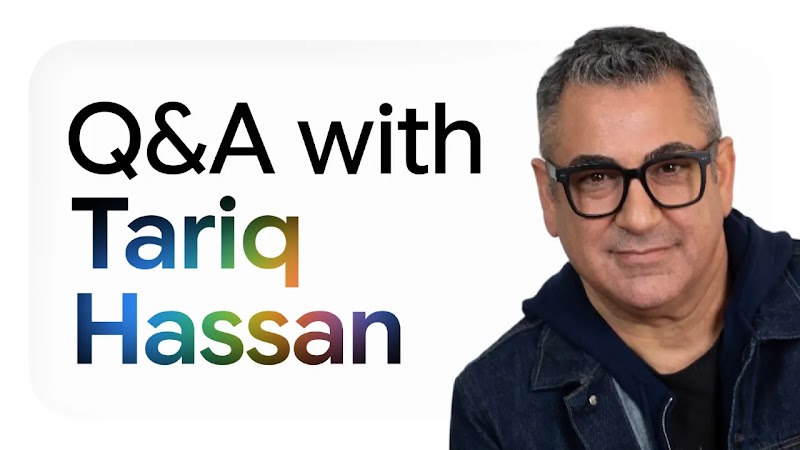
How do CMOs actually drive growth in the AI era? To answer this question we sat down with Tariq Hassan, former chief marketing and customer experience officer at McDonald’s USA. Hassan is a contributor to the Institute for Real Growth (IRG), which collected, synthesized, and published insights from over 25 global marketing leadership organizations into its recent Marketing 2030 report.
Q: What’s the thesis of the IRG’s Marketing 2030 report, and what makes it urgent?
Tariq Hassan: The Institute for Real Growth is a marketing community, founded on a powerful thesis: Companies that understand the value of a human component — a conscience and a core focus on human capital — actually drive better business growth. The data on this is compelling. Companies that prioritize culture, leadership development, and human capital consistently outperform those that don’t.
This isn’t just about “soft” leadership development. It’s directly tied to business performance. Here’s the urgency: You cannot have sustainable growth without a strategy that develops your people while driving value for all other stakeholders, from your customers and communities to capital markets.
Q: You define the CMO as a growth architect. What does that look like in action?
Hassan: To begin, cloud and AI have brought a fundamental and structural shift in how businesses are going to operate. So it’s worth noting that marketing’s enterprise isolation challenge is a systemic, organizational design flaw.
The new value will come not from doing marketing in the narrow sense but by the CMO becoming a growth architect who partners across functions to create enterprise value and growth. Technology led by AI will force us to break these silos, because data is fluid and doesn’t care about our org structures. As a growth architect, you have to earn the right to play in your peers’ backyards by proving you understand their business, not just your budget.
When you use marketing science to solve an operations headache, you earn your seat as a growth architect.
In my previous role at McDonald’s, we were using highly traditional, manual processes to recruit new franchisees. That is fundamentally an acquisition challenge. Working with operations and HR, we applied digital customer acquisition models and persona-building frameworks — things marketing does every day — to identify potential franchise applicants. By the time prospects got through our digital acquisition funnel, there were more of them, and they were significantly better qualified. When you use marketing science to solve an operations headache, you earn your seat as a growth architect.
Q: How do the insights in the report refine the relationship between CMOs and the rest of the C-suite?
Hassan: This study is the second chapter of research that started a decade ago to produce Marketing 2020. This time, the research was extended to engage CEOs, CFOs, and CMOs, through stakeholder interviews, and scraping podcasts and Substacks to provide a true enterprise-wide view.
You cannot have sustainable growth without a purpose that develops the growth of your people.
The biggest takeaway is that marketers need to take a broader view of their role. Marketing has historically been charged with being obsessed with customer centricity. That remains critically important. But today’s marketers need to step up as enterprise growth architects. Success is no longer possible in a functional silo. Instead, marketers must leverage the data signals that flow fluidly across the entire business to drive growth. If you focus solely on functional excellence without connecting to enterprise priorities, you are basically perfecting one instrument while the rest of the orchestra may be playing a completely different tune.
Q: How do CMOs establish relevance in the C-suite?
Hassan: We must speak the language of the business. This means understanding the corporate growth priorities and aligning marketing strategies directly with those drivers. Many marketers assume the CFO sees marketing as only a cost center, constantly looking for the ROI of spend. But this, too, is an opportunity for the CMO to partner with the CFO to co-own the KPI framework.
Together, they can move beyond purely financial metrics to shape the enterprise performance story in the language of the business. When marketing metrics are shared leadership goals, they can be viewed as leadership goals with shared accountability and not as functional marketing failure. At AT&T, Kellyn Kenny did this masterfully, partnering with her CFO and leadership to study different investment mixes to establish a cosponsored, shared view on returns.
Q: What’s the biggest surprise in the research?
Hassan: The absolute shocker: CFOs are actually looking for help with storytelling.
The popular narrative is that there is tension between marketing and finance. But, if you think about it, our finance partners are required to convey company performance to the Street every quarter. That’s an opportunity to tell a bigger story, one that marketing needs, and CFOs are looking for marketing to support. In a highly competitive market, spreadsheets don’t speak for themselves. CFOs need compelling, differentiated ways to tell this story, and storytelling is marketing’s superpower. We need to shift the narrative from the relationship between marketing and finance as a purely transactional one to one of strategic value.
As technology commoditizes our ability to do more, the differentiator becomes our uniquely human understanding of the consumer context.
Q: How should marketing leaders navigate the clutter tech changes create?
Hassan: It is time to go beyond the data to understand why something happens or how someone feels, linking data to motivation, product to narrative, and strategy to behavior. This is what will be required to break through and create both human and agent value. I really like how Marie Gulin-Merie at Google talks about this: “As technology commoditizes our ability to execute fast and do more, the true differentiator becomes our uniquely human understanding of the consumer context, turning fragmented data into real, valuable, and sustainable connections.”
Q: What is your single most important piece of advice for a CMO who feels marginalized as a downstream execution function?
Hassan: CMOs must navigate two distinct tasks to succeed as growth architects. First, they must create and run an AI-powered efficiency engine, designed for speed and scale. Then, they must nurture the human-centric connections that build trust, shape culture, and secure lasting relevance.
Rather than trying to plant a “marketing flag,” build solutions with C-suite peers, sharing the wins and creating shared accountability for the failures.
This creates an opportunity to reengineer and reenergize marketing to bridge efficiency and meaning, data and creativity, and technology and humanity across the enterprise. This will require clarity to drive impact. Ultimately, you must engage your C-suite peers to explicitly define marketing’s role. What does the business need? What should marketing own, influence, or simply support? Because these questions are too consequential to be left vague, let your narrative be influenced by their input and challenges. Rather than trying to plant a “marketing flag,” build solutions together, sharing the wins and creating shared accountability for the failures.
Finally, be declarative and accountable. Don’t wait to be invited to discuss existential business challenges. Lean in and take accountability, even if it falls outside traditional marketing boundaries. The future of marketing cannot be decided by marketers alone. The C-suite and boards shape what the function can become. Marketers must actively engage them to be viewed as growth architects for the entire enterprise, not just the marketing department.

Social Module
Share