


 Sign in with Google

Pulling holiday budget on December 25 hands your most decisive buyers to the competition. New research from Ipsos and Google reveals five post-holiday shopping trends and how to capture high-intent shoppers across Search, AI Mode, and YouTube.
Many brands pull back spend after December 25, right when the season’s most deliberate buyers show up. In this post-holiday window, often called “Q5,” shipping cutoffs are over and the frantic rush to buy gifts for others gives way to intentional shopping.
Compared to peak holiday season, post-holiday shoppers do much more homework before they buy: They shift to shopping for themselves; they check deals, reviews, and store details online before heading to a store, and they use Search, AI Mode, and YouTube to compare options and avoid returns. Because they take the time to get it right, they buy less on impulse, feel more confident in their choices, and shop across more categories — with 87% of U.S. shoppers making a purchase on post-holiday shopping occasions.1
Here are five ways post-holiday shoppers are more deliberate than peak-season buyers — and how to capture that demand.
1. The gift list is done, but the wish list isn’t
For most of December, shoppers focus almost entirely on buying gifts for others. Once the holidays pass and those obligations are met, they naturally turn their attention back to shopping for themselves.
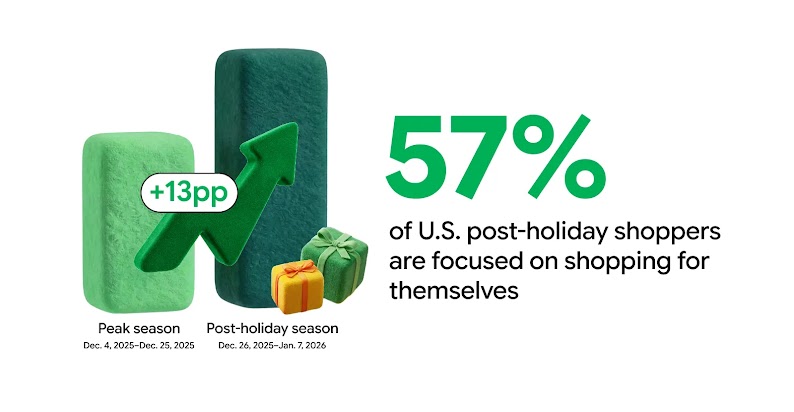
With gift lists checked off, 57% of U.S. post-holiday shoppers are focused on shopping for themselves.2
Shoppers are cashing in gift cards, upgrading everyday essentials, and buying what they didn’t get under the tree. They aren’t ignoring their loved ones, as belated gatherings and New Year visits still take place, but the mental weight of buying has lifted. Shopping now stems from personal desire rather than a frantic deadline.
Your move: Swap out shipping cutoff urgency for self-gifting and New Year upgrade messaging. Remarket directly to December gift buyers, loyalty members, and recent site visitors who browsed your catalog for others and are now ready to buy for themselves.
2. Store visits start online
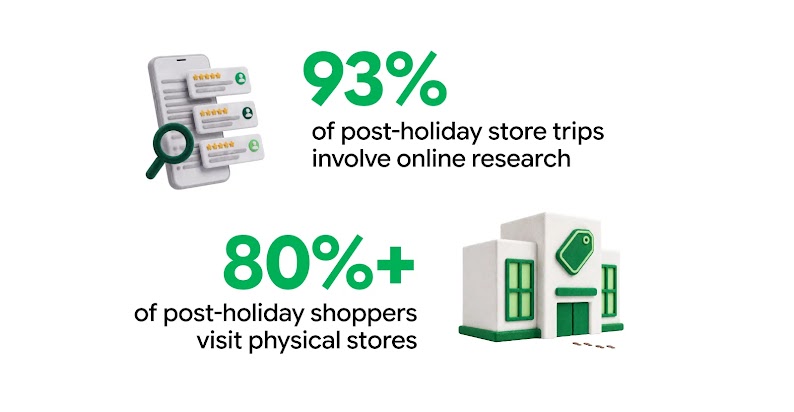
Post-holiday shoppers aren’t wandering the mall to browse. They plan targeted store runs on their phones before leaving the house. The physical store is at the heart of this behavior. More than 80% of U.S. post-holiday shoppers visit physical stores.3
Almost none of those store visits happen by chance. Before visiting a physical store, post-holiday shoppers look for information online for 93% of their in-store occasions. Compared to peak season shoppers, they were more likely to search online for deals, discounts, or promotions, product details, reviews, where to buy, store details (for example, hours of operation), and images, prior to going in-store.4
Your move: Turn online research into foot traffic by keeping your Google Business Profile updated with post-holiday hours and by feeding live local inventory into your campaigns. When shoppers check whether an item is in stock nearby, make sure your store shows up first.
3. Shoppers buy less on impulse — and that’s the opportunity
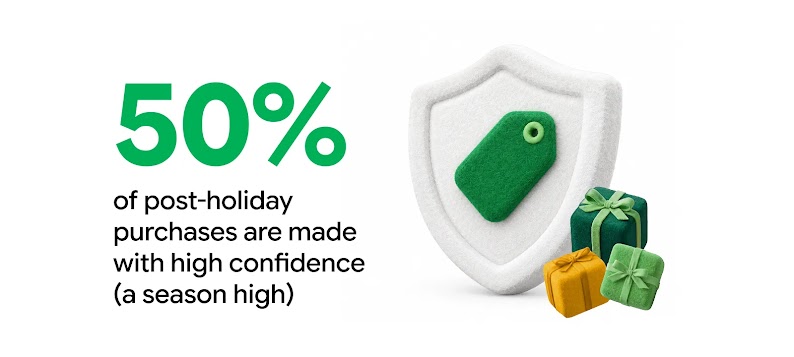
Without the pressure of a ticking clock, shoppers stop making last-minute compromises and buy with high conviction. After the holidays, impulse purchases dip to 24% of reported U.S. post-holiday purchases, while highly confident purchases reach a season high of 50%.5
When post-holiday shoppers find what they are looking for, they don’t leave it sitting in an online cart. They buy it on the spot.
Your move: Don’t rely on blanket clearance markdowns alone. Lead with product quality, clear delivery or pickup windows, and hassle-free return policies so high-conviction buyers have every reason to check out on the spot.
4. They’re researching to avoid a return, not to delay a purchase
Post-holiday buyers don’t guess. They use Search, AI Mode, and YouTube to pressure test their choices and avoid returns.
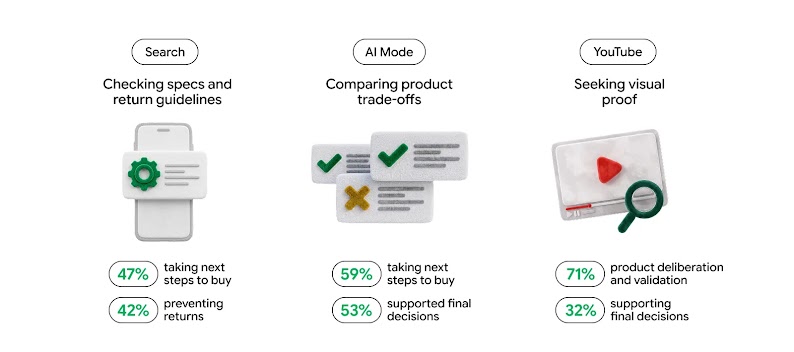
Google Search plays a practical, action-oriented role in this process. Among U.S. holiday shoppers who use Google Search, 47% of post-holiday shoppers use it for taking the next step toward buying, and 42% use it for gaining confidence in their purchase to prevent a return.6
Instead of keeping shoppers in a browsing loop, AI tools help people quickly narrow their options much faster. Among U.S. holiday shoppers who use Google AI Mode, 59% of post-holiday shoppers say it supported them with taking the next step toward buying, and 53% say it supported the final decision on which product or gift to buy.7
Video provides the final visual proof that shoppers need before committing: 71% of U.S. post-holiday shoppers who watch videos watch product deliberation and validation content, and among those who use YouTube, 32% of post-holiday shoppers use it for supporting the final decision on which product or gift to buy.8
Your move: Feed complete product specifications, sizing details, and comparison data into your merchant feeds so Search and AI tools can surface accurate answers. Pair that with creator reviews and product demos on YouTube that show how your product performs in real life.
5. The cart expands to the whole household
Once gift shopping wraps, baskets widen from single-item gifts to whole-home restocks as shoppers prepare their homes and routines for the year ahead.
U.S. post-holiday shoppers shop across a season-high average of 4.6 product categories.9 Rather than buying toys and holiday novelties, shoppers are restocking pantries, organizing closets, updating living spaces, and investing in daily wellness routines.
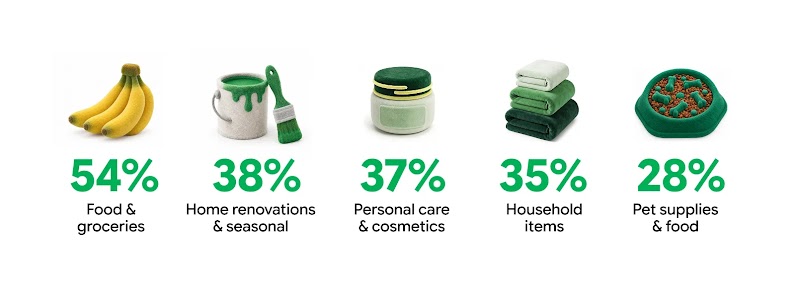
Your move: Use AI-powered Search and Performance Max campaigns to match shifting post-holiday searches across your full product catalog. This allows you to capture shoppers who originally came for a single item and are now restocking their home, pantry, and daily routine.
Don’t go dark when buyers are ready to spend
Pulling your budget on December 25 doesn’t save money. It hands your most decisive buyers straight to the competition. Post-holiday sales remain strong, driven by clearheaded consumers who know what they want and are ready to buy.
Winning Q5 doesn’t require a brand-new playbook. It simply means staying present, keeping your campaigns funded, your local store inventory visible, and your creative aligned with shoppers who are finally buying for themselves.

Social Module
Share