





 Sign in with Google
When Nestlé launched Nescafé Espresso Concentrate, the company wasn’t just introducing a new product. It was trying to establish a new daily habit. The goal was ambitious: Get younger coffee drinkers to trade their expensive iced coffees for homemade premium espresso drinks.
To make this happen, traditional ads wouldn’t cut it. The Nestlé team realized that to resonate with younger consumers, they had to rewrite their playbook and let YouTube creators take the lead.
Instead of one-off campaigns, Nestlé built a marketing framework designed to scale creator authenticity globally. Here’s how the company turned creative freedom into category-defining business results.
Take a look behind-the-scenes at how Nescafé scaled its global YouTube creator strategy with Zach King.
Scaling authenticity with a global framework
At the heart of Nestlé’s new approach was letting creators tell the story.
“The target audience prefers to hear recommendations from somebody they follow, watch, and listen to, rather than from a brand pushing a message,” says Matthew Solomon, global marketing communications manager for Nescafé. “We felt that creators were the heart of that messaging and storytelling.”
To pull this off globally, Nestlé rolled out a Global Creator Playbook to guide 11,000 internal marketers. Instead of treating creator marketing as an afterthought, Nestlé engineered a social-first operating model that mirrors YouTube’s core “Build” principles.
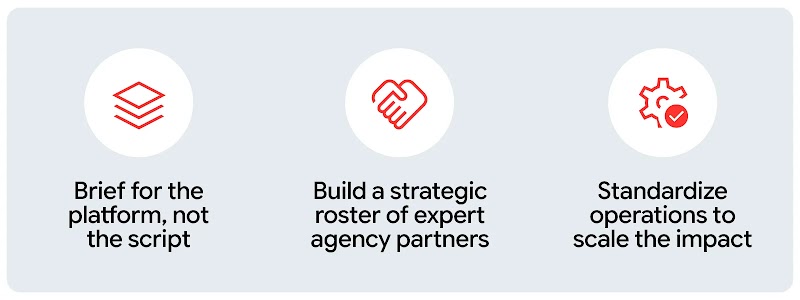
- Brief for the platform, not the script. Nestlé abandoned the traditional model of handing down rigid scripts. Instead, they brought creators in at the start and gave them broad guidelines rather than strict rules. This allowed creators to do what they do best: speak to their audience in their own, authentic voice so the content felt natural.
- Build a strategic roster of expert agency partners. Nestlé simplified its approach by curating a roster of preferred media, creative, and influencer marketing agencies (IMAs). This gave local teams expert support for strategy and execution, while keeping best practices consistent worldwide.
- Standardize operations to scale the impact. To roll this out across markets, Nestlé brought its teams onto a single platform, CreatorIQ. Having everything in one place made it easy for teams to identify the right creators, collaborate smoothly, and track performance.
With its playbook in place, Nestlé needed a star who could command global attention and set the tone for the entire Nescafé campaign. After reviewing a shortlist provided by their agency, Publicis, it found the perfect partner in YouTube creator Zach King. His signature “digital magic” was an ideal creative match for a product meant to shake up the traditional coffee routine.
Co-creating authentic entertainment with platform experts
King’s mind-bending videos captured the feeling of magically shortcutting a morning coffee routine.
“We told him we wanted to hack iced coffee, and the relationship grew from there,” Solomon explains.
Instead of making a single traditional commercial, the Nescafé marketing team went all-in on co-creation, flying to Los Angeles to sit side-by-side in King’s studio to build the campaign together.
Following the principle of designing for multiformat, they paired the velocity of short-form video with the depth of long form. They combined quick YouTube Shorts for visual tricks, like King reaching through the screen to borrow milk from a viewer, with longer videos for deeper product education and storytelling, including behind-the-scenes breakdowns showing how the magic was made.
Giving King the freedom to take the lead ensured the content felt natural, which was key to its success. As King notes, “Campaigns do really well when the brand sets clear guardrails and then trusts creators to craft content in their own voice and style. This allows us to do what we do best, and our audience really recognizes that freedom and trust.”
Zach King incorporates his own personality and creativity into YouTube Shorts for the Nescafé Espresso Concentrated campaign.
Adapting global ideas for local subcultures
The true test of a global framework is how well it can adapt for local markets. While King kicked off the global campaign, the real strategy lay in empowering local teams to activate diverse creators in their own countries.
According to Daniele Tundo, Nestlé’s global digital content and influencer lead, “As a leading global brand, you need to have a global creator strategy, but when it comes to execution, you take those ideas and adapt them with cultural nuances.”
Australia was a great example. Using CreatorIQ to pinpoint creators with high local relevance, Nestlé teamed up with former “Love Island Australia” winner Tina Provis. Known for her relatable vibe, Provis took the campaign and made it her own. She mixed Nescafé Espresso Concentrate Rich Caramel Flavour with coconut water to create a “Caramel Cloud Latte.” By leaning into a drink trend her followers loved, she pulled off her own kind of magic.
Delivering efficiency and bottom-line results
Putting the playbook into action paid off. Compared with traditional commercials, the creator-led videos saw a 75% higher click-through rate and a 30% lower cost per acquisition.
The multiformat video campaign won massive engagement in key markets.
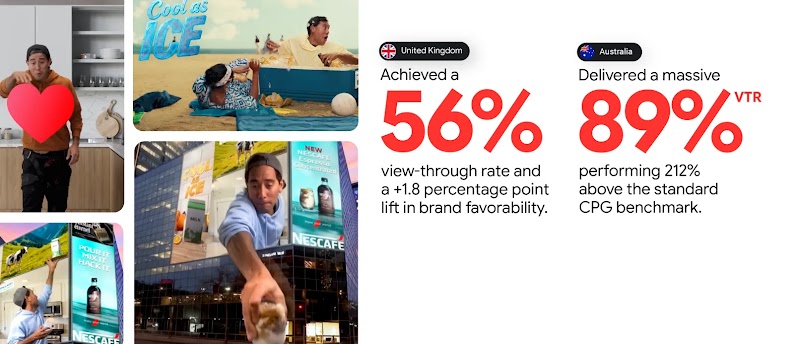
Beyond strong media performance, the campaign successfully established the coffee concentrate category in key markets. Nescafé Espresso Concentrate drove rapid trials, with household adoption beating new product benchmarks by 3X in Australia and 2X in the U.K. within its first year.
Driving a mindset shift
Ultimately, the biggest feat was pulled off by Nestlé’s marketers themselves. By building a clear global framework, giving King the freedom to work his craft and letting local creators like Provis tailor the message, Nestlé balanced global scale with local relevance.
Critically, the campaign also drove a meaningful shift internally. It wasn’t just a win for Nescafé, but a major turning point for how the entire Nestlé organization views, funds, and trusts creator-led advertising. It showed why creator marketing belongs at the center of a campaign, and gave leadership the data they needed to confidently support that approach.
For legacy brands looking to try something new, the lesson is simple: Stepping away from a strict corporate script and trusting creators doesn’t just help you reach a new audience. It modernizes how you tell stories.