





 Sign in with Google
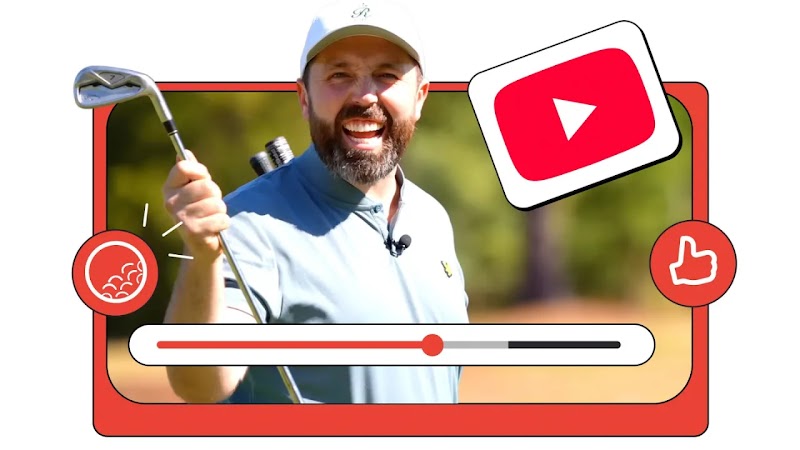
With sports fans increasingly looking beyond traditional broadcasts for deeper engagement, creator-led sports content has reached unprecedented scale. This shift is perfectly encapsulated by Rick Shiels, who recently made history as the first endemic golf channel to surpass 1 billion lifetime views on YouTube.
Affectionately known as the “godfather of YouTube golf”, he has spent nearly 15 years transforming a straightforward instructional channel into a global sports entertainment network. By evolving his content with cinematic course vlogs, dedicated gear reviews, and a video podcast, he has cultivated a highly loyal community.
We sat down with Rick to discuss his expansion into both the living room screen and international markets. And he shared his advice for brands: embrace creator-led storytelling to turn passive viewership into measurable impact.
You just surpassed an incredible 1 billion lifetime views on YouTube. What has been the defining shift you’ve seen in the content global sports audiences consume?
Rick Shiels: I started my YouTube channel as a marketing tool to advertise myself as a golf coach. Back then, there were probably three golf channels; today, there are over a thousand across the globe. It has really blown up because there’s such a variety of content — from tips and tricks to challenges and comedy — which is what has attracted so many golfers to the platform. Plus, you can watch it on demand, whenever you want.
The biggest change I’ve seen is that audiences now want relatability and personality. When you watch golf on traditional TV, it feels like you’re watching from a distance. On YouTube, you experience the feelings and emotions because it’s up close and personal. People want to see golfers of a similar ability playing a sport they love, which makes them feel better about how hard the game truly is.
YouTube shouldn’t just be a consideration; it should be number one on your list
We are seeing an explosion in Connected TV viewing. How has this big-screen format shaped your approach?
Rick: I identified the shift fairly early on, back when 4K first became a factor. It made sense to adapt our production approach on YouTube for bigger screens, so I told my team that our shots had to be smooth using gimbals, and our videos had to become a journey. Today, we’re producing essentially full-blown films, like “The Rick Shiels YouTube Golf Major”, which is over three hours long and has 4.2M views.
Because viewers are watching on living room screens, they are incredibly invested. Golf has a natural start, middle, and outcome, and we have great retention because highly attentive viewers want to see the payoff. For advertisers, this format is incredibly valuable. Instead of disruptive commercial cutaways during a traditional broadcast, they get their message delivered organically and creatively through the voice of the creator. It enhances the viewing experience rather than interrupting it, meaning the viewer benefits and the brand benefits.
Golf is a high-consideration category. How does authentic creator content like yours turn viewer interest into real-world buying behaviour?
Rick: When I first got into YouTube, my passion was to help golfers get better. One of the biggest uncertainties in the sport is equipment. Brands spend a lot of money on marketing, but there was no real way of knowing what was actually the right fit.
I’ve reviewed equipment in the most honest, impartial way possible since 2012. While a lot of golf content has moved toward pure entertainment over the last decade, we actually doubled down on reviews. That’s why we launched the H.I.T. Golf channel — which stands for Honest, Independent, and Trustworthy. Our reviews are independent and our opinions are our own. That honesty has helped us build trust with viewers.
I constantly get feedback from brands telling us we’ve sold massive amounts of products — sometimes even when the review wasn’t entirely glowing! Looking ahead, we want to look into automatically directing viewers to the best prices. YouTube is always bringing in new tools, like Shopping and links to allow people to buy things. These features enhance the creator ecosystem, turning those honest reviews into a seamless buying experience for the viewer.
For a CMO looking to move beyond passive sports sponsorships, how do you demonstrate the full-funnel performance impact of a creator partnership?
Rick: It starts with understanding what the brand actually wants. Some want to demonstrate a clear ROI, while others want exposure and are happy to be part of a video with 500K views.
For example, I did a 10-video partnership with Golf GameBook, an app that is hugely popular in the Nordics but relatively unknown elsewhere. Their goal was global recognition. Integrating the app into our content actually added value for the viewer by providing extra stats about my round, and the brand was delighted with the surge in app sign-ups.
If I were speaking to a CMO, my message would be simple: I don’t believe that anywhere in the world gives you better exposure and a better ROI than YouTube. Creators are the absolute best equipped to promote and sell your product to an audience that is deeply, genuinely engaged. YouTube shouldn’t just be a consideration; it should be number one on your list.
You’re actively expanding into international markets. How do you break language and cultural barriers to unlock global scale for your content?
Rick: Golf is absolutely huge in Korea and Japan. We’ve been experimenting with multi-language audio for the last two years. We use AI dubbing and translation tools and we always have it human-verified.
Interestingly, by spending time in Korea, I learned a crucial nuance: audiences there often prefer watching English content with local subtitles rather than full dubbing. We now offer both options. We’ve only experimented with less than a hundred of my 2,500 videos so far, so there is massive potential to help more people discover and enjoy our older videos.
I don’t believe that anywhere in the world gives you better exposure and a better ROI than YouTube
We strive to embrace local nuances too. In Korea, for example, female golf, golf fashion, and simulator golf are incredibly popular. I visited shopping malls with massive dedicated golf sections featuring American brands selling apparel you can’t even get in other countries.
But it’s a balancing act. If we make content entirely focused on Korean culture, we see a spike in local viewership but a drop-off in the U.K. and U.S. The sweet spot is blending the two. For instance, taking our long-form “Break 75” series to the Jack Nicklaus Golf Club in South Korea worked perfectly. The U.S. audience watched it because Jack Nicklaus is a legend in the same category as Tiger Woods, and the Korean audience watched it because it showcased a premier course in their home country.
As the platform evolves, where do you see the future of sports storytelling heading?
Rick: We are going to see a massive shift with mainstream athletes moving to YouTube. You have dominant pros like Bryson DeChambeau nearing 3M subscribers, and recently LeBron James launched a golf channel that already has 3M views on its first video.
For advertisers, this is a game-changer. Suddenly, there is an opportunity to collaborate with sports stars who were previously untouchable. A brand can now partner with someone like LeBron James to reach a brand-new audience without needing to sponsor an NBA broadcast.
The cross-pollination between mainstream sports and YouTube creators is just beginning, and it’s going to redefine sports marketing over the next decade.
Social Module
Share