


 Sign in with Google
South African sports fans are creating a YouTube marketing playbook. Here’s the new game plan

Tumelo Selikane is the managing director of Nielsen Sports South Africa. As a consultancy, its research uncovers insights and understanding of the African sports industry and sports-viewing consumers for its clients.
South Africa is famously a sport-crazy nation: 75% of online South Africans watched a live sporting event in the last year.1 For brands, the question has never been whether they can find an audience among sports fans, but how they can capture high-intent engagement where it actually happens.
For decades, traditional TV has served as the sole viewing channel while marketing decision makers have evaluated its importance through a single screen, a single broadcaster, and a fixed five-minute viewing threshold. But as sports viewers build dynamic, multi-platform journeys surrounding live sports events, we see this measurement model as a one-way, one-dimensional ticket to missing the modern consumer altogether.
With 87% of online South Africans using YouTube for sports-related content,2 the real match-day story is unfolding across an ecosystem of discovery, fan community, and culture.
How the South African fan journey has changed
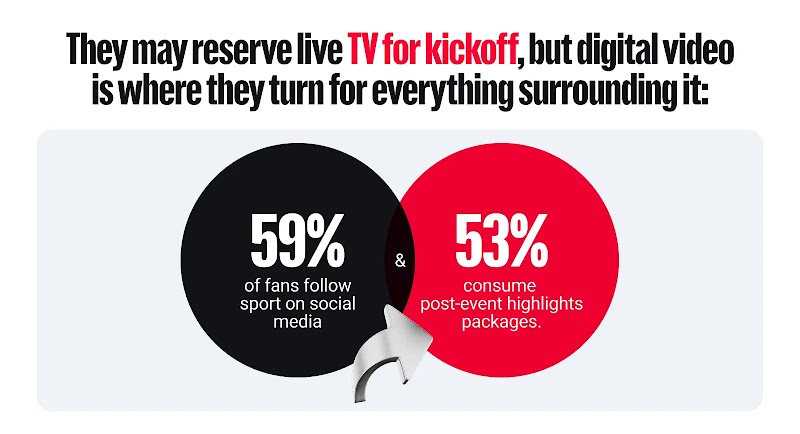
The modern fan no longer waits for appointment viewing.3 They may reserve live TV for kickoff, but digital video is where they turn for everything surrounding it: 59% of fans follow sport on social media and 53% consume post-event highlights packages.4
YouTube sports viewers lean heavily into social media and streaming over free-to-air (FTA) TV,5 forming a digitally-native, mobile-first audience. Across a typical week, fans move fluidly between platforms and apps, with 41% engaging through dedicated mobile apps alone.6 For example, they might watch a live match on traditional TV, debate a refereeing call in a group text exchange, and then dive into YouTube the next morning for the highlights and a tactical breakdown. The decades-old model only measures the live match and repeats, not the total fandom.
The nature of the commentary is experiencing a change too. During the pre- and post-event windows, creator-led content on YouTube has shifted fan expectations from polished, objective studio commentary to authentic, relatable, and off-the-cuff analysis.7 Brands buying ad space exclusively on live TV miss the highly engaging conversations happening across these creator-led windows.
Inclusivity, niche formats, and subscription fatigue
The digital fanbase for inclusive and niche sports in South Africa has also seen an increase. Two things are driving this behaviour: access and format.8 In a world where TV schedules are finite, prime time goes to the biggest sporting events such as rugby and football.
YouTube, however, has no schedule limit in this regard, allowing fans to find what they love, and the algorithm introduces them to more and more of the same thing, which works for brands too.
Crucially, their viewing habits expand far beyond conventional broadcast schedules:
- Women’s and mixed sports: South African YouTube viewers demonstrate greater gender inclusivity, actively following both men’s and women’s local football, rugby, and golf events versus viewers who use FTA and subscription TV (PayTV).9
- Fast-paced and niche formats: They favour condensed formats like Rugby Sevens alongside niche properties like combat sports and motorsport.10
At the same time, many households are facing severe economic pressure, driving widespread subscription fatigue.11 This signals a clear consumer demand for flexibility, mobility, and affordability, while broadcasters and rightsholders often cling to rigid, high-cost exclusivity and risk pushing their fan bases to find better alternatives that meet their needs.
Rather than treating this purely as a risk, brands should recognise the opportunity to engage fans through accessible, ad-supported digital channels.
Actionable takeaways for marketers
To maximise commercial ROI around major sporting events, brands must adapt their video marketing strategies to match modern viewing behaviours.
- Treat YouTube as incremental reach: Beyond the first and final whistle, use YouTube to build potential, incremental reach alongside traditional TV sponsorship. Relying solely on linear TV ratings misses the daily time and attention given by the 87% of online South Africans who engage with sports content on YouTube.
- Measure “total consumption time": Move away from legacy five-minute linear broadcast metrics. Evaluating campaign success through total active engagement hours across highlights, creator channels, and long-tail analysis provides a clearer picture of true brand impact and active fan attention.
- Activate beyond the live window: Extend campaign value across the full seven-day fan journey. Sponsor pre-game build-ups, post-match breakdowns, condensed formats, and inclusive women’s sports coverage where YouTube engagement peaks.
Fandom is no longer confined to an 80- or 90-minute broadcast window. Brands that follow fans across their full, multi-platform journey will convert high-attention digital minutes into long-term commercial returns.
Social Module
Share