





 Sign in with Google
 Victoriia Rodkina and Kseniia Gorkusha manage and optimise digital advertising for online broker FxPro. Rodkina oversees channels, budget allocation, and reporting, while Gorkusha drives PPC campaign development.
As a brokerage looking to scale globally, we found that driving volume through search keyword bidding was a proven starting point. However, as we accelerated our expansion, we hit a natural ceiling.
We noticed that high registration numbers didn’t automatically translate to active traders, resulting in post-registration drop-offs. The challenge shifted from simply getting users through the door to finding a high-value audience with a genuine affinity for trading at scale.
The realisation that we were trapped in a cycle of chasing volume over value became our turning point. To break free, we stopped looking at registration numbers and started focusing on intent by building a strategy dedicated to finding serious traders who stick around.
Fixing the blind spot in the customer journey
One of our core hurdles was an attribution blindspot. We optimised our campaigns heavily for web registrations, but we were missing the high-value mobile app journey. When our internal data revealed that between 60% and 70% of our users were migrating from the web to our mobile app to manage their funds and trade, we realised our web-centric tracking was outdated.
To shift toward value-driven growth, we expanded our use of Demand Gen, which allowed us to reach relevant audiences across a variety of visual channels, including YouTube, Discover, and Gmail. As we redirected our focus toward high-value customers, applying a unified attribution framework proved particularly valuable for our team.
Previously, we suffered from a common industry problem: siloed data. For example, if a user saw a YouTube ad, clicked through to our website, but later downloaded the app to convert, the original ad received zero credit. By integrating Google’s Firebase platform with our Demand Gen campaigns, we connected our web and app traffic to unlock true cross-channel attribution and optimisation.
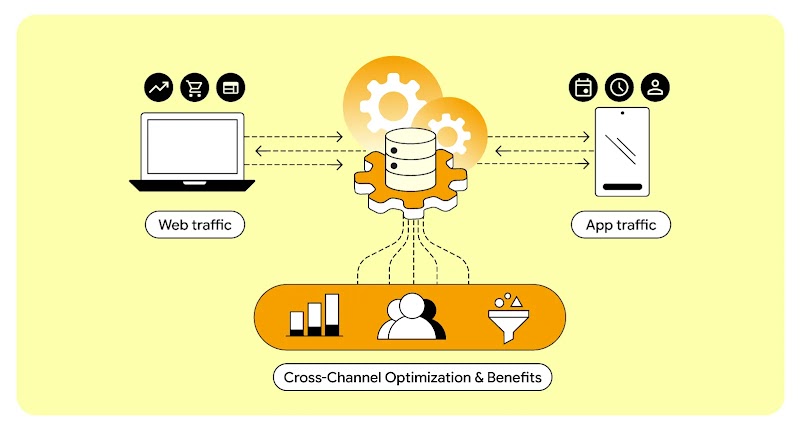
We also implemented deep links to remove friction from the customer journey. Previously, app users clicking on one of our ads were redirected to a standard mobile website login, causing heavy drop-offs.
Now, the deep link instantly verifies if the app is installed. If it is, the link automatically bypasses the mobile browser, launches the app, and routes the user directly to a specific in-app location, such as a promotional page, rather than a generic home screen.
Personalising ads at scale with AI
With our tracking fixed, we used custom and affinity segments within our Demand Gen campaigns to attract users already familiar with trading. For example, we built custom segments around search terms for popular trading platforms.
Personalisation ensured that our messaging felt like a native conversation rather than a generic ad.
To drive deeper engagement across our core markets, including MENA and South Africa, we localised our video ads. Rather than manually producing dozens of individual regional videos, we integrated native-language subtitles directly into our YouTube video assets, automatically aligning the messaging with each viewer’s browser settings.
Here is an example of a video with dynamic voiceover that adapts to the user’s YouTube language settings:
Finally, we tailored our messaging for local impact. In Egypt, for instance, we focused on highlighting relevant local currency and payment options in the creative, as seamless funding is crucial for traders there. We also adapted the visuals to feature local users and delivered the copy in Arabic, ensuring the ads felt natural and relatable.

This extra layer of personalisation ensured that our messaging felt like a native conversation rather than a generic ad.
Tailoring bidding strategies by audience type
The final piece of our strategy was moving away from a “one-size-fits-all” bidding approach. Instead, we aligned different conversion actions with the appropriate audience segment within our Demand Gen campaigns.
For new website visitors, we tailored the campaign toward driving the initial registration. However, if the user was already registered or had previously funded an account, we transitioned to a Maximize Conversion Value strategy — a setting within Demand Gen that tells the AI to stop bidding for cheap clicks and start focusing on key actions, such as deposit allocation.
The results proved our approach was transformative. Between July of last year and February 2026, we achieved a 9.2X increase in revenue generated from new customers and a 2.5X increase in revenue from existing users. Overall, we saw a 40% improvement in return-on-ad-spend (ROAS) across all Demand Gen campaigns.
For marketers looking to shift from volume to value, our journey highlights three critical steps:
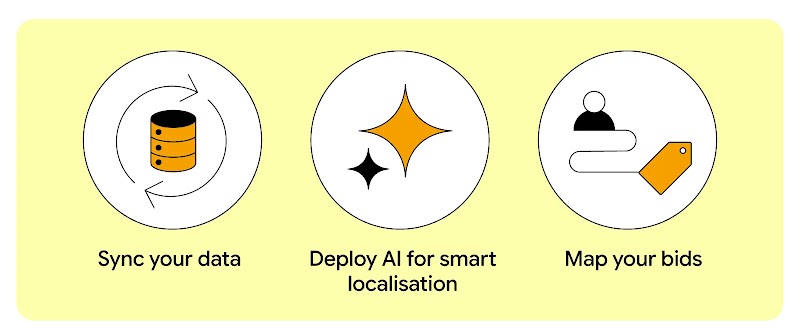
1. Sync your data: Break down the silos between your web and app data to enable cross-channel optimisation.
2. Deploy AI for smart localisation: Scaling internationally doesn’t require inflating creative budgets. Use AI-driven tools to adapt messaging to local languages and cultural nuances seamlessly.
3. Map your bids: Don’t treat every user the same. Optimise for the actions that make the most sense for where that user is in their journey.


Social Module
Share