


 Sign in with Google
Brand is a performance multiplier. Here’s how to prove it to the C-suite
Google partnered with 46 brands and independent measurement partner Analytic Partners to optimize marketing performance. The verdict: Fixating on immediate sales leaves long-term revenue on the table. Here, Megan Danielson, managing director, agency and measurement partnerships at Google, and Tina Moffett, vice president of corporate strategy and development at Analytic Partners, share how marketing leaders can unite brand and performance and prove their value to the CFO.
CMOs are under more pressure than ever from CFOs to prove the value of marketing and media to the bottom line. That pressure might motivate some to focus on short-term results at the expense of brand — a mistake worth millions.
In one study, independent analytics leader Analytic Partners found that 10%–50% of media impact is realized in the long term, well beyond the window most campaign reporting captures.1 That means marketers fixated on today’s gains risk compromising tomorrow’s growth.
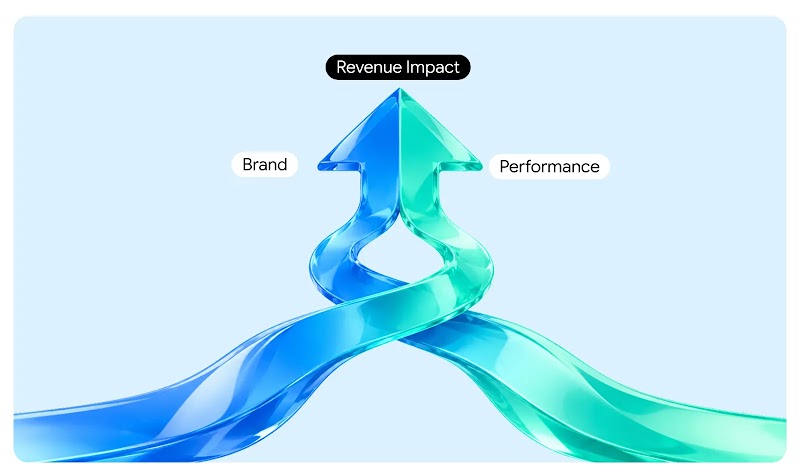
New research provides a stronger incentive to take the long view. Google and Analytic Partners teamed up with 30 advertisers across 46 brands to connect granular campaign data to short- and long-term sales impact — a level of detail aggregate marketing mix models (MMMs) rarely reach. Three lessons stand out: break down silos between brand and performance; use AI to multiply advertising effectiveness; and move from measuring what happened to deciding what to do next.
Brand is a performance engine
Imagine you are a marketer in the travel industry. The goal of your next campaign is hardly limited to selling cruise packages and food tours. You are also helping to inspire prospective vacations years from now, when your customers are finally ready to take you up on your offer.
That’s brand work. From the consumer’s perspective, performance marketing is often most effective once some level of familiarity, relevance, or preference has already been established. Brand-building helps create those associations before a consumer is in-market. When they do enter a buying moment, the brand means that much more to them.
Our joint analysis found that visual storytelling channels like YouTube and connected TV act as dual-mandate assets, driving immediate sales while building the brand associations that pay off later. According to an Analytic Partners MMM meta-analysis in the U.S., on average, YouTube delivered 23% higher return on ad spend (ROAS) than total media.2
Brand and performance work better together. When marketers overindex on short-term performance, they risk focusing too heavily on existing demand without making the same investment in building the brand associations that generate and convert future demand. According to Analytic Partners’ ROI Genome, an integrated brand and performance strategy delivers up to 90% higher ROI than a performance-only strategy.3
Leadership mandate: Erase the divide between brand and performance teams. Replace separate scorecards with one shared planning and performance review, built on a common view of what drives growth and a shared vocabulary. When teams decide together from the same evidence, budget conversations shift from competing for dollars to allocating them where they work hardest.
AI-driven advertising is an effectiveness multiplier
People don’t move through a neat marketing funnel anymore. They’re streaming, scrolling, searching, and shopping across screens all at once. That makes it the job of every marketer to meet them wherever they happen to be.
AI solutions like Demand Gen, which capture engagement and action across Google properties, gives brands the agility to do so. According to an Analytic Partners MMM meta-analysis in the U.S., on average, Demand Gen delivered 53% higher ROAS than brands’ total media investments.4 Whether the goal is to reach the widest audience efficiently or build deeper connections, creating demand before the consumer journey even begins is essential.
That goes for AI-powered campaigns on YouTube too. Turning again to the joint study, according to an Analytic Partners MMM meta-analysis in the U.S., on average, video reach campaigns and video view campaigns delivered 33%5 and 26% higher ROAS,6 respectively, than brands’ total media investments.
This new research goes a step further to demonstrate the compounding impact of one channel’s success on another, maximizing ROI across both. Analytic Partners’ ROI Genome found that 45% of advertising’s impact comes from its ability to boost the ROI of other channels.7
By working in tandem, campaigns that run on different channels serve to enhance the overall effect of your brand story. Marketers must account for how these channels enhance each other through a comprehensive measurement approach or risk losing sight of potential short- and long-term gains.
Leadership mandate: Deploy AI to fluidly meet consumers across surfaces before intent is even formed, and anchor your strategy in unified measurement that values the compounding synergies between channels.
Decisioning is as essential as measurement
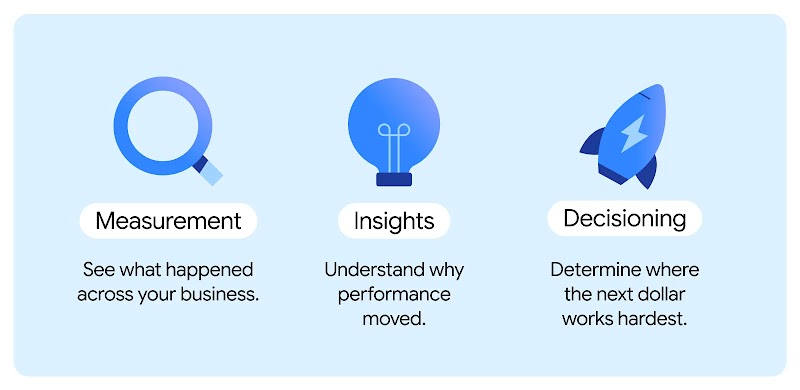
While historical measurement scorecards show you what happened, they fail to guide you on which channel levers to pull and when. To make MMMs actionable, you need granular measurement embedded in scenario-planning tools that evaluate the marginal returns of each dollar over the long term.
Connecting day-to-day channel execution — like creative formats, bidding, and audience mix — to business drivers shows teams why performance moved and where the next dollar works hardest.
“Granular measurement has given us clearer visibility into what drives performance across Google channels,” said Fang Li, senior director, data science at Walgreens. “These insights have helped us make smarter tactical decisions, modernize our measurement approach, and improve results while staying aligned with our broader business and brand objectives.”
Leadership mandate: Layer your measurement to cover the full consumer journey, showing how much of the return arrives in later quarters and what the business would lose if it were to cut spend. Quantify how much each channel lifts the others. Point out where the next dollar will earn the most, not which channel looked best last quarter. Finally, show how you know the numbers are right, because a CFO will trust a range they can test more than a single figure they can’t.
Sustainable growth can’t be achieved one conversion at a time. To prove marketing is the primary driver of business value, leaders must shift their focus from tactical campaign optimization to holistic portfolio management. By embracing a rigorous measurement approach, organizations can stop forcing brand and performance to compete for budget, and start enabling them to optimize one another.



Social Module
Share