





 Sign in with Google
APAC Predictions 2027: Industry leaders weigh in on their marketing predictions for 2027

Editor’s note: To bring each prediction to life, we commissioned original artwork from two APAC digital artists: Shane Tiara, a Jakarta-based visual artist, and Marianne Tan, a digital illustrator from Singapore.
With 2026 nearly behind us, marketers are taking stock of a year that reshaped how people find, compare, and buy, and are turning their attention to 2027.
This was the year AI moved from novelty to habit. People folded AI tools into everyday decisions, from planning a holiday to choosing their next home. The result is a discoverability economy: being found now depends less on a single touchpoint and more on showing up wherever people, and the AI tools they rely on, go looking for answers.
So we asked some of APAC’s top marketing minds what their predictions for 2027 were. How should brands show up in moments that matter, and what marketing moves will set the winners apart?
Here’s what they had to say:
Prediction by Aimee Buchanan
CEO, WPP Media ANZ
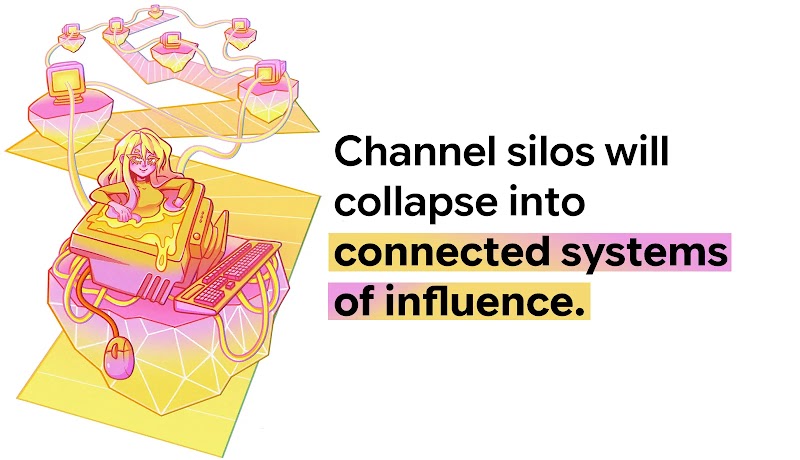
We’re moving into an era where creators influence consumers, communities shape culture, trusted journalism influences both people and AI, and AI systems increasingly determine what gets discovered, recommended, and purchased.
What connects all of that is a system of influence.
The brands that win won’t necessarily be the ones spending the most in any single channel. They’ll be the ones building connected influence across creators, fandoms, trusted media, AI visibility, and commerce, because every signal now influences the next.
Brands won’t just be competing for human attention. They’ll increasingly be competing to be chosen by both people and AI-led machines and algorithms. And marketers will need to build connected systems that influence both.
Prediction by Gayatri Yadav
Group CMO and EVP of Strategic Initiatives, Chairman’s Office, Reliance Industries Limited
For decades, marketing sat downstream of the business. Marketers were told what to sell, measured on campaigns, and were chasing reach. I think that model breaks in 2027, but not just because AI gives marketers better growth signals. Marketing now has the clearest view in the business of what customers want, and the clearest responsibility for protecting what they’ve entrusted us with.
As marketers, we’re sitting on the kind of first-party signal that can genuinely shape the next phase of growth. But that signal only stays valuable if customers keep believing we’ll handle it responsibly. My bet: the winning formula in 2027 is AI handling the scale, humans handling the restraint, and trust is what you get when you get that balance right. That’s the job now. The CMOs who succeed won’t choose between growing the business and protecting the brand; they’ll prove those were always the same job.
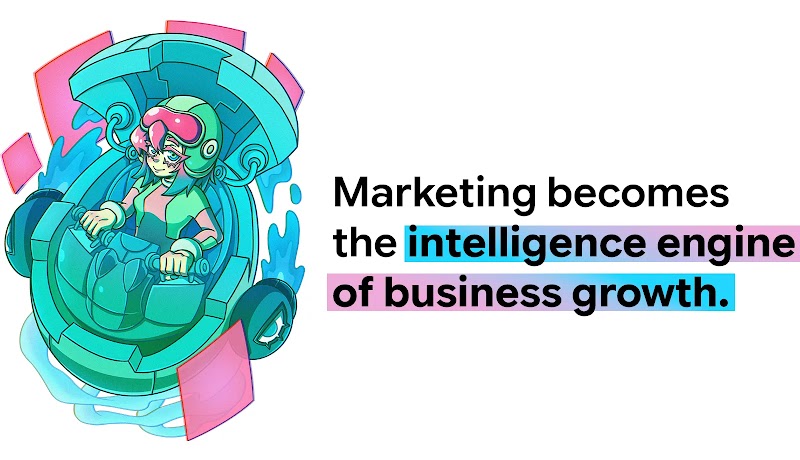
By 2027, marketing will cease to be a function. It will become the intelligence engine of business growth and the custodian of trust. Neither works without the other.
Prediction by Mim Haysom
CMO/EGM Brand & Customer Experience, Suncorp Group
We are seeing a shift from an attention economy to a discoverability economy where customers will increasingly rely on AI to make decisions on their behalf.
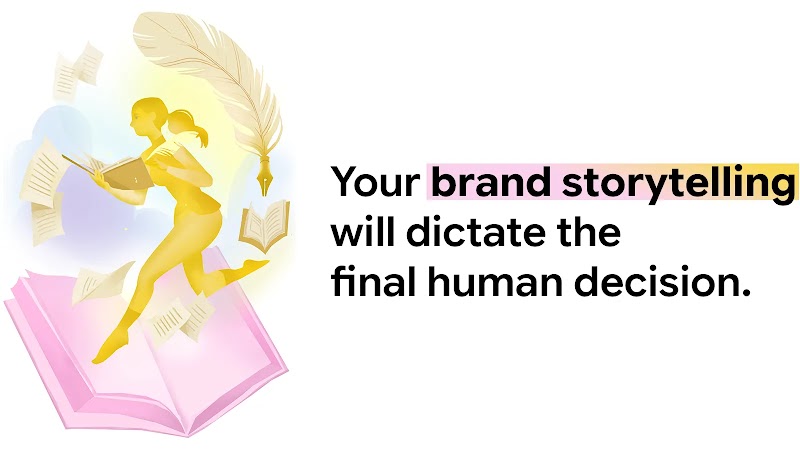
In that world, trust, brand strength, and customer experience become even more important. Marketers need to think about how they tell their brand story differently and embed it in every single customer interaction, every engagement, and every touchpoint where the brand can show up with the customer.
The organisations that connect creativity, customer obsession, and commercial outcomes will create disproportionate growth because they will be the brands both people and machines choose first.
Prediction by José Miranda
CMO, BYD (Americas, Europe, Middle East, and Africa)
In 2027, machines will create, target, and optimise most marketing, faster and cheaper than any human team. What they cannot do is care.
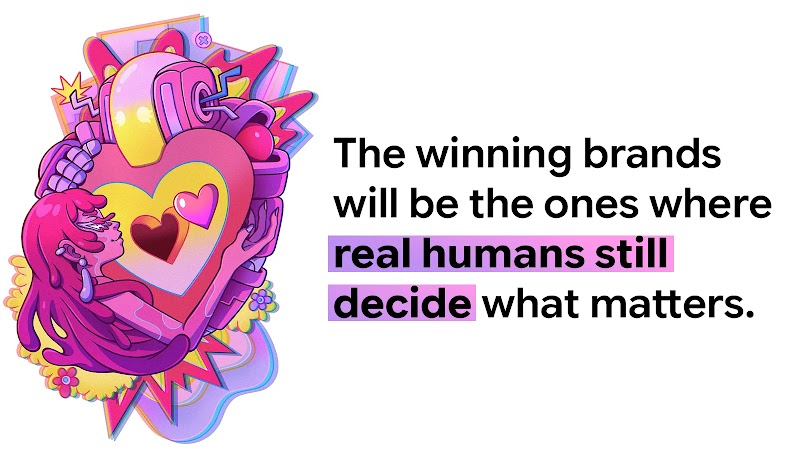
The brands that win will be the ones where real people still decide what matters, stand behind every claim, and show up in person when it counts. Automation will make marketing efficient, but only humans will make it trusted.
Prediction by Vikas Chawla
Co-Founder, Social Beat
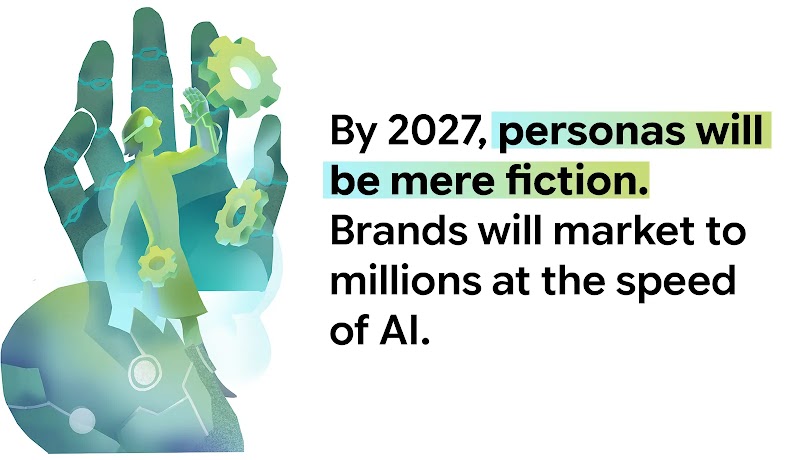
For decades, brands have planned for specific personas to simplify targeting because breaking them down further cost too much. AI now lets brands respond to signals as they happen, rather than to a fixed profile drawn up months earlier. By 2027, personas are fiction. Brands will market to millions at the speed of AI.
Your real competitor is the AI on your customer’s phone. It answers in seconds. It remembers context. It speaks to one person. Any brand slower than a chatbot becomes invisible, whether it sells loans, cars, or cooking oil.
Take a market like India, with its multitude of languages, quick-commerce players, CTV, and nuances that vary from metros to Tier 2 and Tier 3 towns. Personalisation at that scale was always out of budget. AI brings it within reach.
Marketers should build creative, media, and service as modular parts, and let AI put them together for each person. The core question will shift from “Which audience is this campaign for?” to “How fast can we adapt and build creative at the speed of culture?”
Prediction by Lex Bradshaw-Zanger
Chief Business Capabilities & Innovation Officer, L’Oréal SAPMENA
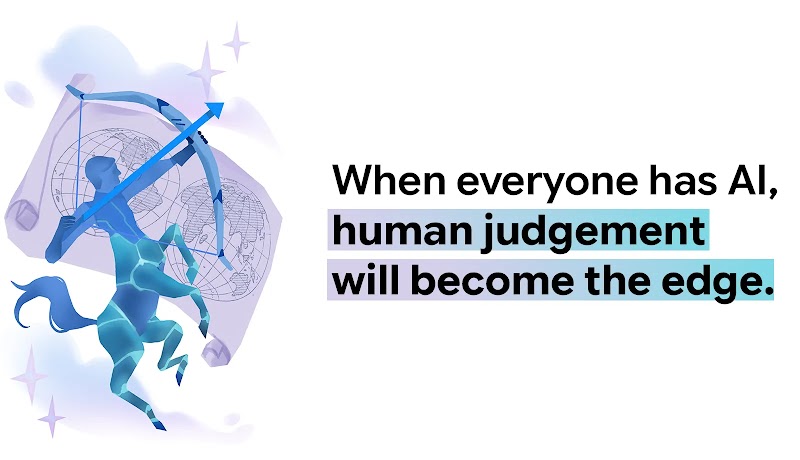
When everyone has access to the same AI tools, the baseline rises for all. AI will lift the bottom, raising the floor of quality. It will also create a vanilla layer: a lot of competent, similar-looking work.
To use the technology and reinvent our processes, marketers need two capabilities that are often missing today. First, a very clear view of what we are trying to do - strategy and creativity. Second, a good understanding of the technology and the technological ecosystems around us, so we can harness it.
As in every revolution, our challenges are not really about data, technology, hardware, or software. They are about people’s evolution. Technology is evolving light years faster than human beings. The winners will be people with true marketing capability, a stretching vision, and real creativity, who also leverage the technology.
Those humans will jump ahead, stand out from the crowd, and win tomorrow.
Prediction by Jakii Chu
SVP Growth Marketing, Klook
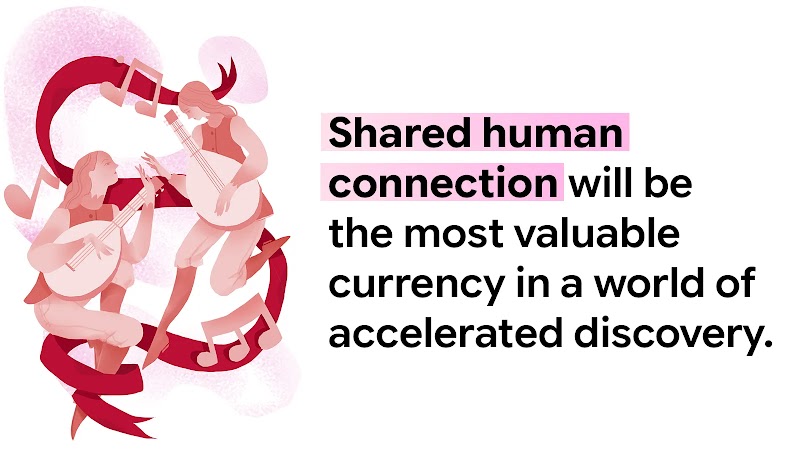
As technology makes discovery faster and more personalised, shared experiences will become even more valuable. Dating is a good example. Apps made matching more efficient, but people still value the connection, spontaneity, and experience that happen beyond the match itself.
That’s how we think about travel too. We pair customer data with our network of merchants and Kreators, using technology to make choices more relevant and experiences easier to discover, while ultimately creating more opportunities for connection, surprise, and shared experiences.
The brands that stand out won’t just connect people to products. They’ll create more reasons for people to connect with each other.
Prediction by Varun Duggirala
Co-Founder and CCO, EMoMee
We’ve spent years measuring what people watch, click, and engage with. Speed and scale only matter if they change something. In 2027, the brands and creators that matter will be those who can demonstrate what people actually do differently because of them.
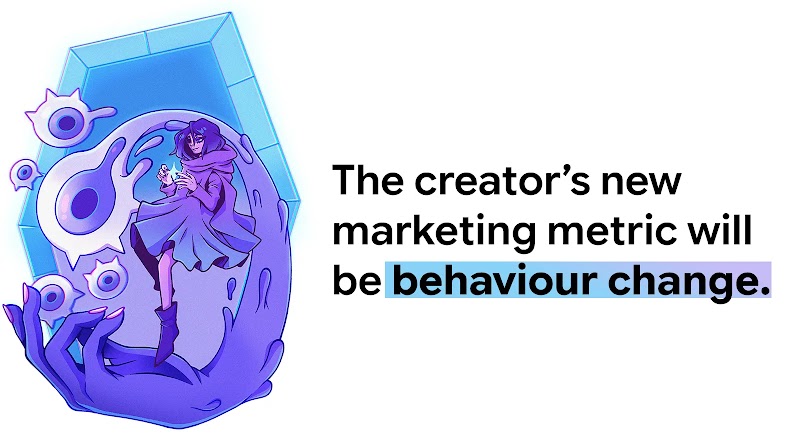
The next big marketing metric will no longer be attention, but behaviour change. I think we’ll see a more meaningful distinction between creators and brands that simply attract attention and those that genuinely influence decisions, shape habits, and change behaviour.
Attention is the starting point. Behaviour change is the outcome.
Social Module
Share