


 Sign in with Google
Pearl CEO: Why better AI makes human expertise more valuable

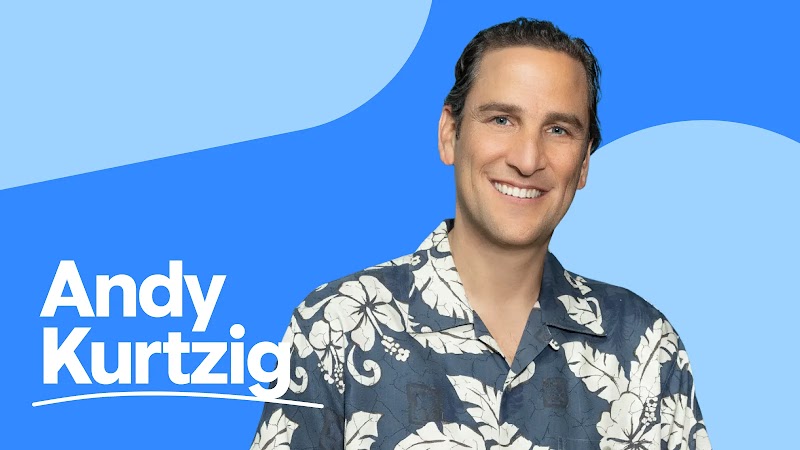
AI can automate transactions at scale. But when a person faces a high-stakes decision, speed alone doesn’t close the deal. Trust does.
Andy Kurtzig, founder and CEO of Pearl, the company behind JustAnswer, has spent nearly 15 years combining artificial and human intelligence. In professional services, he believes accountable professional judgment must be part of the experience, not an afterthought.
By placing credentialed human experts in the loop, Pearl is showing how human judgment can accelerate conversion. We recently spoke with Kurtzig about this approach.
How does Pearl use AI in its products, and can you explain your ‘hybrid intelligence’ approach?
Andy Kurtzig: Pearl offers Experts-as-a-Service by empowering more than 20,000 credentialed professionals with our AI-powered platform. Businesses can bring our verified experts into their own AI-powered customer experiences without building an expert network themselves.
Human expertise is the core of Pearl. We automate the work around it, so customers get real expertise quickly and affordably. The future is hybrid intelligence — AI plus humans together.
In high-stakes fields like medicine and law, we believe a real, verified, licensed professional must be part of the service. “Consult a professional” shouldn’t just be a disclaimer. It should be built into the experience.
Pearl began experimenting with AI nearly 15 years ago. What have you learned that’s serving you now?
Kurtzig: We were really early, just experimenting to figure out what customers actually wanted. And we learned fast that, in professional services, there’s a lot only humans can do. So when the modern version of AI arrived a few years ago, we knew exactly what to do.
I like to think of it kind of like an Iron Man suit. Tony Stark, the fictional character, is inside the suit making the calls, but he’s got an incredible amount of technology around him. Our job is to make this incredible Iron Man suit for the professionals inside. In our case, that includes a suite of agents to take care of administration, billing, customer service, and more, so that these professionals can focus on their expertise, which is their most valuable asset.
AI offers speed, accessibility, and scale. Humans provide judgment, nuance, and accountability. Here’s the counterintuitive part: Human expertise becomes more valuable as AI gets better, not less.
AI agents are handling discovery and comparison, yet complex purchases still stall on doubt. How do you see AI agents changing how brands show up for customers in the next few years?
Kurtzig: AI removes friction, and human expertise removes doubt. For high-consequence decisions, we believe you need both.
We have an e-commerce marketplace partner where our human experts answer specialized product questions to help shoppers choose the right product. When a human expert steps in, we see a 30% conversion rate. Where fit matters or the situation is complicated, human expertise can help customers buy with confidence.
Your marketing organization scaled AI Max for Search campaigns to 50% adoption in under a year. How do you build a culture that tests at that velocity?
Kurtzig: It’s in our DNA to test and learn. We’ve never met a beta we didn’t like. We’ll try everything. When we see something working, we scale it as fast as we can. Our Google team has been great at getting us on the cutting edge and helping us design tests carefully, because it’s easy to set up a test that tells you what you want to hear instead of the truth. The data speaks. Our customers speak.
Marketing leaders often struggle to secure budget for foundational data infrastructure. How should a CMO make the business case for data maturity?
Kurtzig: We realized early that the data doesn’t become good because of AI. The AI becomes good because of the data. It puts your data on steroids. If the data’s wrong, you get bad outcomes fast. If it’s right, you get good outcomes fast.
It’s hard, it’s expensive, and something’s always breaking, so you have to be ready to fix it fast. It’s not set and forget. It’s a constant effort.
Most organizations still view AI as an efficiency tool. Why do you believe treating AI purely as cost reduction is a strategic error?
Kurtzig: Don’t bolt AI onto the company you already have. Start changing how the company works. We have more than 1,000 agents in production and a custom tool called AgentHub that gets employees building and using them. We’re giving our people and professionals an AI-powered support team.
The goal isn’t to remove people. It’s to remove the work that keeps them from doing what they’re uniquely good at. Professionals have earned more than $500 million on our platforms. We want AI to help them serve more people and earn more, while making expertise more affordable for customers.
Using AI just to cut costs and people is like using a telescope to read the newspaper. It might work, but it’s incredibly shortsighted. AI is a tool for growth. You can cut costs and save a few bucks, or you can 10X the capability of your team and your company.
Social Module
Share