





 Sign in with Google
In the high-stakes world of biotechnology, Genentech is a household name for tackling the world’s most complex diseases through relentless scientific inquiry. But inside the company’s walls, a different kind of breakthrough is unfolding, one that applies that same clinical rigor to the way the brand connects with patients and healthcare providers.
We sat down with the architects behind this transformation: Genentech’s Justin Molavi, senior director of measurement and optimization business products; Marcel Minassian, head of media and innovation; and Srikar Bongoni, head of performance marketing. Despite approaching the challenge from different perspectives, the trio’s goal is singular: move beyond gut feelings and transform marketing into a data-driven laboratory.
“Innovation is in our DNA, whether we’re looking at a molecular structure or a media plan,” Minassian says. “We wanted to move from ‘we think this works’ to ‘we know this works.’” Here’s how they did it.
A white-box approach
The biopharmaceutical landscape presents unique measurement hurdles. With sales cycles that can span months for chronic treatments or mere days for acute flu medications, traditional, off-the-shelf models often fail to capture the nuance of the patient journey. “We needed a solution that could account for the carryover effects of our ads and high-stakes decision-making without being a black box of algorithms,” explains Molavi.
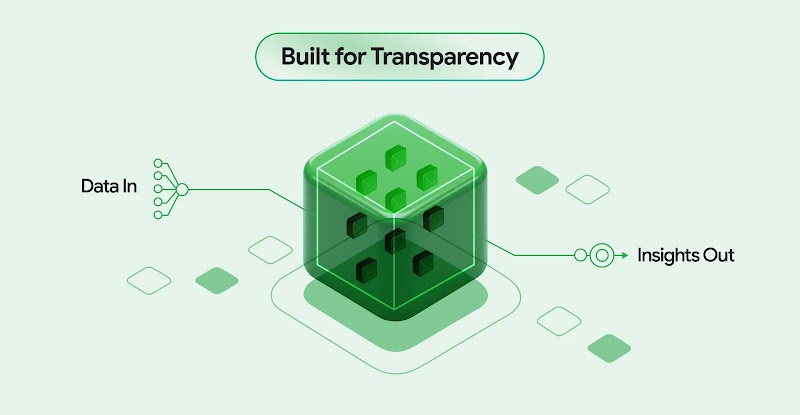
Enter Meridian, Google’s open-source marketing mix model (MMM). By adopting an open-source framework, Molavi and team were able to build a custom tech stack that prioritized transparency.
We needed a solution that could account for the carryover effects of our ads without being a black box of algorithms.
Leveraging Bayesian causal methodology, they integrated privacy-safe performance signals, historical trends, and the seasoned intuition of their marketing experts. “Integrating Meridian into our technology stack wasn’t a solo endeavor,” says Molavi. “The partnership with Google’s data science and gTech teams was critical.1 Over multiple sessions, we worked side by side to ensure the model was not only technically sound but deeply customized to the nuances of our data environment.” This wasn’t just a technical upgrade. It was a shift toward a white-box approach, in which every input was visible and every output was actionable.
Aligning education with unmet needs
One of the most profound shifts driven by this new precision was the optimization of resource allocation across the portfolio. Historically, Genentech’s approach focused on maintaining high levels of marketing support for established treatments with the broadest patient reach. While this appeared intuitive, data-driven insights suggested a more nuanced path.
Using Meridian, Bongoni says the team identified that established therapeutic areas did not always represent the highest potential for incremental patient impact. By consulting their models, the team discovered untapped opportunities where increased educational outreach could better address unmet needs. This insight allowed Genentech to rebalance investments across its treatment portfolio, ensuring that resources were steered toward increasing patient outcomes rather than simply reinforcing existing reach.
Diversifying the media mix
This data-backed confidence empowered the team to reexamine traditional industry benchmarks regarding channel dominance. Historically, industry outreach relied heavily on traditional broad-reach platforms to connect with audiences.
The MMM provided the evidence we needed to confirm that a diversified strategy drives meaningful results.
However, Genentech’s models provided a more comprehensive view of how a diversified media mix effectively reaches relevant audiences. As Minassian explains, “In an industry where certain channels have historically seen outsized investment, the data allowed us to move past established biases. We had internal hypotheses about the effectiveness of a digital, multichannel approach, and the MMM provided the evidence we needed to confirm that a diversified strategy drives meaningful results.”

By validating the directional impact of a broader range of touchpoints, Genentech optimized its budget allocations across the entire media ecosystem. This shift enhanced organizational agility, enabling the team to reach patients across their unique journeys with far greater precision and efficiency.
Measurement as a growth engine
The success of the data-driven marketing lab has triggered a cultural transformation within Genentech. What began as a project to prove media ROI has evolved into a strategic resource for the entire company. After two years, teams and senior leaders that were once hesitant about the methodology are no longer just running ads. They are embracing Meridian to develop road maps for capital investments. Here’s why their approach is working:
- Centralized strategy. Marketing teams are aligned on a consistent measurement approach to evaluate high-level media investments.
- Shared intelligence. A unified measurement platform ensures that an insight for one brand becomes an advantage for the whole company.
- Compound interest on data. As more teams contribute data and signals, the model becomes more accurate, creating a rising tide that lifts all performance metrics.
For Genentech, the integration of Meridian represents a new era of accountability and transparency. Treating every campaign as a test and every result as a lesson ensures that innovations in the lab are matched by innovations in marketing, ultimately helping the company better reach the patients who need them most.

Social Module
Share