





 Sign in with Google
 For 20 years, digital marketing measurement was a relatively straightforward process of connecting dots. We could follow a user’s journey, attribute a conversion to a specific ad, and optimise accordingly.
Today’s landscape is fundamentally different. People move fluidly between devices, and privacy regulations rightly limit the ability to track individuals. At the same time, AI tools like AI Max for Search have become incredibly effective at finding customers by operating on a vast array of signals that are largely invisible to the advertiser.
These signals could include contextual nuances like Monday morning browsing vs. Sunday evening, or cross-signal patterns like an app install, a YouTube view, or a search query.
The result is a paradox. Our ads are working better than ever, but when marketers leave more to AI, they need to dig deeper to understand the specific mechanics of why campaigns are working.
The modern measurement toolkit
In order to be able to understand the why, successful advertisers are building a robust measurement framework around it.
Our work with leading brands shows this framework rests on three essential pillars:
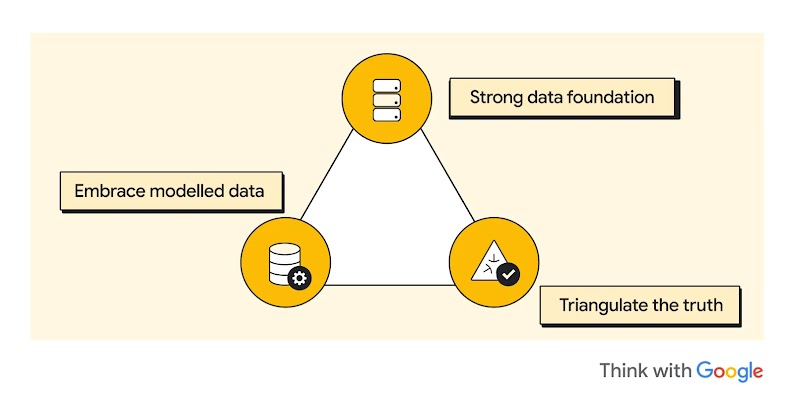
- A strong data foundation: Start with clean, well-organised first-party data and secure your data strength by implementing Google tag gateway and Enhanced Conversions. Upload your offline data via Google’s Data Manager.
- Embracing modelled data: In a world with fewer direct signals, modelling is non-negotiable. Advanced methods like Marketing Mix Modelling (MMM) allow us to understand the total impact of our marketing, accounting for external factors like seasonality.
- Triangulating the truth: No single tool tells the whole story. The most effective teams use multiple data sources — combining insights from attribution, MMM, and incrementality experiments — to get a complete picture.
The data detective: Why measurement requires a strategic owner
However, having the right tools in place is only half the formula. As we move away from simple click-counting toward a world of modelled data and the triangulation of multiple truths, measurement has become incredibly complex.
It requires interpretation.
Enter the data detective. Their job isn’t to run the campaigns, but to interpret the data behind their performance.
“Having a dedicated measurement lead has been a real game-changer for us,” says Oleh Nesterenko, CMO of Swedish audiobook subscription service Storytel. “It helped us move away from internal debates about whose data is ‘right’ and toward a shared, disciplined understanding of what actually drives growth.”
As well as being a full-time role, it should also be a neutral one. If the measurement function reports directly to the media team, it can feel like asking a student to grade their own homework. By positioning the role as a peer to the Head of Media, you create a system of checks and balances that fosters a culture of truth.
Nesterenko agrees: “You can challenge the data and analyse deeper, but the moment subjectivity starts winning over facts, trust is lost — and without trust, marketing cannot credibly own investment decisions.”
If your organisation lacks a measurement owner, look internally first. Find someone with a natural curiosity and a passion for the “why” behind the “what”.
Task them with creating a 24-month roadmap. Their first priority might be shoring up your data foundation or running a single incrementality test. Once this role starts delivering clear, actionable stories, it will naturally grow in influence.
The 5 Ps of measurement excellence
To empower this data detective, organisations must build the structural environment where they can actually succeed.
At Google, we use the “5 Ps framework” to help leaders transition from tracking KPIs to building a permanent engine for marketing effectiveness. These five areas ensure that measurement isn’t a one-off project, but a core business discipline:
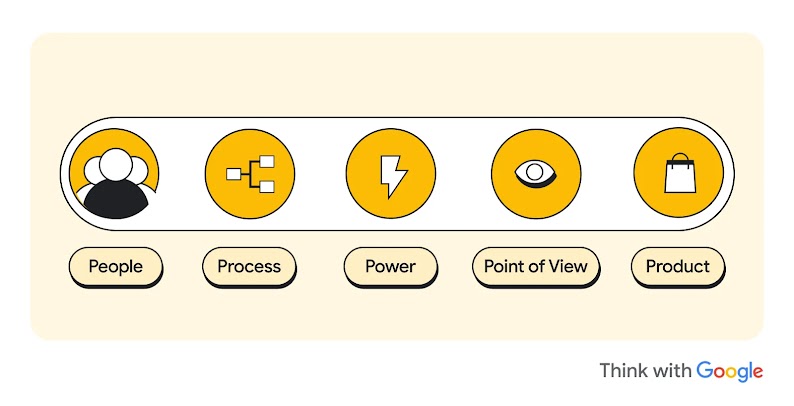
- People: Appoint a data detective. While you can outsource technical modelling, you cannot outsource the strategic roadmap or the ownership of the truth.
- Process: Make measurement a routine. This means setting hypotheses before a campaign launches and holding quarterly reviews to turn insights into budget optimisations.
- Power: Give the role authority. The measurement owner must have the mandate to enforce a single KPI framework that both the CMO and CFO agree upon.
- Point of View: Establish a shared playbook. This ensures that everyone in the organisation is following the same rules of evidence and avoiding biased decision-making.
- Product: Ensure you have the right technical stack — from a clean data foundation to advanced tools like incrementality testing and MMM.
By defining these five areas, the 5 Ps transform measurement from a back-office reporting function into a strategic asset that guides every Euro spent. In fact, according to Deloitte, measurement front-runners are 44% more likely to beat revenue goals compared to low-effectiveness companies.
Scalable excellence: From H&M to Storytel
The idea of a new strategic lead might seem daunting, especially since many marketing teams are small. But you don’t need a massive budget to start.
“Our journey at H&M shows that you don’t need a large department to start valuing effectiveness. You need a single point of accountability,” says Tomas Alonso, marketing head controller at H&M. “What began five years ago as a part-time focus for one individual exploring the potential of MMMs, has evolved into global marketing effectiveness teams.”
This shift was not simply about adding headcount for H&M. “It was about changing our mindset from spending budgets to investing for growth,” continues Alonso. “In a world that is moving faster than ever, understanding your customers and knowing where and how to reach them is what separates relevance from simply adding to the noise.”
Similarly, Storytel maintains a dedicated measurement owner despite having a smaller team. “For a lean team, every Euro has to work harder,” adds Nesterenko. “Today, we don’t just run campaigns; we run a disciplined learning agenda that directly informs where our next investment should go.”
In an age defined by AI, the most important investment you can make isn’t in a smarter algorithm, but in the human talent that can translate its output into a clear story of business growth — ensuring that even when the signals go dark, your path to ROI remains perfectly clear.


Social Module
Share