





 Sign in with Google
While sports broadcasts only last a few hours, today’s fan experience never powers down. Sports fandom has evolved beyond a series of scheduled events into an always-on, 24/7 culture. The modern fan craves authenticity and seeks content before, during, and long after the season has ended. In fact, more than 40 billion hours of sports content is consumed annually on YouTube globally, fueled by a new class of creators who have turned a single game day into a continuous cycle of pregame hype and postgame commentary.
Leading this evolution are creators who have redefined the boundaries of access: The Woodhalls, who document the raw grind of their professional journeys as elite athletes; Matthew Meagher, known as MMG, who brings an on-the-ground perspective to the NFL’s biggest moments; and Jesser, who produces the high-energy basketball content that has become essential viewing for a new generation.
Their work represents three opportunities for marketers to move beyond the traditional ad break by embracing raw authenticity, capturing intentional living-room audiences, and building the kind of durable partnerships once reserved for major media networks.
Prioritizing raw over refined
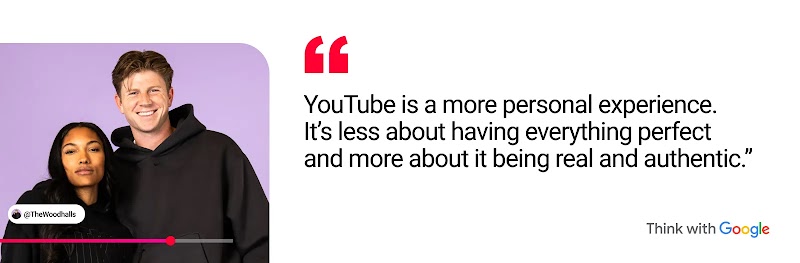
Insight into the lives of the world’s best athletes are found on the training ground as much as at the studio analyst’s desk. Take Hunter and Tara Woodhall, who have built a massive following through vlogs, by documenting their journeys as elite athletes. Whether they are sharing the high-stakes start of their Olympic season, the behind-the-scenes reality of the World Championships, or a peek at how they train, the Woodhalls provide a look at the relentless work required to stay at the top.
Hunter Woodhall, a three-time Paralympic medalist, says the demand for intimacy has outpaced traditional production. “YouTube is a more personal experience. It’s less about having everything perfect and more about it being real and authentic.” This isn’t just a creative preference; it’s a requirement for brand conversion. When the Woodhalls attempted to increase the production value of their videos, their audience pushed back, craving unvarnished reality instead. This demand for authenticity creates a high-impact opportunity for brands to move beyond transactional ads and into integrated storytelling.
The Woodhalls weave sponsors into long-form vlogs that blend elite training with life at home. For instance, they paired a behind-the-scenes look at their Nike partnership with raw workout footage showing their gear in action. As Tara Davis-Woodhall notes, “We want partners that help us get closer to our goals. Our audience knows when we’re faking it.” By highlighting the product’s functional role in their regimen, they demonstrate how the brand supports their performance, rather than simply telling the audience to buy something.
The living room is the new front row

There has been a significant shift in recent years as sports content has migrated to the TV screen, with living-room watch time up 45% year over year. For MMG, who specializes in Madden and NFL culture, the fact that over 50% of his audience now watches via a TV has fundamentally slowed his creative pacing. “Long-form content has essentially turned into a recurring TV show,” he says. “It allows me to calm down, think more deeply, and speak clearly to a more attentive audience.” This approach is most evident during the league’s biggest moments; whether he is taking fans to the Super Bowl or timing his “Wheel of MUT” series to coincide with the NFL postseason, he transforms his channel into an essential, digital-first broadcast for the NFL season.
For marketers, this intentionality is the ultimate signal of receptive attention. Unlike the high-speed interruptions of mobile feeds, the living room creates appointment-viewing moments outside the sports seasons where the audience is fully engaged with a story.
Long-term partners like SeatGeek have flourished here by moving away from rigid scripts toward organic storytelling that respects the viewer’s focus. MMG credits this success to a less-is-more brief. “The best thing they did was keep the brief to half a page. They wanted it in my own words, and it was such a breath of fresh air.” In this environment, brands succeed by trusting the creator to guide the story so the partnership feels like a natural part of the show. The result? MMG says his brand partnership videos on YouTube are some of the best converters for SeatGeek.
From talent to media network
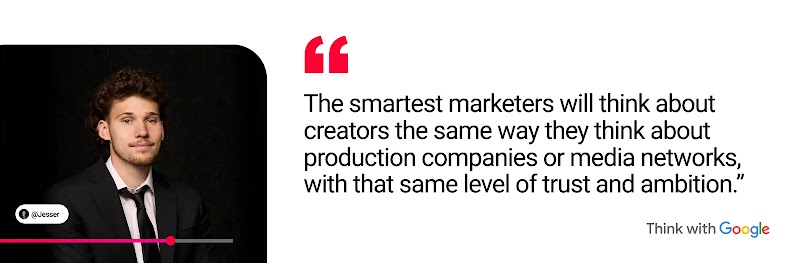
During cultural milestones like March Madness, Jesser, a go-to creator for basketball fans who love high-energy challenges and real-life versions of their favorite hoops moments, moves beyond simple commentary to create high-stakes entertainment franchises. By partnering with brands like State Farm and Puma, he turns the tournament into a series of interactive challenges and mini-hoop tournaments that generate millions of views, often rivaling the engagement of official broadcasts.
This success is driven by the fact that creators have matured into durable media brands, functioning with the business logic of professional agencies. Jesser has scaled his Bucket Squad brand into a media empire that includes dedicated producers and product managers who treat video production as a science.
“The smartest marketers will think about creators the same way they think about production companies or media networks, with that same level of trust and ambition,” Jesser says. This shift makes the old Hollywood approach of simply slapping a logo on a video obsolete. The most effective partnerships are built on creative freedom. By treating creators as media networks and executive producers, marketers move beyond transactional, one-off posts toward collaborative storytelling that respects the viewer’s focus and builds a genuine connection with the audience.
Investing in the future of culture
Today’s sports creators manage expansive universes that vary from vlogs and challenges to long-form explainers and episodic content. For brands, this evolution enables them to move beyond the ad slot and into the heart of the conversation.
To bridge the gap between interruption and connection, the strategy is clear. Prioritize the creator’s voice as the primary vehicle for authenticity, optimize for the intentionality of the living room, and build durable partnerships with creators, treating them as you would a traditional network. As the physical and digital boundaries of the stadium continue to dissolve, the brands that win won’t just be sponsoring the game. Instead, they’ll be a meaningful part of the shows fans actually choose to watch.
See how other industry leaders like The Home Depot and Gillette Venus are already moving from the sidelines into the heart of the action with content creator marketing.
Social Module
Share