





 Sign in with Google

William Hale is the founder of PickandMix.com, a Cheshire-based sweet shop that has transitioned into a fast-growing online brand. The business ships thousands of orders every month and is gearing up for global expansion, all powered by digital innovation.
Two years ago, my role looked very different. Every day began with a deep dive into the mechanics of our ad campaigns: adjusting keywords, tweaking bids, and juggling budgets to keep performance on track.
As the founder of PickandMix.com, I wear almost every hat: tech, finance, operations, and marketing. And as a team of only three people, time quickly became our most valuable — and most limited — resource. The hours spent managing campaigns pulled me away from the bigger picture: improving our website, keeping pace with trends, and enhancing the customer experience.
Over time, it became clear that if we wanted to scale, we had to work differently.
The daily grind: Moving beyond manual campaign management
Our challenge wasn’t just the time commitment — it was the impact it could have on the business. In a market driven by impulse buys, manual campaign management felt like a constant battle.
To stay on top of performance, we’d review the previous week’s data only to find that certain products had overspent, throwing everything else off balance. While we wanted to set higher revenue targets and reach full warehouse capacity, it felt risky. Increasing budgets on manual campaigns often pushed up our cost per conversion, counteracting the consistency we needed to scale with confidence.
We were stuck in a classic dilemma: the very tasks helping us drive performance were the same ones holding us back from the next stage of growth.
A strategic shift: How automation unlocked time for innovation
That’s when we decided to test AI-driven performance ads. When I first heard about Performance Max, I was intrigued, but sceptical. The idea that automated campaigns could outperform carefully managed manual ones felt almost too good to be true. Still, given the pressure we were under, it felt like the right moment to experiment.
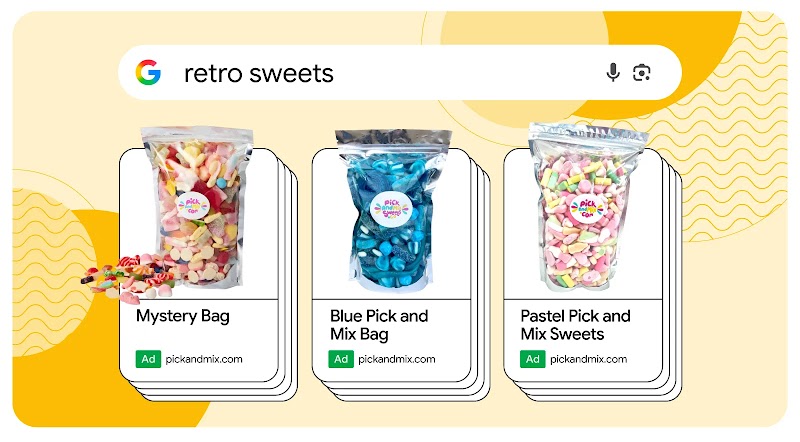
We launched three AI-powered Performance Max campaigns alongside our Search campaign. To support this shift, we also added the Google for WooCommerce extension, automatically syncing our product data to provide richer, real-time inputs for optimisation.
Almost immediately, this shift changed how we worked. Instead of manually writing every headline and description, Performance Max began suggesting creative assets based on our website content, performance signals, and the wider competitive landscape. It allowed us to build higher-quality ads at a faster pace — and connect with customers at the moments they were most likely to make impulse purchases.
Saving time to serve up more sweets
With less time spent on daily campaign management, we could refocus on what mattered most: improving the customer experience. That shift freed up the team to start experimenting with small machine learning features on the website, designed to make shopping feel more intuitive and relevant.
For example, the algorithm could help recommend sweets based on what a customer has already added to their bag. In practice, if someone selects several Haribo products, it can suggest the most likely pairing next. These improvements didn’t just enhance the user journey — they created a powerful feedback loop.
Those same insights then fed back into our marketing. Data on top-performing products were passed directly into our Google Ads campaigns through custom labels in our Merchant Center feeds, to help the AI make even smarter decisions over time.
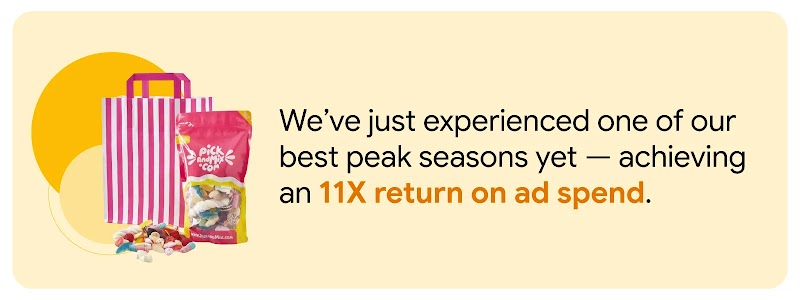
The results have been transformative. Overall, we’ve driven a nearly eight-fold uplift in average ROAS, a 10X increase in daily website traffic, and a 24X increase in revenue — all while spending significantly less time on day-to-day optimisation. Plus, we’ve just experienced one of our best Christmases yet — achieving an 11X return on ad spend during the peak season.
Levelling up from operators to orchestrators
With automation handling the day-to-day optimisation, our role as marketers has fundamentally changed. Rather than obsessing over individual keywords, we can now focus on the levers that drive the greatest impact. We’ve moved from being operators – managing settings and budgets – to orchestrators, guiding AI to perform at its best.
More of our time is now spent on curating stronger product feeds and developing higher-performing creative assets, and ensuring our website content taps into customer intent. It also means we can trust our ads to respond to demand without constant manual intervention, using flexible, demand-led budgets with ROAS targeting.
As a performance marketing team, we’re now able to expand our focus beyond pure efficiency plays. With AI more efficiently managing the tasks that once drained our time, we can focus our attention on activating rich demand signals uncovered with AI and embed those insights into a more robust, informed marketing plan.
Two years ago, I was buried in campaign settings – now, I check performance once a week. That level of stability has given us the confidence to increase budgets and stock levels, knowing our campaigns can now scale alongside the business.
By automating ads optimisation, we can focus on driving the next stage of growth – for us, that’s advancing our strategy, investing in creative thinking, and delivering an even sweeter customer experience.
Social Module
Share