





 Sign in with Google
Mark Ritson is a global brand consultant, columnist, and a marketing professor with over two decades of experience. He’s known for his no-nonsense, research-driven approach to marketing strategy and is the founder of the MiniMBA in Marketing.
It started about a decade ago with a simple LinkedIn post.
I was frustrated by the endless, binary tug-of-war between using traditional or digital media. So, I pointed out a pattern I’d seen in almost every piece of research: If you combine a bit of traditional with a bit of digital, you invariably get a better result than choosing just one.
A marketer commented on the post, saying, “This will henceforth be known as the start of the ‘bothism’ movement”.
I thought, “Actually, that’s brilliant!”. Once the word existed, it became a reality that explained everything I was seeing in the industry.
What is ‘bothism’?
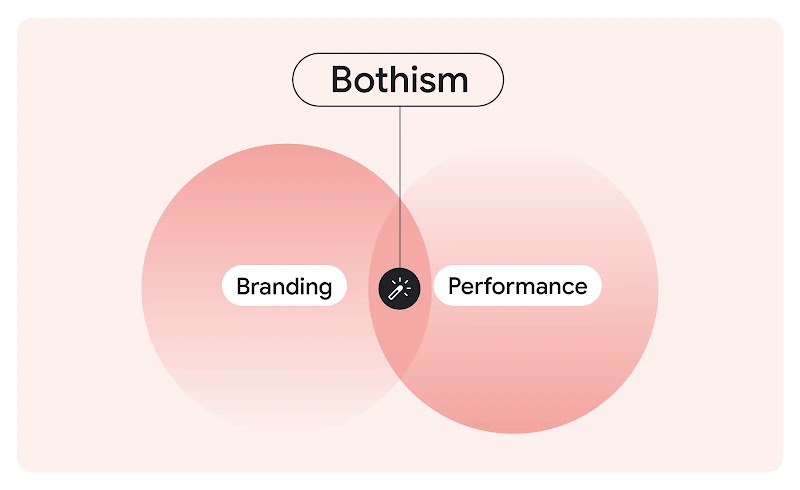
I define bothism as the rare capacity to not only see the value of both sides of a marketing story, but to actively consider and co-opt them into any subsequent marketing endeavour in an appropriate mix.
It’s purposefully vague. It’s about resisting the urge to be “team brand” or “team performance”, instead recognising that these aren’t opposing tribes — they are complementary forces.
Crucially, bothism isn’t about a mandatory 50/50 split. It’s about finding the right balance for your specific challenge.
Marketing’s false choices
Take “distinctiveness” vs. “differentiation”. For years, the marketing debate has been vociferous, with some claiming distinctiveness (authentically looking like yourself) has replaced differentiation (unique associations).
But why choose? You want your brand to come to mind first, and you want it to have the associations that secure the purchase.
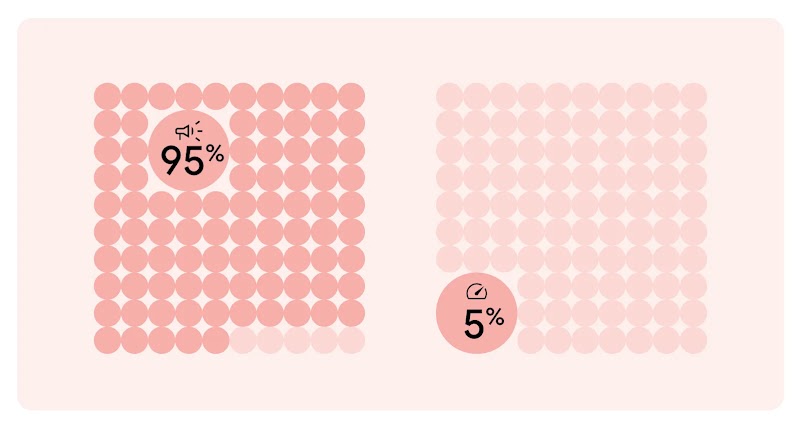
We see it again in the 95/5 rule. This states that, at any given time, only 5% of a target audience is “in-market” (ready to buy right now). The other 95% are “out-of-market” and won’t purchase for months or even years.
You need brand building to predispose the 95% of the market not currently buying, and you need performance marketing to convert the 5% who are.
And the 95/5 rule isn’t just a fun statistic; it’s a warning against bottom-of-the-funnel obsession. Most marketers get pulled toward performance because of the immediate ROI. But unless the world’s going to end next Tuesday, you must commit to both.
Long-term brand building actually makes your short-term performance more efficient. It’s not a zero-sum game; it’s a virtuous circle.
The same holds true for the consumer journey. We often talk about ”discovery” and “decision” as if they happen in different worlds. But for a brand to succeed, you have to be there when they are discovering something new and when they are at the sharp end of the purchase funnel making a final choice. It’s not about discovery or decision; it’s about the reality of being present for both.
We often mistakenly think this “bothist” approach is reserved for the FMCG giants of the world. But look at a B2B powerhouse like ServiceNow.
They are a spectacular example of a brand that refuses to choose. While they maintain a world-class engine for lead generation and performance, they’ve also leaned heavily into massive, fame-building brand campaigns.
Even the rise of AI is a bothism story. The future isn’t AI replacing humans; it’s the combination of AI’s impact with human management, leadership, and taste.
The power of qualitative and quantitative
One of the best examples of bothism in practice is the marriage of qualitative and quantitative research.
Qualitative research is inductive — it helps you discover what is going on and identifies the variables. Quantitative research is deductive — it tests, measures, and models those variables at scale.
For a century, these two paradigms have looked down their noses at each other. Quantitative researchers dismiss qualitative work because the sample sizes are small; qualitative researchers feel quant lacks depth.
The ideal architecture is a bothist one:
- Start with qualitative: Use inductive research (like focus groups or ethnography) to understand the variables and what is actually going on.
- Move to quantitative: Once you know what to measure, use a survey to test and model those variables at scale.
‘Won’t this double my workload?’
Whenever I talk about this, marketing leaders say, “Mark, you’re just trying to double my workload”.
Actually, the opposite is true. If you bypass the qualitative stage you end up with a survey containing 900 questions. That’s because you don’t know what you’re meant to be measuring yet. By committing to a bit of qual first, the amount of quant analysis you actually need is significantly reduced.
Bothism doesn’t mean double the work; it means the same amount of effort for much greater results due to the synergy in the mix.
The ultimate ‘and’: Search and YouTube
For many advertisers, the Google offering is another illustration of bothism. Marketers often view Search and YouTube as an either/or choice for their budget.
But media diversity is spooky in its effectiveness. It follows a simple bit of bothist math: A times B is always greater than two times A or two times B. When you stop looking at Search and YouTube in silo and start using them as a duo, you aren’t just adding reach — you’re multiplying impact.
Taking even 10% or 20% of a budget from one and putting it into the other almost always generates a better return. The opportunity to apply this ‘bothist’ math is clear when 76% of consumers from The Netherlands — and 83% globally — report using Google and/or YouTube on a daily basis.1
A new path for marketers
Bothism applies to almost everything. Newton and Einstein, unstoppable on their own, but even better together. Messi and Ronaldo; Britney and Christina; Gin and Tonic.
As you grow more senior, the pressure to make binary “or” choices will grow stronger. I want to encourage marketers to resist that false imposition. Blow the snow off the lane-way and discover there is another path.
Look for the “and”. It is a more inclusive, more powerful, and — ultimately — much more effective way to build a brand.
Social Module
Share