



 Sign in with Google
 Marketers in Asia Pacific (APAC) are facing a new frontier of measurement. As the regulatory landscape for sustainability evolves, they’ll need to track and disclose emissions across marketing channels, from digital ads to physical campaigns.
Already, countries like Australia, Indonesia, Japan, New Zealand, and Singapore are rolling out climate-related disclosure requirements or sustainability reporting standards.
Yet even in countries where sustainability reporting isn’t required, many companies are choosing to do so voluntarily. The reason is twofold.
For one thing, it helps them attract investment — around 75% of investors surveyed said they would increase their investments in companies taking climate-related actions.
Second, it helps them appeal to customers who care about sustainability. This is a significant group in APAC, with half of its consumers buying more sustainable products to reduce their impact on the climate.
Getting the fundamentals right with first-party data
With sustainability becoming table stakes and new standards for measuring carbon emissions across media channels being established, marketers will need robust measurements to help them chart their progress.
To support such efforts, Google has launched Carbon Footprint for Google Ads, which all advertisers can now access and request via Google Help Center.
Carbon Footprint for Google Ads provides first-party data to marketers to help them track their advertising carbon footprint within Display & Video 360, Search Ads 360, Campaign Manager 360, and Google Ads.
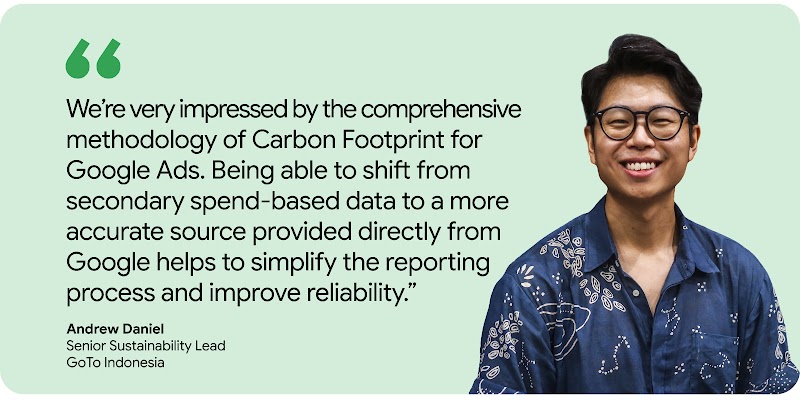
The first-party data that marketers get with Carbon Footprint for Google Ads is developed in accordance with the Greenhouse Gas Protocol and Ad Net Zero’s Global Media Sustainability Framework, which estimates emissions across media channels using media industry and climate science standards.
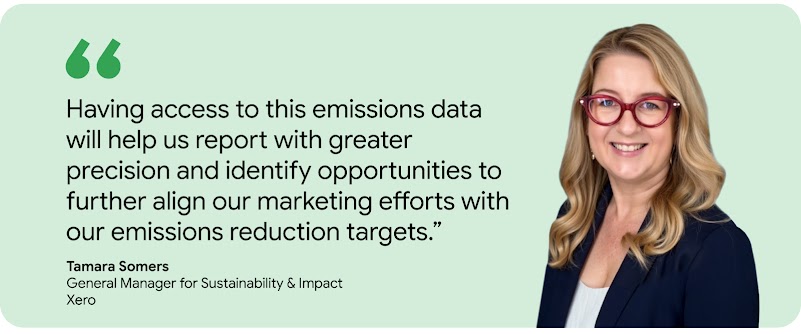
One advertiser that participated in the Carbon Footprint for Google Ads pilot programme is online accounting software company Xero.
Building a strategy for greater effectiveness
Companies are also coming together, across industries, to drive change and transition to a more sustainable future.
Ad Net Zero, for instance, is an international alliance, with Google as a founding member. From building a standardised methodology for measuring and comparing ads carbon emissions to encouraging more sustainable consumer behaviour, Ad Net Zero seeks to reduce carbon emissions across the ads supply-chain.
Ad Net Zero opened its inaugural APAC chapter in New Zealand in 2023 and launched a new chapter in Australia last year, with 25 businesses supporting the initiative, including Google Australia.
Jonas Jaanimagi, technology lead at the Interactive Advertising Bureau Australia, says: “Since the launch of Ad Net Zero in Australia in October 2024, we’ve witnessed the industry unite to identify and review innovative technological solutions to help drive our local industry forward. This approach builds upon global learnings from other markets and shows how collaboration and creativity can pave the way for a more sustainable future in how we all operate.”
Enhance your measurement with AI insights
Besides emissions measurement solutions, marketers can also tap into other sustainability insights to accelerate their net zero progress.
AI-driven ads solutions, for instance, are proving that more sustainable media and ad performance are not mutually exclusive. AI marketing tools like Insights Finder, for example, make it easier for marketers to find ways to align their ad creatives effectively with eco-friendly consumer habits.
Another resource is Google’s Sustainability Marketing Playbook. It provides tips on how to apply sustainability principles to the creative development and campaign execution process. Such an approach can pay off handsomely, as a recent analysis of green ad creatives shows: Ads that combine sustainability and brand messaging perform more strongly, with an average increase of 54% on Ipsos’ overall creative effectiveness performance index.
The journey towards more sustainable marketing is a race that cannot be run alone and when marketers rally together, they can achieve more than just compliance.
By embracing data-driven approaches and working collaboratively, marketers can build a more sustainable future that better serves people, businesses, and the planet. Now’s the time for marketers to redefine the role that brands play in the lives of consumers.