





 Sign in with Google
 People in Southeast Asia (SEA) live to travel.
Globetrotting has become such a vital part of their lives that their digital travel spend rose 13.3% in 2025, outpacing expenditure growth on essentials like groceries and gas by 3.3X, new data from Visa shows.1
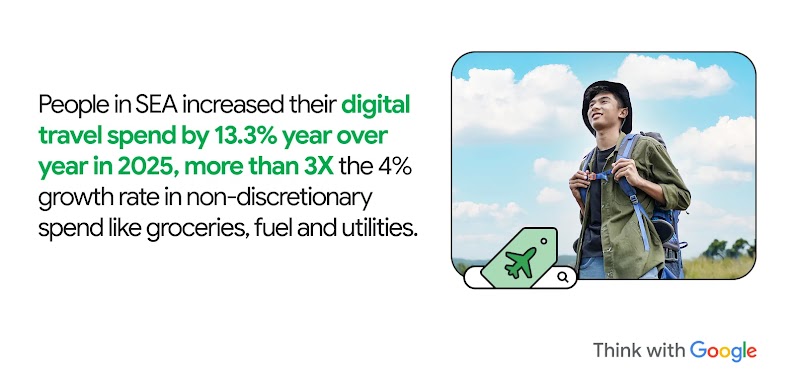
And to feed their wanderlust, they’re even willing to change how they travel, as research by Google and Visa on SEA’s travel trends has found.
Here, we unpack their three key behaviourial shifts, and share ways your travel brand can capture their dynamic demand by using AI in marketing to maximise conversions.
When they travel: More off-peak season trips and earlier bookings
SEA’s consumers today are going to great lengths to make trips happen — even if it means picking less popular travel dates, and booking way in advance. Our research on these two trends reveal the following insights:
1. People increasingly search for travel dates outside the traditional peak period
Nowadays, April and May draw the highest relative volume of searches for check-in dates, according to 2025 data from hotel search on Google.2 That reflects a shift in search interest away from June and July — the most popular travel months in 2023.3
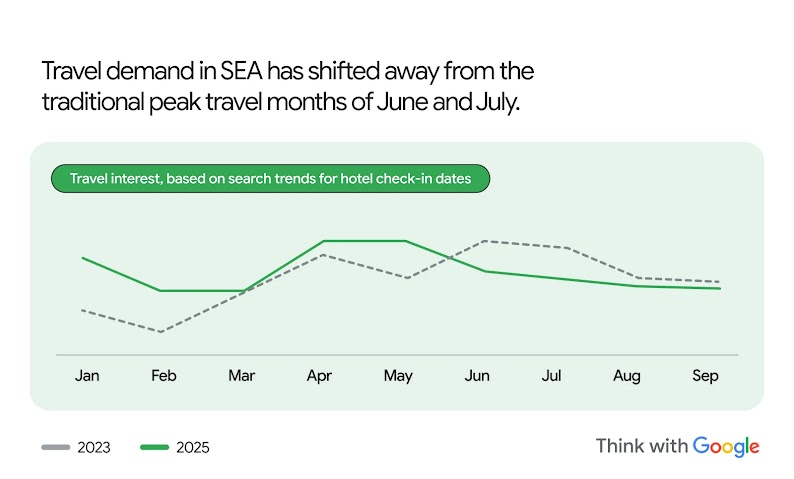
This shift comes amid rising flight and hotel costs, which travellers in SEA markets like Singapore say are affecting their decisions.
Since travel is a big-ticket item households want to keep even when under financial pressure, it’s no surprise that SEA’s travellers are willing to forgo peak season experiences like summer getaways, and satisfy their travel needs at off-peak prices.
2. They are booking trips even earlier
In 2025, SEA’s consumers booked their travels on average 83 days in advance, compared to 46 days in 2024, Visa’s spend data on travel-related transactions showed.4
That suggests they’re looking for and finding deals at times far beyond the usual peak windows when you’d expect most booking journeys to occur. In fact, many people constantly look out for information to help them book trips, with 90% of SEA’s travellers regularly spending time consuming travel-related content.5
How to win over SEA’s travellers: Stay constantly engaged with them on the content-rich platforms that travellers turn to for everything from travel inspiration to decision-making. Those platforms are Google and/or YouTube, which are used by 93% of SEA travellers in their purchase journey, significantly higher than any other online platforms.6
To keep your Google and YouTube marketing always-on, adopt flexible budgets that can better capture travellers’ fluctuating demand year-round, and maximise conversions.
And to ensure that those budgets drive maximum impact, use a target return on ad spend (ROAS) bidding strategy that lets you optimise campaigns for the highest customer lifetime value.
That’s what global hospitality brand Prism, which owns Oyo, did to capture dynamic holiday demand while maximising value.
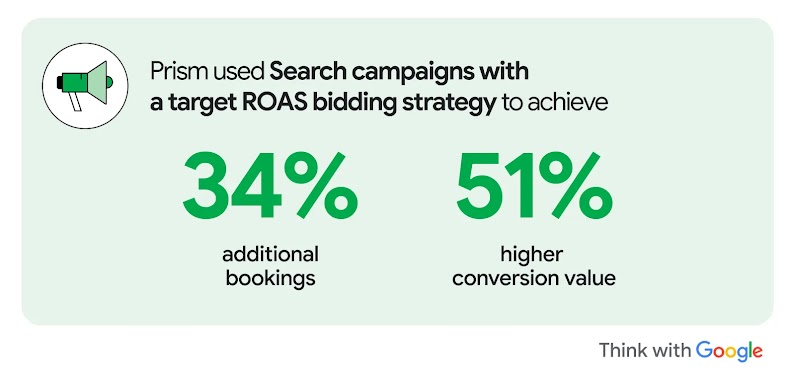
It used Search campaigns with target ROAS bidding to prioritise acquiring high-quality customers who’re more likely to generate a strong ROI. That resulted in a 34% surge in bookings and 51% higher conversion value.
Where they travel to: More off-the-beaten-path destinations
People in SEA are increasingly opting to explore destinations beyond the typical top tourist picks, as Google’s latest hotel ads data shows. These “second-cities” often offer the charm of popular spots with less crowds and a lower price tag.
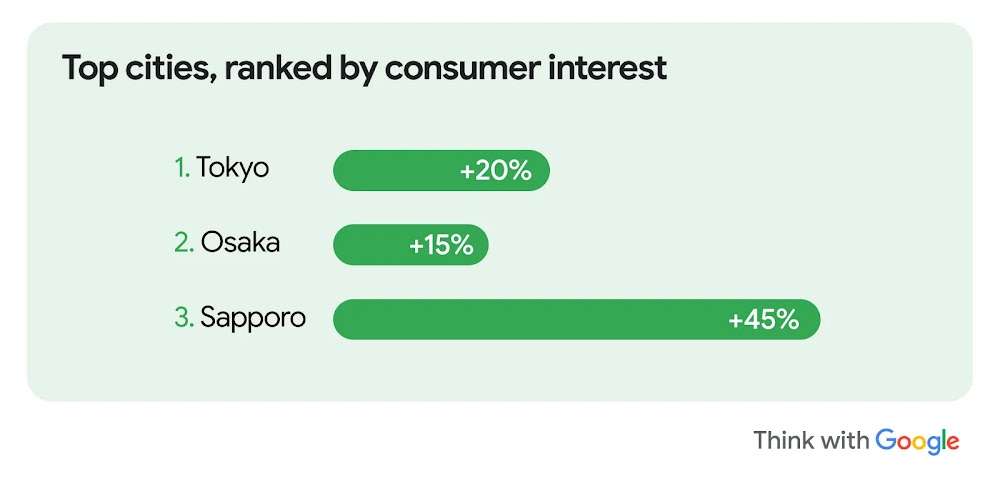
In Japan, for example, consumer interest in the smaller city of Sapporo surged 45% in 2025, more than 2X the growth in interest for Tokyo and Osaka.7 Similarly, interest in second-tier cities like Chiang Mai in Thailand and Strasbourg in France accelerated much faster than interest in the most popular cities of those respective countries.8
Click on the dropdown below to see how fast traveller interest is growing across destination cities:
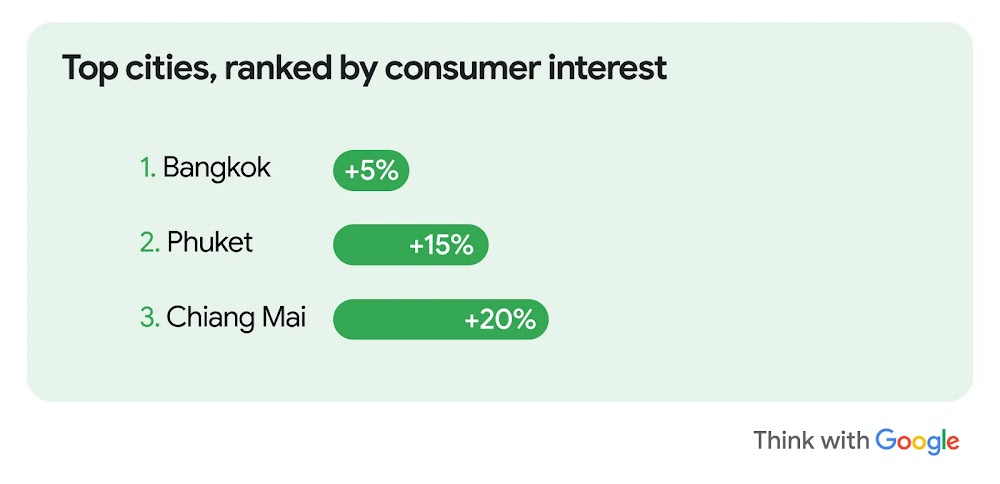
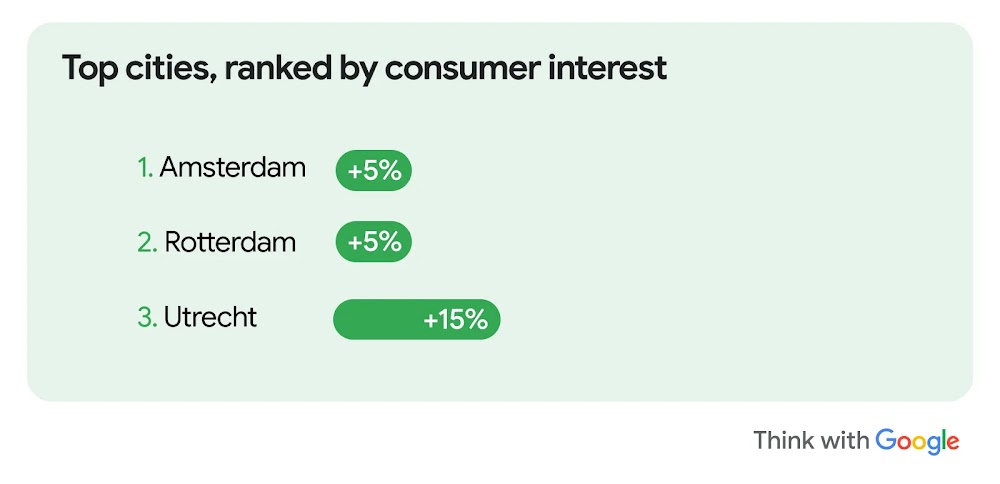
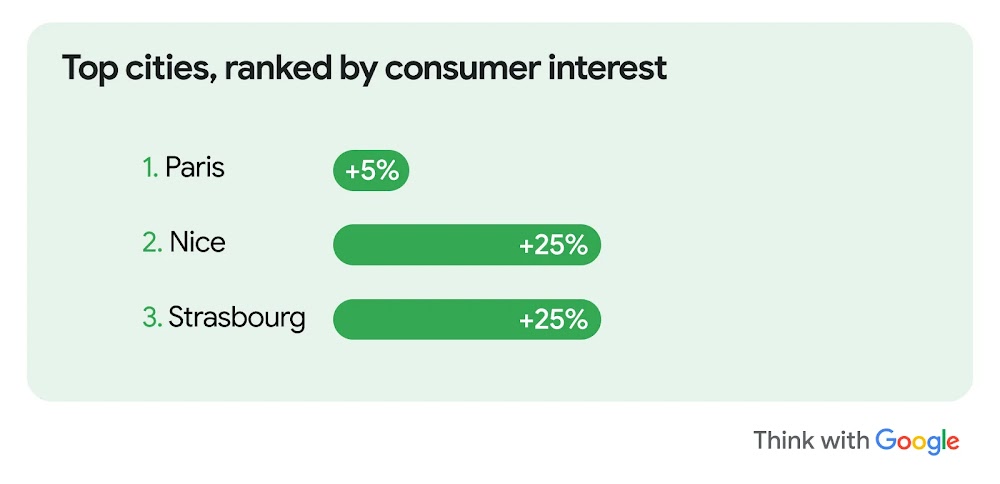
How to maximise conversions: With travellers exploring a greater diversity of locations, your marketing will need to be highly relevant and dynamic to match their wider preferences.
For that, tap AI Max for Search campaigns, which uses billions of combinations of user signals to understand users’ true intent and find even more relevant demand. The AI-powered campaign lets you optimise creative content and landing pages in real-time, so your ads can resonate with each traveller’s unique interests.
Online travel agency Headout used AI Max for Search to intelligently expand its reach into new, high-intent queries it wasn’t accessing before, and drive conversions.
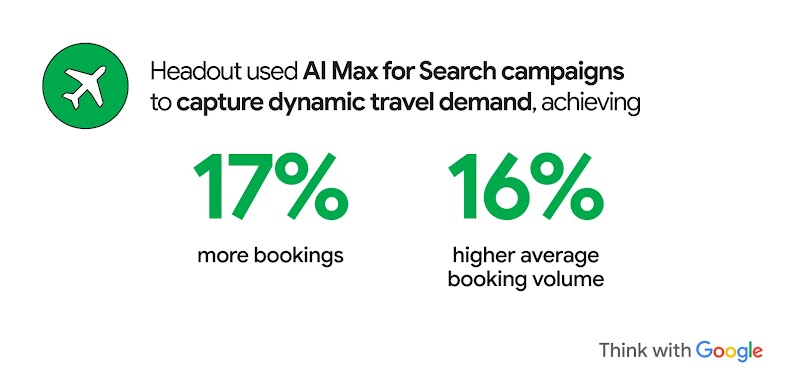
The impressive results, which included 17% more bookings, led Headout to expand the use of AI Max for Search to other markets.
What they choose to do: Offload one location from itineraries
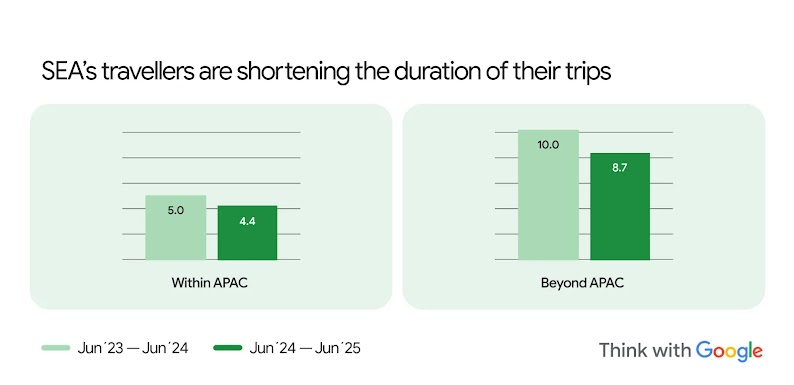
Google’s data shows that travellers’ overall trip durations are shortening from an average of 10 days in 2024 to 8.7 days in 2025 for trips within APAC.9
However, the average length of their hotel stays has remained constant. That suggests more travellers are dropping one location from their itineraries to allow them to keep travelling almost as much as before.
How to help SEA’s travellers choose you: Clearly communicate your brand’s value to help them confidently decide to keep you on their itinerary. Additionally, tailor your offerings to these three traveller segments’ distinct preferences:
Premium travellers go for luxury. People in the top 10% of travel spenders take an average of 5.3 leisure trips a year.10 And they outspend mass travellers by 33X on retail goods, 16X on dining, and 15X on lodging, Visa’s spend data showed.11
To satisfy their habit of high-end travel, curate consistently high-quality experiences they can count on during every trip. Additionally, build your reputation as an integrated lifestyle brand, as the Como Group has done by offering luxury accommodation, shopping, and dining services in immersive destination experiences like Como Orchard.
Mid-tier travellers favour experiences. The next 20% of travel spenders gravitate to food paradise destinations across Asia.12 Since their budget share spent on restaurants is 1.2X that of premium travelers,13 focus your ad creatives on gastronomic experiences and cultural immersion to win their bookings.
Mass travellers prioritise essentials: They prefer destinations closer to home, and their budget share spent on groceries is 3X that of premium travellers.14 So meet their needs by highlighting practical features, like proximity to supermarkets, that make travel frictionless and affordable.
With these insights into the changing preferences of SEA’s traveller segments, your brand can capture more of their dynamic demand. And by combining flexible budgets with AI-powered campaigns, you’ll be set to maximise valuable conversions in the year ahead.
Contributors:
Vitezslav Otruba, Analytical Lead, Google
Visa Consulting & Analytics (VCA):
Lubna Akhtar, Head of Data Science, Southeast Asia
Prateek Nagaria, Portfolio Solutions Lead, Southeast Asia
Vanessa Tay, Senior Data Scientist, Southeast Asia


Social Module
Share