





 Sign in with Google
Did you know that only 42% of retailers in the Nordics and Benelux have product pages structured well enough for AI agents to read?1
That is just one insight from the 2026 Omnichannel Index, a joint study by Google and omnichannel digital commerce agency, Impact Commerce.
To understand where the biggest gaps and opportunities lie, Impact Commerce audited 74 consumer journey touchpoints across 373 brands and retailers in six Northern European markets: the Netherlands, Belgium, Sweden, Norway, Finland, and Denmark.
This research, encompassing over 27,600 data points, reveals a significant readiness gap. It found that while many retailers have built the foundations for data collection, some are struggling to translate that information into the AI-readable experiences that define modern retail.
Here are the three opportunities we found that no retailer should overlook:
Opportunity 1: AI and the customer journey
The shift toward agentic commerce — where AI assistants help in discovery — rewards brands that have structured, machine-readable data. Put simply, AI agents cannot recommend products they cannot understand.
Despite this, only 42% of product pages reviewed in the report are currently AI-ready.2 On a market level, no country in the research exceeded a 22% adoption score for AI readiness.
Furthermore, just 3% of brands support visual search3, limiting retailers visibility and relevance in new ways of being found.

The opportunity is clear. Retailers who prioritise AI-readable, high-quality, structured data and visuals today are building the search visibility of the future.
Key action: Focus on data hygiene. Ensure your product feeds, including images, are structured to be machine-readable so they can be surfaced by AI-driven search assistants. Start by looking at your Merchant Excellence report to do this.

Opportunity 2: Close the data activation gap
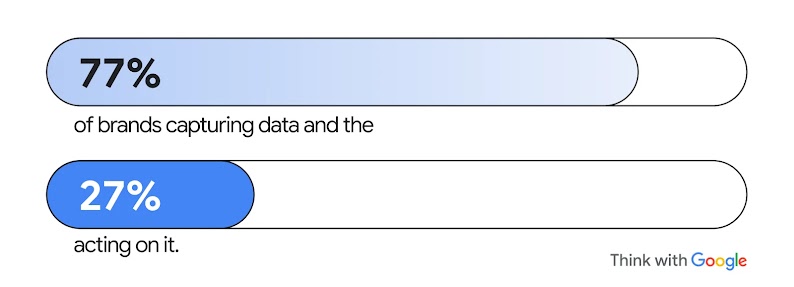
Most retailers collect data, but few are powering experiences with it. The disconnect between the 77% of brands capturing data and the 27% acting on it4 explains why customer journeys can feel fragmented and lack personalisation.
This activation gap is most visible in loyalty programmes. While the majority of retailers rely on monetary discounts, only 20% offer benefits that create emotional or experiential value.5
The opportunity lies in closing the loop. For example, ensuring that a customer’s online browsing behaviour informs the service they receive when they walk into a physical store.
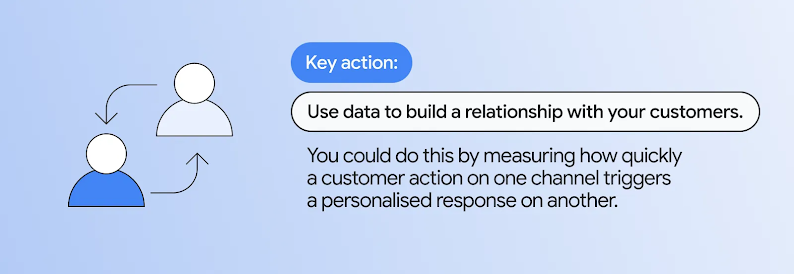
Key action: Use data to build a relationship with your customers. You could do this by measuring how quickly a customer action on one channel triggers a personalised response on another. A good place to begin is Smart bidding on- and offline sales.
Opportunity 3: Provide consumers with assistance
Many retailers have perfected the buy button — the purchase phase is the standout performer in this year’s Index at 53%.6 However, the phases in the consumer journey where AI and data activation could provide the most value, such as evaluation (34%) and loyalty (37%), are trailing.7
To move beyond this retailers must use their data to provide assistance tools. This could be richer product storytelling or comparative video guides that help a customer narrow down choices before they reach the basket.
Key action: Audit your digital presence for assistance. Ask yourself if your product data is being used to help a customer choose, or simply to help them check out. Spark inspiration whilst intent is still being formed using tools like Demand Gen.

The path forward
The findings of the 2026 Index suggest that the next phase of retail will be shaped by making your data work harder, and embracing the growing role of AI across the customer journey.
Social Module
Share