





 Sign in with Google

Jon Walden is COO of Shade Station, a leading U.K. eyewear retailer. He’s been with the company since 2003, and after taking an ownership stake in 2023, led Shade Station through its most ambitious phase yet: international expansion.
Twenty different countries. Twenty different languages. Twenty different ways to Search and shop. Those were the challenges we faced when expanding Shade Station. (And it was actually more than 20 countries, in the end).
25 years in, we’d built Shade Station into one of the U.K.’s largest online eyewear retailers, with over £24 million in annual revenue. But by 2024, we’d reached a pivotal moment. The U.K. sunglasses market was mature, and to keep growing, we had to look beyond our lenses.
Our ambition was clear. The path, however, was not. Early attempts at international expansion were a lesson in complexity. In a competitive field, Shade Station’s unique selling point is that we can glaze lenses for the prescription eyewear we sell, in addition to our robust sunglass trade. Even so, we were running basic, one-size-fits-all campaigns that treated a shopper in Singapore the same as a customer in Spain. It wasn’t working. As the COO, and having been with the company since we built our first website back in 2003, I knew this approach wouldn’t scale. We needed a way to replicate our U.K. success while respecting the unique nuances of each new market.
Identifying our blind spots
Growth brings complexity. Especially as, for us, expanding internationally wasn’t just about adding a few new countries. Instead, we were managing dozens of new markets, languages, currencies, and competitive landscapes. And if that wasn’t enough to be getting on with, we were also looking to iron out the seasonal nature of our sunglasses business, alongside our agency partner, Smarter Ecommerce. Selling sunglasses to customers in Australia and New Zealand during our winter months — their summer — would help balance the peaks and troughs brought about by European weather.
To go about achieving this, we had laid the operational groundwork, and translated our website for 16 of the largest non-English-speaking markets, as well as made sure our logistics could handle next-day shipping to Europe. But our marketing strategy wasn’t keeping pace. A manual approach to optimising campaigns for 25 different country-specific websites seemed all but impossible.
This was only compounded by the fact that – as we learnt pretty quickly – what makes a brand a bestseller in one country doesn’t necessarily translate to another. For example, a brand of high-performance mountaineering sunglasses that’s popular in France and Switzerland can be virtually unheard of in the U.K. — for obvious reasons. Pushing our U.K. bestsellers everywhere would have been an expensive mistake. We needed a smarter, more scalable way to operate.
Setting our sights on local demand, using AI-powered signals
The solution was to work smarter by embracing AI. This wasn’t about conceding control. Rather, it was about using technology to execute a highly-nuanced strategy at a scale that our team couldn’t achieve manually.
Google’s AI helped us navigate the subtle but critical differences between markets. It discovered that search terms could vary dramatically, even within the same language. In the U.S., for example, people search for “eyeglasses,” a term never used in the U.K., where they’re simply “glasses.” AI helped us capture that local intent without needing to be experts in every regional dialect.
It also highlighted how our brand was perceived differently around the world. In the Middle East, our campaigns found traction with shoppers looking for luxury brands. In a market like Singapore, however, we were seen as a trusted and reliable provider of genuine, quality products. This insight allowed us to tailor our messaging and product focus, so we were always locally relevant.
Adjusting our focus with automated campaigns
Our full-funnel approach combined two powerful tools. For new markets where Shade Station was a complete unknown, we used Demand Gen campaigns to build much-needed brand awareness and introduce our story to new audiences. Once that initial connection was made, Performance Max helped us capture high-intent shoppers and drive conversions.
The real turning point was when we started guiding the AI with our own first-party business data. By feeding Smarter Ecommerce and our Performance Max campaigns real-time information on product profitability, stock levels, and return rates, we transformed them into powerful business tools aligned directly with our earnings goals.
This really came into its own on Black Friday. In the past, we’d run out of stock on a bestseller, yet would continue spending money advertising a product people couldn’t actually purchase. Now, our system automatically moves an out-of-stock product into a separate campaign with a lower budget and different targets. This simple, automated shift means our ad spend is always focused on products we can ship immediately. The result? Our most recent Black Friday sales were up 50% year-over-year, and we achieved it more efficiently.
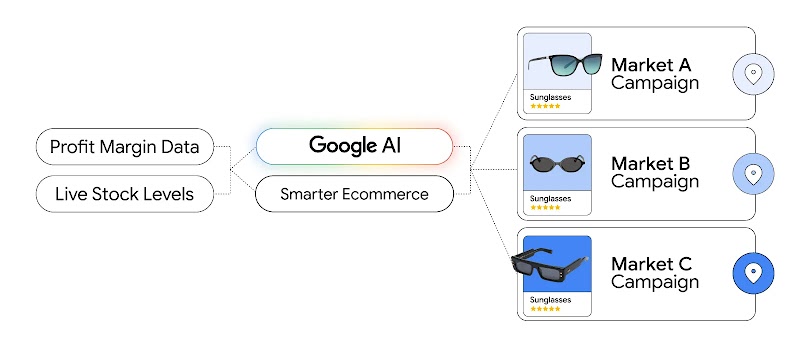
This tailored, data-informed strategy has been transformative. Over the last year, we’ve seen a 57% year-over-year increase in revenue from our international efforts, all while maintaining a stable and profitable return on ad spend (ROAS).
As Nina Hager, client success manager from our agency partner Smarter Ecommerce told me, “Some advertisers might think ‘Yeah let’s just turn on a campaign and it works’. But that isn’t the case, because [you] did a lot of work on [your] websites, on logistics, on after sales and everything. And I think without this perfect base, we wouldn’t have had such a successful year. So I think that’s very important to have the right creative, to have the setup, to make sure the feed is up to date. Everything.”
A clear vision for profitable global growth
Our journey from a national leader to a player on the world’s stage has taught us several key lessons that can serve as a blueprint for any business looking to expand its horizons.
Build a solid foundation first. AI is a powerful accelerator, but it can’t fix a flawed operational base. Before we spent a single pound on our new campaigns, we invested months in our logistics, customer service, and duty-paid shipping processes, so we could deliver a great experience.
Guide the AI with your business intelligence. Don’t just turn on automation and hope for the best. The most powerful results come when you combine the machine’s ability to process real-time signals with your deep knowledge of what drives your business, like profit margins and inventory.
Think full-funnel. It’s essential to build awareness and capture demand simultaneously. Use upper-funnel tools to introduce your brand in new markets and performance-focused campaigns to convert shoppers who are ready to buy.
Embrace a test-and-learn mindset. We didn’t launch in all markets at once. We started with small groups of countries, learned from the results, then scaled what worked. International expansion is a marathon, not a sprint.
I believe the future of global e-commerce lies in this blend of human strategy and machine execution. By using AI to manage complexity, we’ve been able to think globally while building locally-specific strategies, and it’s unlocked a new chapter of growth for our business.
Or: the future’s so bright, we’ll have it made in the shade.
Social Module
Share