



 Sign in with Google
The smartest 2026 marketing plans are being forged right now. And they’re built on a foundation of real-world data, not last year’s assumptions.
This means the upcoming peak season is more than just the busiest time of year. It’s an opportunity for marketers to capture the high-volume performance data needed to build a data-driven strategy and budget for 2026.
There are three essential actions you can take today to prepare:
- Connect your data sources
- Recover unobserved conversions to view the full customer journey
- Prove campaign impact with incrementality testing
1. Data strength: Connect your data sources
Before you can build a successful 2026 marketing plan, you must first establish your data strength. This foundational first step ensures the data signals you base your decisions on are as complete and accurate as possible.
To make this simple, Data Manager can act as your central hub. It’s designed to unify your most valuable first-party data sources in one place, giving you more control and clarity.
Data Manager, accessible via the Google Ads user interface, does this by combining signals from two areas:
-
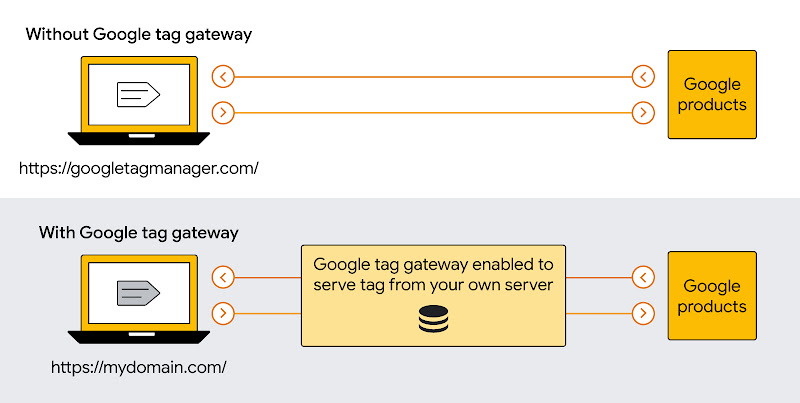
Your website: The Google tag is the piece of code on your website that measures activity and conversions. In a standard setup, this tag is served from a Google server.
Now, you can implement a Google tag gateway for advertisers, which serves the tag from your own server infrastructure. This significantly improves data quality and the resilience of your measurement signals, improving performance.
The impact is significant: Advertisers who adopted Google Tag Gateway on average observed conversions uplift of 14%.1
- Other sources: To complete the picture, you can integrate other crucial data sources — such as customer information from your CRM or data from an external partner. This ensures valuable insights are all brought together to drive performance. Nothing is left in a silo.
French skincare and grooming brand Horace did just that. “Before Google Tag Gateway, we struggled with increasing data gaps in our analytics due to evolving browser restrictions,” explained Kim Mazzilli, co-founder and chief technology officer at Horace.
“Google Tag Gateway has allowed us to recover 22% of previously invisible conversions, leading to a significant boost in marketing performance, particularly during critical peak periods,” he said. “It’s an incredibly powerful solution with a remarkably simple, 1-click setup.”
2. Beyond the click: Recover unobserved conversions
Even with strong tagging, some conversions can go unobserved as customers switch between devices or as traditional identifiers become less available. During the high-traffic peak season, this measurement gap can hide a significant portion of your campaign’s true value.
This is where you need to be enriching your connections with signals about your customers, their purchases, and their interactions with your ads. For example, Enhanced Conversions helps measure conversions more accurately. It’s not a nice-to-have; it’s a baseline requirement for getting the right data.
These data points become essential fuel for Google’s AI. It allows conversion modeling to fill any remaining gaps where cookies were not available, giving you a more complete and accurate picture of performance.
These accuracy improvements can lead to a tangible performance uplift. On average, advertisers bidding to conversion value who implement Enhanced Conversions see an 8% incremental ROAS on Google Search campaigns.2
Take online marketplace Carwow, which used Enhanced Conversions to better connect ad views on YouTube to actual sales leads. This resulted in a 7% increase in overall attributed conversions, giving them a more accurate view of their ROI and allowing them to allocate budgets more effectively.
3. Incrementality testing: Prove campaign impact
Even with accurate measurement, proving marketing’s true business impact remains a challenge. In fact, Gartner research shows that only 52% of CMOs and other senior marketing leaders were successful in demonstrating marketing’s impact on business outcomes.
Incrementality testing provides a rigorous framework to answer the crucial question: “Would my customers have converted anyway?” By comparing a group of people who saw your ads to a control group that didn’t, you can isolate the additional sales your campaign delivered.
A robust learning agenda will help to guide your strategic decisions. It allows you to plan your incrementality tests ahead of time, accounting for seasonal effects that may influence results. After all, peak season, with its high stakes and compressed timelines means that even more consideration is required for your incrementality testing strategy.
For example, if you are experimenting with new media formats ahead of peak season, it is important to optimise your campaigns and implement crucial measurement foundations, such as Enhanced Conversions, before launching incrementality tests. This upfront investment will lead to better, more accurate learnings.
We would generally recommend completing any incrementality tests before the big retail moments in Q4. That way you can establish a clear baseline, refine your bidding strategies, and optimise budgets in advance.
It’s also worth noting that Google has recently made incrementality testing much more accessible, with new methods significantly lowering the investment threshold. This makes it possible to run rigorous tests across more campaign types — even with smaller budgets — to pinpoint what drives added value and inform your peak and 2026 media mix with confidence.
Turn this peak season into your 2026 advantage
The data from this year’s peak season is one of the most valuable assets for your 2026 marketing strategy. By using this period to establish a stronger measurement foundation, you can build your budget on fresh, hard evidence of what truly drives growth.