





 Sign in with Google
As businesses scale, opportunities grow, and so does the complexity of customer journeys. Paylocity, a leading provider of payroll and HR solutions, knows this well. Having expanded from serving small businesses to supporting large enterprises, the brand faced both opportunity and challenge: how to capture high-value B2B leads in a longer, more complex sales cycle.
Historically, Paylocity focused on lead volume, but volume alone wasn’t enough to fuel long-term growth. More queries only meant more time spent identifying high-value leads. To overcome this, the company shifted its focus to the outcomes that mattered most: first-time appointments and sales-qualified leads (SQLs).
From data gaps to gains
The first step was to uncover a clearer picture of its lead funnel. Using Data Manager with enhanced conversions, Paylocity discovered a major disconnect: only 12% of Google Ads leads were successfully matched with its customer relationship management (CRM) system. That meant many high-value prospects were unaccounted for, and opportunities were being missed.
For the first time, we set a true high-value business metric as our conversion goal in Google Ads and saw its direct impact on growth.
To fix this, Paylocity partnered with agency Monks to strengthen its data integration. The team expanded match keys to include Google Click IDs (GCLIDs) alongside other data inputs, while also resolving file formatting issues that had been hindering accurate attribution. Ensuring the GCLID was always included proved to be the breakthrough, creating a more connected view from initial click to final outcome.
With stronger data practices in place, Paylocity was ready to take the next step: testing value-based bidding, with SQLs set as the key conversion action. This shift ensured that Google Ads optimized spend toward the prospects most likely to drive revenue.
Tory Lariar, SVP of paid search at Monks, offers this advice to other brands and agencies strengthening their data integration: “Frame the conversation around business goals. The technical implementation is a means to an end, in our case, driving more first-time appointments. But measurement isn’t just a set it and forget it; keep partnering closely throughout the process to ensure the setup is correct.”
Securing quality leads, quantified
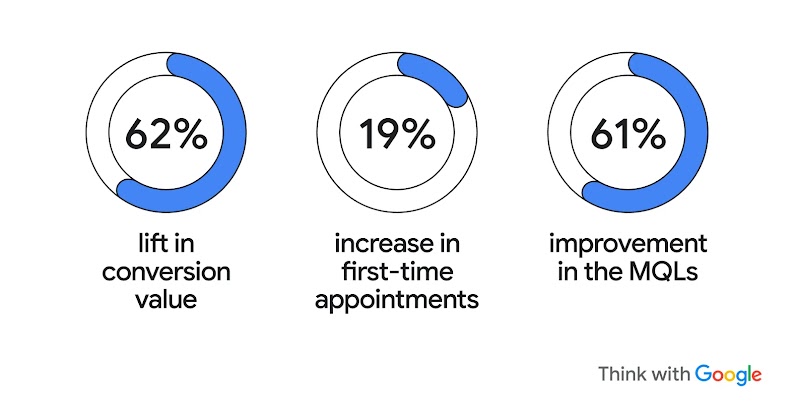
The results quickly followed. By moving from volume optimization to a value-driven approach, Paylocity achieved a 62% lift in conversion value, alongside a 19% increase in first-time appointments. The team also saw a 61% increase in the marketing-qualified lead (MQL) conversion rate, proving they were reaching stronger, higher-potential prospects.
By attracting more qualified leads, Paylocity fuelled business growth and improved efficiency, enabling the sales team to focus on the opportunities most likely to convert while cutting time wasted on unqualified ones.
Maddy Cross, Paylocity’s director of digital marketing, summed up the pivot: “For the first time, we set a true high-value business metric as our conversion goal in Google Ads and saw its direct impact on growth.”
3 takeaways for marketers to build data strength
- Connect your data sources. Data gaps can hinder performance. By connecting their CRM platform to Google Ads, Paylocity unlocked the clarity it needed to optimize their campaigns effectively.
- Maximize your signals. Once your data sources are connected, the next step is to ensure you’re passing the right signals. For Paylocity, this meant expanding its match keys to always include GCLIDs, email addresses, and phone numbers, and fixing formatting issues.
- Activate with AI. With high-quality data in place, you’re ready to activate it, and AI-powered solutions can optimize your campaigns. Paylocity tested value-based bidding with SQLs as the key conversion goal. The result? Fewer off-target leads, more high-value opportunities, and a marketing engine geared to drive quality growth.
For Paylocity, the breakthrough wasn’t about getting more leads. It was about unlocking high-quality ones at speed and scale, while freeing up resources to focus on the opportunities that mattered most. For B2B marketers looking to do the same, the challenge — and the opportunity — is clear: Apply these same principles and watch your next wave of growth take shape.
Social Module
Share