





 Sign in with Google
 It may be 2025 but 1970s fashion is back with a bang — from bell-bottom jeans to platform shoes.
And they’re not the only 70s classics reborn with a modern twist. Marketing mix modelling (MMM) is experiencing a powerful comeback, upgraded with new technology and insights for today’s complex landscape.
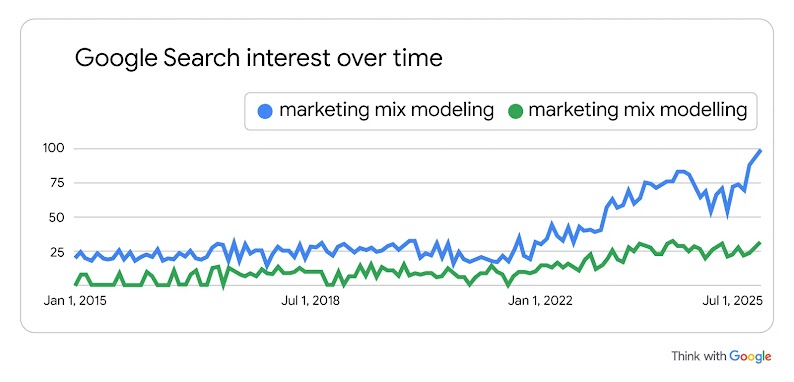
Global Google Trends data from the past decade shows, regardless of spelling, interest for “Marketing Mix Modelling” and “Marketing Mix Modeling” is on the rise.
At the start of 2025, Google launched Meridian, an open-source MMM for today’s measurement needs. But this isn’t just another model; it’s a significant leap forward.
Built on years of Google’s research and innovation, it offers unprecedented transparency, actionable insights, and privacy-safe capabilities that empower advertisers to optimise their budget allocation with confidence.
Introducing Meridian: Your tool for tomorrow’s marketing
Meridian is designed to help marketers understand the true, incremental impact of their campaigns, across online and offline channels. It brings together disparate data into one unified view, like many MMMs.
But its unique value proposition is the advanced modelling techniques it offers, including calibration, reach, and frequency modelling. Traditional MMMs, built for offline media and branding, have historically been unable to fully measure performance media, like Search ads, or User Searches (the volume of searches in Google). They may not update assumptions based on incrementality experiments or provide granular insights, such as optimal frequency or regional nuances.
Incorporating a modern MMM, such as Meridian, into your measurement toolbox helps drive more efficient and better business outcomes.
[Meridian] offers unprecedented transparency, actionable insights, and privacy-safe capabilities
Understanding how Meridian works
It’s a powerful tool, but in essence it works like this:
Marketers or analysts begin by defining their key performance indicators (KPIs) and business questions within Meridian. They then feed it as much historical sales and marketing data from across various channels and regions as they have. The system needs at least two-years worth of data.
Meridian measures marketing effectiveness using aggregate data and Bayesian methods. This means it uses statistical inference that updates the probability of a hypothesis as new data becomes available. Put simply, it gets smarter the more information it gets, and learns from the results it receives.
And Meridian doesn’t need individual identifiers or cookies, making it privacy-safe.
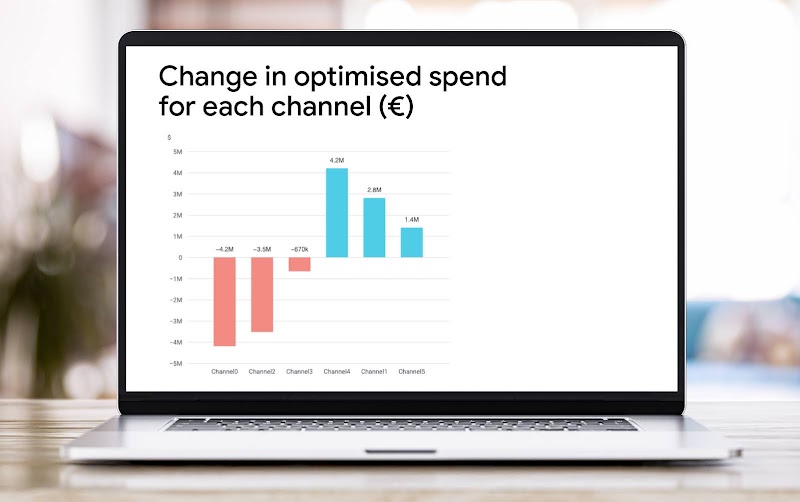
It produces actionable results like budget optimisation recommendations, guiding users towards specific actions to take. As you add more data, these recommendations refresh, making the system more responsive to your needs.
This powerful functionality allows Meridian to help marketers tackle the hottest questions in marketing right now. Questions such as:
Q: How can I bring together experiment results and MMM results for media channels?
Meridian blends your prior data with real-world data (e.g. user search data) to reveal the true incremental impact of your marketing.
You decide on the KPIs that make sense for your business, from incrementality test results, to sales, website visits, TV ad performance, or Search. It can then run optimisation scenarios and suggest the best use of your budget. The more results you input from every media channel, the more the model can show you what channels are and aren’t working for you.
Q: What is the optimal level of weekly reach and frequency for my campaigns, beyond just impressions?
Meridian accounts for reach and frequency — not just impressions — to maximise effectiveness on channels like YouTube. These metrics reflect how many unique viewers see your ads and how often they see them, respectively.
MMMs have historically measured video in impressions, but impressions only tell part of the story. Ten impressions could mean ten people reached, or one person reached ten times.
Q: How can we get a more accurate view of our search effectiveness, reflecting local consumer interest and intent?
Meridian integrates user search data — which estimates the number of searches for a particular keyword or query on Google — including organic search queries to reflect category demand.
It also allows use of geo-level marketing data, so that you can examine the effectiveness of marketing efforts at a local or regional level.
And you don’t have to take our word for it. Pandora is one of the world’s largest jewellery brands, present in more than 70 countries. They were one of the first teams to get their hands on Meridian. Here’s what Kristina Kaste, Pandora’s media planning specialist, had to say:
See how Meridian sparkles with Pandora

“We began using Meridian to gain a clearer understanding of our overall media mix and to better compare return on investment (ROI) across channels,” says Kaste.
“To start, that meant using Meridian in markets where we did not have another measurement solution in place — usually smaller markets or markets with potential.
“The tool has provided us with a holistic view that allows us to make more KPI-driven decisions. For us, a huge benefit was the model’s ability to learn from real-world experiment results, giving us confidence in optimising our budgets based on the model’s recommendations.
“Meridian has helped us gain clearer visibility into the performance of different channels, such as paid social versus paid search, which has been particularly valuable for us.
“It has become a strong foundation for our planning, moving us away from relying solely on gut feeling. Since we started using Meridian, we’ve seen that our media mix aligns well with the tool’s recommendations, giving us confidence that we’re heading in the right direction.
“Our marketing team also appreciates Meridian’s user-friendly graphic output as it makes it easy for them to use results in planning.”
Elevate your measurement strategy
The enduring value of marketing mix modelling, much like the timeless appeal of certain 70s designs, has been radically enhanced by modern technology. Implementing an effective MMM strategy with Meridian means using a classic approach that’s aged like fine wine and is now more powerful and relevant than ever.
Whether you’re considering a fully in-house approach with Meridian or a hybrid model, it’s essential to understand the resource requirements. Most teams will need a data scientist to help them get the most out of Meridian, or work with a third-party partner, for example.
Google is here to help. Our goal is to empower your teams to take meaningful action, driving truly robust, actionable, and measurable marketing results.
Ready to learn how Meridian can transform your marketing measurement? Download our comprehensive playbook to find out more and start seeing more measurement success today.


Social Module
Share