





 Sign in with Google

Guillaume Roques is senior director of marketing for Google Cloud in Europe, the Middle East, and Africa. Drawing on more than a decade of leadership experience at top tech companies, he has developed deep expertise in negotiating annual marketing budgets and demonstrating ROI.
If you’re a marketer planning for 2026 right now, I’m sure you’re feeling the squeeze.
Demonstrating the ROI of marketing is an annual dance each time budget planning kicks off.
But it doesn’t have to be this way.
Savvy marketers are now making the case for a dynamic, demand-led model, instead of fighting for a fixed annual budget. A model where the most effective campaigns are never held back by budget caps. A model where any investment on a channel with a proven, positive return is met with further investment, ready to accelerate growth.
My colleague Sophie Neary, a managing director at Google who covers retail and consumer goods, has some insightful advice in these circumstances:
“The question to ask your finance teams isn’t ‘please can we have more budget’ but rather ‘can we afford to miss sales at our target ROI?’.”
We’ve both seen several brands succeed with the flexible budget model. And businesses that haven’t implemented this yet need to consider the cost of missing out on customer demand.
“If 30% of sales happen after 7pm, you shouldn’t shut your shop early by running out of budget on a big sales day,” she’s said.
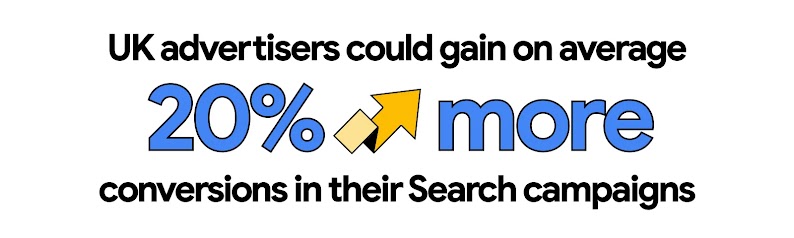
The prize is significant. For example, research shows that U.K. advertisers could gain on average 20% more conversions in their Search campaigns just by being budget agile.1 But only 17% of companies say their marketing budgets are truly flexible.2
So, how can marketers get there? It starts with a conversation.
If you can demonstrate that every dollar of marketing investment leads to at least five dollars of revenue, then it’s a no-brainer
Speak the same language as your finance team
Marketers can start building a case for investment rather than defending a cost by speaking in the language of business growth. Another colleague of mine, Scott Sinclair, works with many of Google’s large clients in the U.K. and Ireland, specialising in Search. He’s seen this first-hand.
“Capturing demand that’s already in the market resonates with everyone,” he told me. “CFOs understand that if Search demand is there, and they control the ROI, they’ll spend to capture it all. It’s about both efficiency and growth.”
The core mindset shift is simple: if an investment consistently yields a proven return at your target ROI, a brand’s Search strategy — fuelled by AI — can be responsive, adaptive, and able to capture more profitable demand.
“For example, if you can demonstrate that every dollar of marketing investment leads to at least five dollars of revenue, then it’s a no-brainer,” said Scott.
But marketing and finance leaders are often hindered by differing strategic priorities. Only 22% of CMOs describe their relationship with their CFO as “truly collaborative”.3 Before any budget conversation, you need to establish a common language.
This means moving beyond marketing-centric metrics like impressions and clicks and agreeing on shared, financially relevant key performance indicators (KPIs). Sit down with your finance team and align on metrics that matter to the bottom line, such as Customer Lifetime Value (CLV), marginal ROI, and overall profitability.
Prove your impact with a robust measurement plan
Once you have shared KPIs, you need to prove you’re hitting them. With 77% of marketing analytics professionals reporting a higher focus on proving ROI in the past two years,4 getting this right is imperative.
Robust measurement is the foundation for proving ROI and justifying dynamic investment. Show your finance team how you’re using a holistic approach to prove that your marketing investment directly drives business outcomes.
Measure top-down impact and better understand the true, incremental value of your campaigns, across online and offline channels with tools like Meridian, Google’s open-source marketing mix model (MMM).
Make sure you’re capturing a complete picture of the customer journey, with the help of tools like Google Analytics. In addition, recovering unobserved conversions — those sales not directly measured — ensures you’re not missing a significant portion of your campaign’s true value.
And prove the additional sales your campaigns deliver. Incrementality experiments like Brand Lift and Conversion Lift help you evaluate which tactics or channels drive outcomes that would not have happened organically.

Use AI to fuel your strategy and demonstrate your ROI
AI is the engine that drives a demand-led strategy. Far more than an efficiency tool, it’s the foundational enabler for strategic budget decisions. Its roles, which include analysing data, streamlining media buying, and creative optimisation, help marketers hit those shared KPIs.
A combination of tools, such as Google’s AI-powered solutions, help fuel a demand-led budget:
- Performance Max to find converting customers across Google channels at the right time;
- AI Max for Search to optimise ads in real time;
- and Demand Gen to tap into reach across visual channels like YouTube.
I’ve identified recurring patterns in the behaviour in those who successfully utilise demand-led budgeting. And my colleague Scott has seen several large retail brands exhibit similar patterns: “I’ve seen brands go fully demand-led because they want to reach those broader search terms. They want to capture all the demand that’s in front of them.”
“What those brands had in common was a flexible budget, the right audience, and robust measurement to capture value and feed it back into their AI flywheel,” he’s said.
Fuelling these with robust first-party data empowers marketing teams to increase reach and conversions, ensuring budget is always being deployed where it will generate the highest possible return. Marketers are proving value to the finance department in real time.
The shift from fixed budgets to an ROI-driven, demand-led investment model means the marketing landscape in 2026 isn’t about managing costs; it’s about unlocking growth.
Social Module
Share