



 Sign in with Google
 As the holiday lights come down, it’s tempting for marketers to power off their campaigns and shift focus to the new year. But the data shows this is a costly mistake.
The period from December 26 to mid-January, often called “Q5,” isn’t a cool down. It’s a distinct shopping season, when shoppers are more decisive, engaged, and ready to spend than at almost any other time of the year.
If you’re winding down, you may be leaving money on the table. Here are five holiday shopper insights that prove why you need to stay engaged during the post-holiday rush — and how you can respond to demand.
1. Purchase intent is at its peak
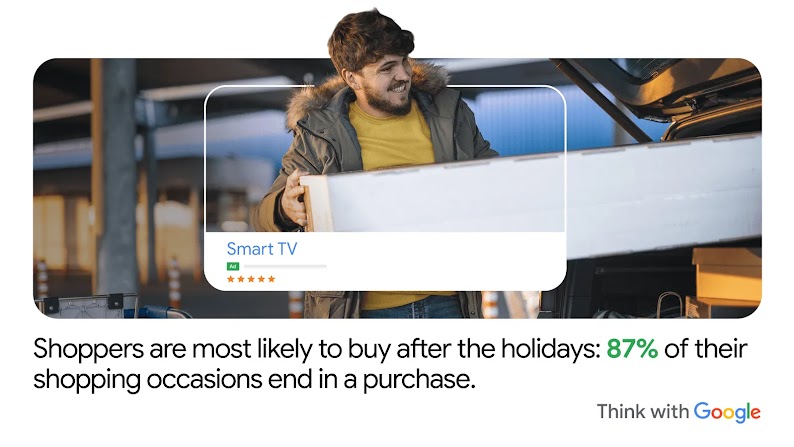
During Q5, shoppers are in “buy mode” and browsing with a high intent to convert. In fact, shoppers are most likely to buy after the holidays: 87% of their shopping occasions end in a purchase.1 And post-holiday shoppers are even more likely to make a purchase than those shopping in the peak holiday window.2
How to respond
- Run always-on campaigns to capture intent across the extended season, so your brand is present with offers to meet shoppers wherever they are in their most decisive moments.
- Ensure discoverability on Search, Discover, and AI Overviews by keeping Merchant Center feeds and structured data accurate.
2. Q5 shoppers are spending more on bigger carts
When shoppers buy during Q5, they aren’t just picking up one small item. They are actively spending more and filling their carts. Consider this: Shoppers report their holiday spending peaks after December 25.3 And after December 25, shoppers buy more items across more categories than at any other time during the holidays.4
How to respond
- Make your marketing direct with strong calls to action, specific product ads, clear pricing, and a frictionless checkout process to capture demand and increase the average order value.
- Use new loyalty features to reward and reconnect with your most valuable customers by offering members-only pricing and services.
3. The path to purchase is highly engaged and more complex
During Q5, shoppers are using more resources and taking more actions than at any other point in the season.5 This marks the seasonal peak for omnichannel behavior, and the complexity is staggering. Half of consumers are navigating between at least 10 different online and offline touchpoints in any given 48-hour window.6
How to respond
- Multichannel presence is critical, so ensure your brand is visible and consistent across platforms.
- Connect your online and in-store experiences with features like local inventory ads and “buy online, pick up in store” to serve these sophisticated shoppers.
4. Q5 shoppers are self-gifting and gift-giving
While the post-holiday Q5 period may be famous for “treat yourself” shopping, gifting to others doesn’t stop. Even after the holidays, buying for others is the top reason to shop; 74% of post-holiday shopping occasions are for someone else.7 Meanwhile, self-gifting continues as 60% of shoppers say they’ll browse online for things they’re interested in buying during the post-holiday period.8
How to respond
- Create campaigns for shoppers using new gift cards or holiday money to “treat themselves.”
- Your messaging can cater to multiple intents. Run ads in parallel that focus on “belated gifts” or “finding the perfect something” for those still buying for others.
5. Google and YouTube usage spikes
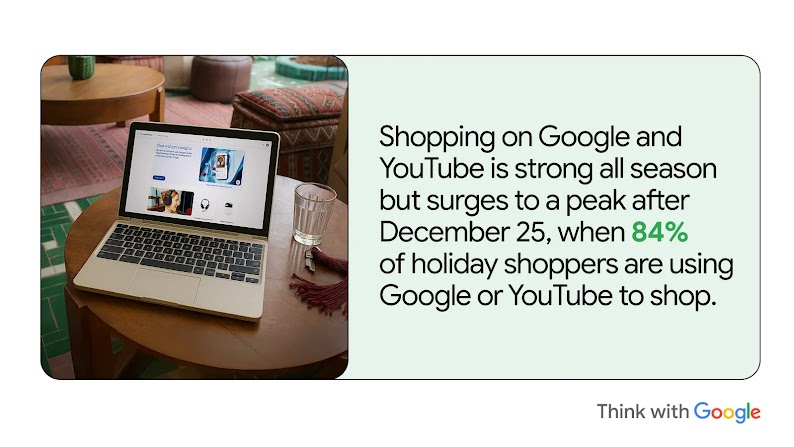
When it’s time to make a final decision, shoppers turn to trusted sources to research, review, and validate their choices. This is where Search and YouTube play a crucial role. Search is the no. 1 way shoppers confirm facts like quality and durability, good reviews and ratings, and brand reputation.9 And, according to a 2024 Traackr survey in the U.S., YouTube was ranked as the no. 1 choice for product reviews and product information by all consumers, including millennials and Gen Zs.10 When it’s time to make a purchase, shopping on Google and YouTube is strong all season but surges to a peak after December 25, when 84% of holiday shoppers are using Google or YouTube to shop.11
How to respond
- Sync your Merchant Center product feed to eligible YouTube campaigns, and feature your in-stock products to maximize promotional impact.
- Tap into the content that your customers are already watching by extending your creator partnerships into Q5 or leveraging the cultural moments of the season like sports.
The post-holiday rush isn’t an afterthought; it’s a distinct, high-value season when shoppers are actively looking to buy. By understanding these behaviors, you can tailor your holiday strategy to meet them where they are, capture their high intent, and start 2026 with strong sales performance.