



 Sign in with Google
 Antonio Ibáñez is a partner at Deloitte Digital. With more than 20 years of experience, he specialises in digital transformation and commercial strategy within the retail and consumer sectors. He leads digital marketing and omnichannel customer experience projects for leading companies.
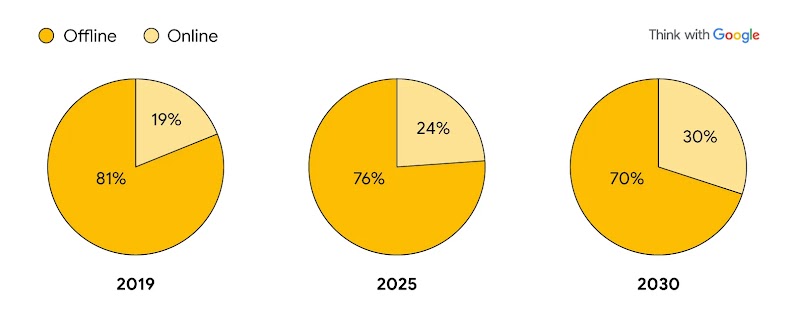
E-commerce fashion is projected to grow 70% by 2030, reaching $233 billion across the U.K., France, Germany, Spain, Italy, Poland, Turkey, the Netherlands, Sweden and Belgium.1 This growth means online sales are projected to account for 30% of total fashion revenue across these countries by 2030,2 up from 24% in 2025, according to Deloitte Analytics.
While the landscape for fashion retailers has been shaped in recent years by the rise of fast fashion players and the lasting impact of the pandemic, marketers will need to pivot their strategies to anticipate emerging trends.
Our new research, conducted in collaboration with Google, has unearthed the true evolution of the fashion industry over the next five years. Capturing a piece of that prize requires looking where your competitors aren’t.
Online fashion sales are projected to account for 30% of total revenue by 2030
Uncovering powerful growth engines
Women’s apparel is set to remain the dominant subsection. Yet two under-the-radar categories are becoming the most promising engines for growth: men’s apparel and footwear.
Our study forecasts men’s fashion will grow at a compound annual growth rate (CAGR) of 10% between 2025 and 2030.3 This stand-out growth is fuelled by a newfound focus on personal style amongst men and popular categories like streetwear and athleisure.
The footwear segment is also projected to grow at a 10% compound annual growth rate over the same period.4 This category has a lower barrier to e-commerce success. Sizing is more standardised, leading to lower return rates, and the category is a perfect fit for immersive technologies like virtual try-on.
Bringing online and offline experiences together
As e-commerce sales continue to increase, brands must adopt a deeply integrated strategy that erases the lines between online and offline to capture the opportunities 2030 will offer.
We see the physical store’s purpose shifting from a simple point-of-sale to an experience hub. It needs to be a blended approach between physical and digital. It needs to be a place for high-touch service, experiences, events, and seamless fulfillment like click-and-collect.
This requires unifying your customer data. Merging online and offline insights gives you a 360-degree view, enabling the kind of hyper-personalisation that builds lasting loyalty.
A marketer’s roadmap for winning the race to 2030
The brands that thrive in the next era of fashion will be those that focus on where the real value is emerging. Your roadmap should include three key priorities:
- Look beyond the noise: Acknowledge the fast-fashion competition, but dedicate your strategic energy to high-growth markets.
- Build your “phygital” bridge: Invest in the technology and training to transform your physical stores into experience hubs that complement your digital storefront.
- Unify your data: Create a single source of truth for customer behaviour to power personalisation across every touchpoint.
Tune in online on 11 November to an exclusive conversation with Michela Ratti, chief brand officer at Italian luxury fashion brand Ferragamo. Find out how luxury fashion brands are navigating today’s e-commerce landscape. Sign up now