





 Sign in with Google
A version of this article was previously published by Forbes.
For today’s marketing leaders, the operational landscape has become a paradox of opportunity and complexity. The pressure to deliver personalized experiences at a global scale while proving efficiency and ROI has stretched teams, tech, and budgets to their limits. The era of incremental gains through manual optimization is already over. The future of marketing is evolving, and with it, a new way of operating is emerging.
We believe artificial intelligence will empower marketers to drive incremental growth for the business through augmentation, evolving ad operations specialists from tactical executors to strategic conductors of intelligent systems. Below are three operational trends marketers should be thinking about as they prepare their teams for the future.
1. Agentic capabilities unlock big-picture thinking
The future of work involves transforming our relationship with technology, shifting from passive tools to active, intelligent partners. Imagine AI as a proactive teammate offering strategic advice across your digital ecosystem — from Google Ads to your CMS. This means AI will do more than flag issues; it will proactively identify growth opportunities, diagnose complex campaign problems, and even outline fixes before they impact performance. Your teams can then focus on higher-value, strategic decisions rather than tactical problem-solving.
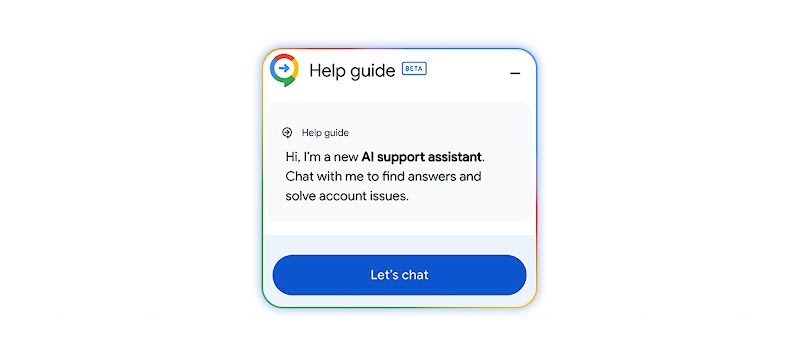
This directly addresses one of the biggest bottlenecks in marketing: the delay between insight and action. Agentic AI dramatically shortens this cycle. Learning from vast datasets, agents will not only recommend actions but, with your approval, execute them. Think of AI building entire ad groups in Google Ads, quickly surfacing critical trends in Google Analytics, or even executing fixes for campaign issues — much like the way our Help Guide beta provides dynamic solutions and diagnostic workflows. Solutions like these transform lengthy, technical text into a streamlined workflow where AI suggests precise actions, enabling faster, more strategic decisions and blurring the lines between content and service.
2. Technological scaling decentralizes ad operations
Exceptional support is foundational to effective ad operations. To continuously improve the Google Ads Help Center experience for millions of weekly visitors, we’re leveraging intelligent systems that analyze user behavior and support ticket data. These insights help Google AI autonomously identify knowledge gaps on our Help Center and create new content, alongside refining our nearly 15,000 published support articles. Our objective is to transform static resources into a dynamic, self-improving knowledge base. The result for your teams is immediate access to more accurate and actionable guidance, enabling them to set up and manage campaigns more effectively and efficiently.
Multilingual help content fosters a global operational model where regional expertise drives strategic agility.
What’s more, we’re empowering in-market teams to run their own campaigns, now with deep local understanding — a major step up from traditional centralized models. Historically, achieving local nuance required extensive regional teams and high operational overhead, but we believe AI is changing this dynamic.
As of July 2025, the Google Ads Help Center offers real-time chat translation in over 26 languages. Multilingual help content and chat support means local teams can quickly find answers. It fosters a global operational model where regional expertise drives strategic agility, allowing your brand to execute global campaigns with the speed and consistency of a local one, breaking down barriers to truly scale growth across markets.
3. Big bets are being made on the ‘engine room’
Effective ad operations teams are critical for the success of your digital advertising, particularly those who painstakingly sift through technical documentation to troubleshoot complex issues or implement new features. These are the individuals with hands on keyboards everyday, meticulously managing the software that runs the ad campaigns that fuel your sales funnels. They are the backbone that translates strategic vision into tangible results.
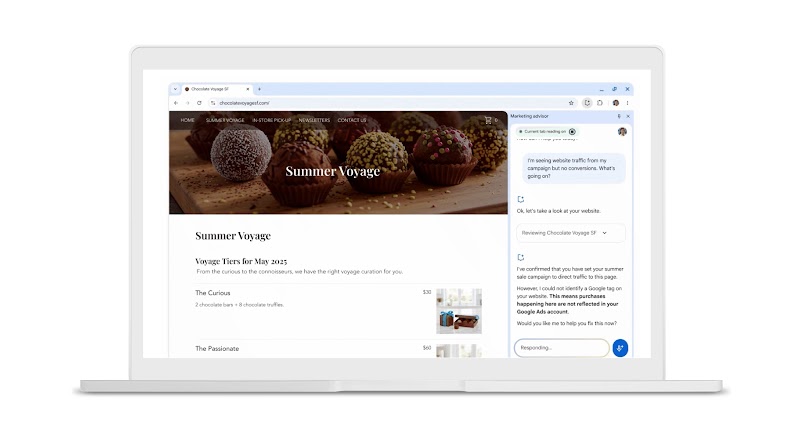
We understand the immense value and tireless effort put forth by these essential teams. To support them, we’re investing in robust tools like Marketing Advisor, which will live inside the Chrome browser and is being developed to help advertisers manage marketing tasks across different platforms. Investment here isn’t just about achieving operational efficiency; it’s about unlocking precious time and shifting the thinking of these teams from mechanics to engineers.
Ultimately, the future of marketing hinges on a collaborative relationship between human expertise and advanced AI. By embracing intelligent, agentic capabilities, leveraging technological scaling, and investing in the foundational engine room of ad operations, marketing leaders can unlock unprecedented efficiency, performance, and strategic agility, meeting evolving expectations and driving impactful decisions in an increasingly complex digital landscape.
Social Module
Share