



 Sign in with Google
 In APAC, where e-commerce is thriving and retail platforms abound, retail media has the power to influence customers and drive sales.
Businesses with the right retail media strategy have unlocked multifold returns. Some brands, for example, have achieved an average return on ad spend of 5X with offsite retail media.
Unlike onsite retail media where ads are run on a retailer’s platform to engage customers on its website or app, offsite retail media uses the retailer’s consented first-party data to run optimised ads on other digital platforms.
What that means is retailers and brands can reach and convert highly relevant customers beyond the retail platform that they’re on. And this is crucial because research shows customers are streaming, scrolling, searching, and shopping across a dynamic web of touchpoints.
The Rakuten Group, which runs over 70 businesses globally, including the e-commerce platform Rakuten Ichiba, has seen how offsite retail media helps shoppers discover what they want, and boost online sales.
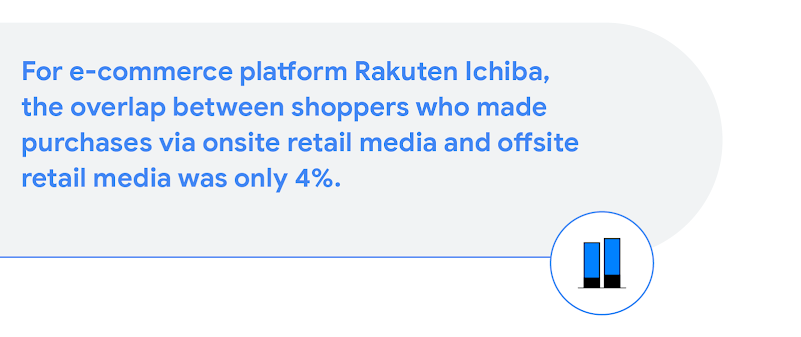
Its research showed that the overlap between shoppers who made purchases via Rakuten Ichiba’s onsite retail media and those who made purchases via offsite retail media was only 4%.
Given the potential for offsite retail media to drive incremental sales, the Rakuten Group accelerated its investment in retail media. In May 2024, it launched the offsite retail media advertising solution, Rakuten Promotion Platform Expansion, developed in partnership with Google.
The solution lets brands tap into Rakuten Ichiba’s consented first-party data to optimise their campaigns on Google Ads properties like Search and Shopping Ads. Besides helping these advertisers reach highly relevant customers beyond the e-commerce platform, the solution also lets them set a daily budget and maximise their return on ad spend.
Prior to launch, Rakuten Ichiba and Google conducted experiments, in partnership with 44 advertisers, between Sept. 2023 to Feb. 2024,1 to find ways for maximising returns.
Here are two findings from the experiments, which can help retailers and brands unlock the full potential of offsite retail media advertising.
Guided by conventional wisdom and the goal of marketing effectiveness, brands and retailers tend to run ads on items with a higher unit price, or items that will yield a high return on ad spend.
However, Google and Rakuten Ichiba’s experiments show that the conventional approach, which limits the number of items promoted, actually results in lower sales. Instead, listing more items in offsite retail media ads drives higher sales.
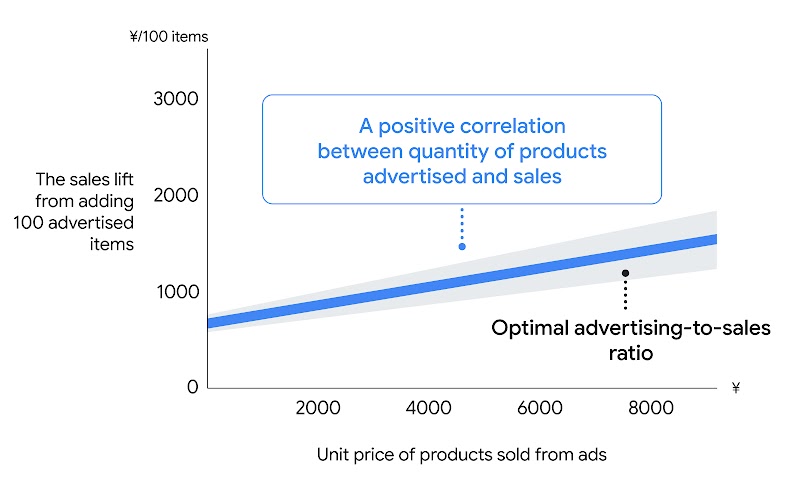
By analysing Google Ads data and Rakuten Ichiba’s purchase data together, it became clear that customers who saw a robust lineup of items in the ads bought the items they clicked on first, and also other related items.
In fact, the results show that the more items listed in the offsite retail media ads, the higher the sales, regardless of the items’ unit prices.
A common decision brands and retailers struggle with is how much campaign budget they should allocate to get optimal results. Google and Rakuten Ichiba’s experiments provide answers.
First, they established the baseline where the daily campaign budget relative to the product’s unit price would lead to a break-even outcome.
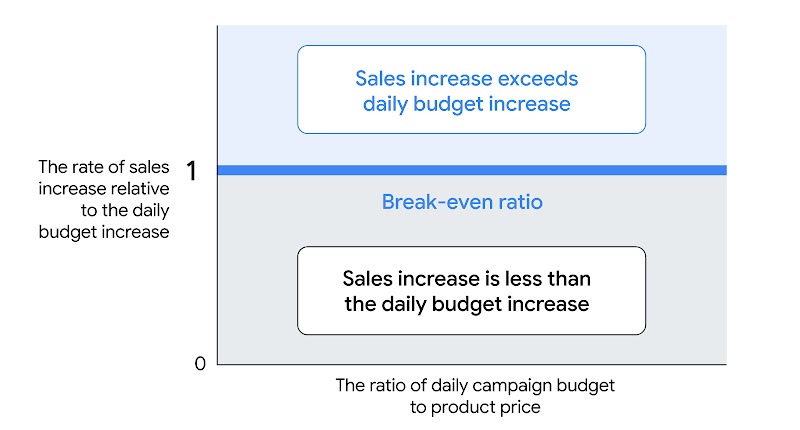
Next, they experimented to see how raising the daily campaign budget would influence sales. Their analysis showed that raising the budget to at least twice the product’s unit price would lead to an optimal increase in rate of sales.
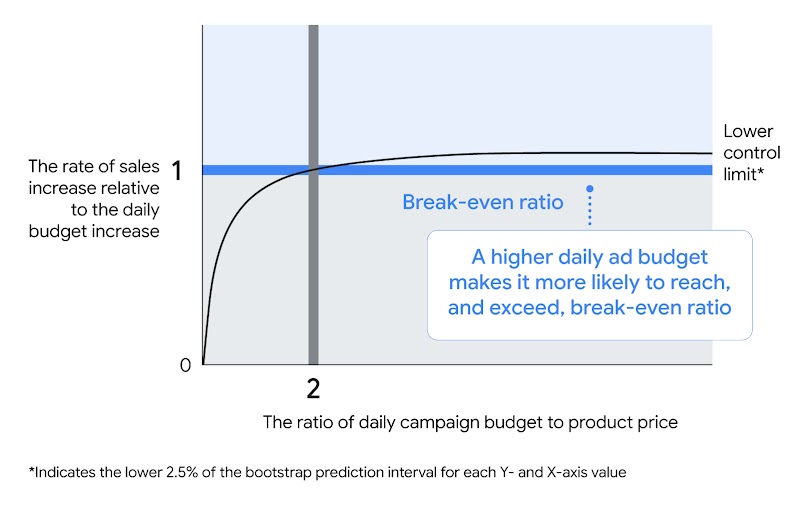
While the precise formula will vary from case to case, what doesn’t change is the principle: A higher daily campaign budget makes exceeding sales more likely.
So brands and retailers should gradually raise their offsite retail media budget as sales increase, and analyse the data to find their optimal budget level for growth.
The experiments further compared the outcomes between those who consistently applied the two best practices above, and those who didn’t.
The result: Those who did enjoyed sustained sales growth beyond the retail peak, including in periods of lower retail demand.
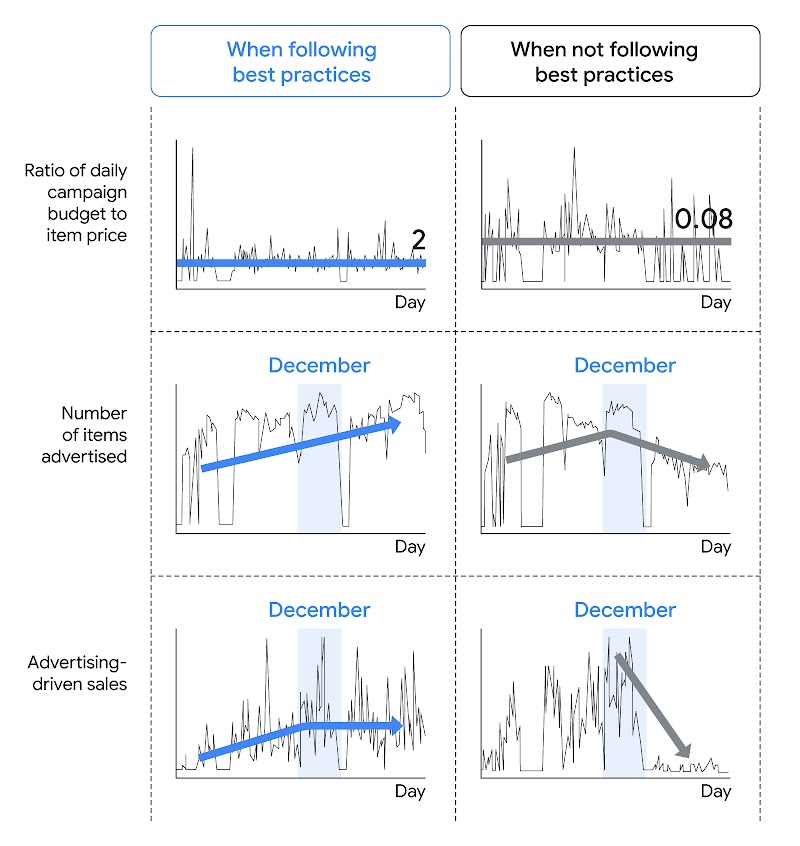
As the charts illustrate, in the instance where both best practices were applied consistently, sales continued to climb even after the peak year-end retail period in December.
However, in the instance where the daily campaign budget was set at 0.08 of the unit price and the number of items listed in offsite retail media ads was reduced midway through the campaign, sales driven by ads dropped significantly after peak demand.
Brands and retailers that want to grow e-commerce sales have no lack of offsite retail media options to tap into, including Commerce Media through Search Ads 360 and Commerce Media through Google Ads. And by applying best practices, they’re well-positioned to drive significant, lasting growth.
Contributors: Ryoji Imaizumi, YouTube Ads Marketing Manager; Takumi Yaguchi, Technical Solutions Consultant - Shopping