



 Sign in with Google
Eugene Healey is an independent brand strategy consultant, keynote speaker, and business lecturer. He specialises in cultural analysis and explaining how brands can win by enriching people’s experiences rather than appropriating them.
Growing old is a humiliating experience in the Western world right now.
And, in general, Western media portrayals of aging have much to answer for this.
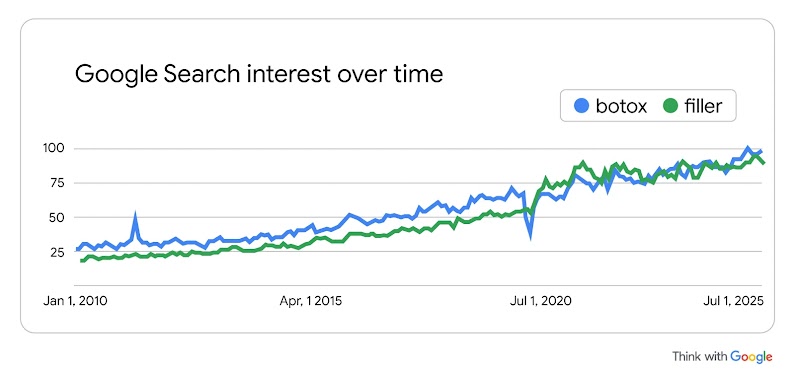
Just look at the cosmetic injectables boom. Botox and fillers have gone from Hollywood’s dirty secret to lifestyle content.
A cursory glance over international Google Search trends from 2010 onwards for “botox” and “filler” reveal an undeniable upward trend that’s picked up steam since the pandemic. But this isn’t simply a beauty trend — it’s a cultural obsession with the fantasy of ‘aging backwards’
This is compounded, on the complete opposite end, by popular news stories of older people that border on parody: skydiving, running marathons, riding motorcycles. These demonstrations all gesture at the same point: “I’m still young in mind and spirit. I can do anything!”
Performative aging and societal stereotypes
Lying beneath these demonstrations is a sinister subtext.
Let me explain…
The surgeon Atul Gawande outlines in his book — “Being Mortal” — how the Industrial Revolution forever changed the structure of values in Western society. As young people left their towns and villages to pursue work in cities, this shattered inter-generational households. The veneration of the family unit was quickly replaced with the veneration of the independent self.
Our worth as individuals became solely defined by our physical independence and our ability to produce, compete, and provide.
Our current fear of aging in Western society is closely tied to that loss of physical independence.
Our current fear of aging in Western society is closely tied to that loss of physical independence. In the West, once you lose your independence, you are often seen to lose your role in society.
Precious little has changed in our attitudes since then, but our image-focussed culture has escalated this to fever pitch. All our media and messaging around aging has become a performance around maintaining your independence.
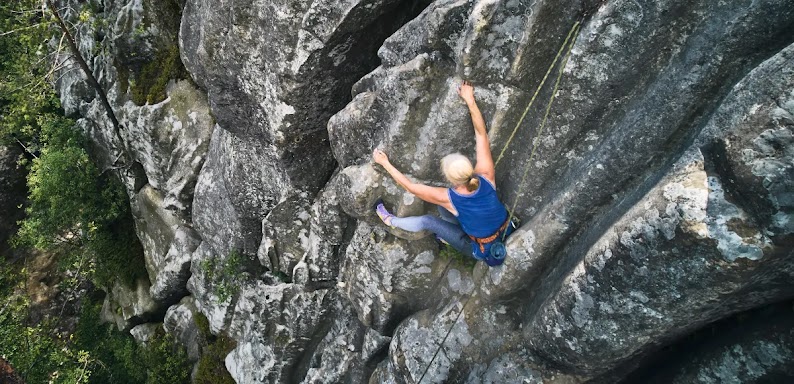
Ostensibly, those stories of older people skydiving, rock climbing, and running marathons are newsworthy precisely because this is not the norm.
Instead, they whisper the implicit message: “Others can do these great things. But you can’t. You should be embarrassed because you can’t keep up.”
There’s just one problem.
This is all a lie.
As we age, physical independence is the one thing that we simply cannot maintain indefinitely.
The reality is structural, not personal.
Almost all of us will eventually require some form of support — whether that’s help with mobility, medication management, or simply having someone check in regularly. This isn’t a failure of willpower or evidence of insufficient self-optimisation. It’s the basic reality of human biology.
I think in our hearts, we know that we will lose our independence. We’re just too terrified to be honest about it. That’s how we end up with marketing and media stories that continue to promote the idea that elderly people can and should maintain their independence. And, by extension, that it’s shameful to admit we need one another.
There’s a cruel irony here. By promoting this myth of perpetual independence, we’ve made the support systems people will inevitably need feel like moral failures rather than necessary infrastructure.
A call for more honest portrayals of aging
It’s time to start being more honest with ourselves. And there’s a business opportunity here:
The Baby Boomer population is aging and bringing their incredible wealth with them.
I believe one of the next big mega-brands is going to be one that understands and demonstrates how human life can be deeply meaningful even when you require physical support.
The opportunity here is for a brand that can finally express the complexities of aging. We’ve gotten comfortable presenting nuanced, multi-faceted representations of younger generations like Gen Z. Why should older people be flattened into either tragedy or superhuman inspiration?
We can already see inspiration for this taking place in the real world. On YouTube there are plenty of examples of honest, meaningful content about aging.
Just take a look at the account Nanny and the Moose, a self-described “pro-aging” channel that showcases the lives of a couple who are 80+ years old. Views on this channel have surpassed 7 million. One popular video from this account talks frankly about “how to recover from a slump in our aging years.” And the most popular video features Nanny giving a tutorial on how to do updos on thinning, aging hair:
Watch the video
A comment on the tutorial says: “Finally! An authentic presenter with practical suggestions. Nanny you add zing to the world of orthopedic shoes, doctor appointments and old age regrets.”
This is the internet we claim to want: honest, useful, refreshingly free of performance. It’s also a roadmap for brands that are brave enough to abandon the fiction that getting older is optional.
On that note, if you’ve started brainstorming ideas to better connect with senior audiences, I want it on-the-record that I want my millennial-branded retirement village to include daily avocado-toast brunches.