



 Sign in with Google
 Retailers have been using AI-powered ad campaigns to help them grow business online. But there’s a sales opportunity they might have overlooked.
AI-powered marketing can help retailers unlock offline sales and drive profitable growth in stores.
Kia India, Pandora, and Tanishq are businesses that have successfully used AI-powered marketing to generate offline leads, drive in-store sales, and maximise ROI.
Here’s a quick look at their AI-powered retail marketing strategies and how you can tailor them to suit your business and increase offline sales.
How to generate offline sales leads with an AI-powered platform
Businesses looking to turn online interest into offline sales are often hampered by friction in the online-to-offline conversion journey.
The challenge: Businesses need a platform that makes it easy for customers to discover brands, take immediate action, and be guided towards making an in-store visit or purchase.
How Kia India used YouTube to drive offline sales leads: Automotive manufacturer Kia India is an early adopter of YouTube on connected TV (CTV).
Having used YouTube on CTV to reach premium audiences in India, it wanted to deepen customer engagement.
So it tapped into a new Shoppable CTV feature which lets viewers interact with ads directly from their TVs — a QR code displayed during YouTube ads on CTV.
The QR code captures audience attention and interest, and when viewers scan the code, they can immediately take action, such as make purchases or explore exclusive offers. The feature also lets brands measure engagement and conversions in real-time to optimise their campaigns.
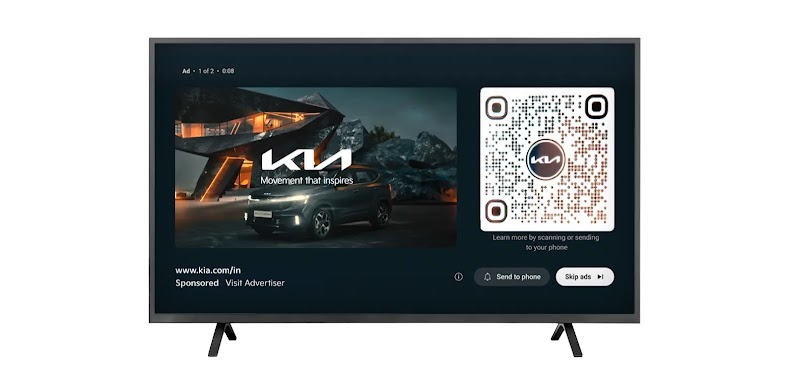
Kia India used the QR code feature in its CTV campaign for its Seltos SUV to direct viewers to its website where they could make a booking for a test drive.
The result: Kia India’s YouTube on CTV campaign led to a 10X jump in users clicking through to its website and a 3.6X increase in conversion rate for verified test drive leads.
How to increase in-store traffic and sales with AI in marketing
Businesses know from experience that when it comes to big-ticket items like fine jewellery, customers might start their purchase journeys online, but often, they’ll buy the items offline after having tried it on in-store.
The challenge: Businesses need their retail marketing to be effective in engaging customers wherever they are — online and offline, and seamlessly drive in-store traffic and sales.
How Pandora used AI-powered ads to grow in-store sales: The global jewellery brand used Shopping ads, Performance Max for store goals, and local inventory ads in Australia to help shoppers make purchase decisions easily, whether they’re online or offline.
With Shopping ads, Pandora could reach customers online with important information like shipping and return policies.
Performance Max for store goals helped it encourage online shoppers to check out promotions in stores. The campaign was also optimised with local inventory ads to feature available products at nearby outlets and the option for customers to click-and-collect.
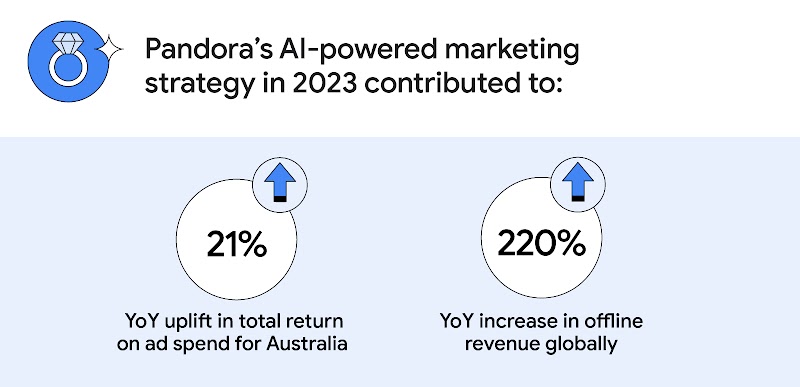
The result: Pandora’s AI-powered marketing strategy contributed to a 21% year-over-year uplift in total return on ad spend for Australia in 2023. That year, it also achieved, globally, a 220% year-on-year increase in offline revenue.
How to maximise ROI with AI-powered measurement
Another common struggle businesses face is accurately attributing their offline sales to their online campaigns. Without this information, they cannot effectively optimise their campaigns.
The challenge: Retailers need a comprehensive view of their online and offline marketing impact to optimise their campaigns, maximise ROI, and increase offline sales effectively.
How Tanishq used AI-powered measurement to increase offline sales: A leading brand in India’s jewellery industry, Tanishq makes most of its sales offline.
But it knows its customers’ buying journeys start in a digital environment before ending in a physical store.
So it designed its omnichannel advertising strategy to extend across its website and app, Search, and social media.
To fine-tune its marketing strategy and maximise ROI, Tanishq used Google’s store sales measurement solution to analyse the impact of its online campaigns.
It discovered that 26% of its store sales had a Google touchpoint; this grew its confidence in making further investments in Performance Max for store goals to drive footfall and in-store purchases
As a result, footfall to its stores increased and this significantly reduced its cost of acquisition by 38%.
So if you’re looking to generate offline leads and sales, and maximise ROI, use AI in your marketing.
With Google’s AI-powered Performance Max for store goals, Shoppable CTV, and store sales measurement, your digital marketing can help you drive reach and growth even in-store.