





 Sign in with Google
Shekar Khosla, VP of marketing, Google India, has extensive experience leading marketing at large companies across APAC and Africa. He is passionate about harnessing Google AI to drive innovation and positive impact for the community.
Marketing, at its heart, is about connecting deeply with the individual and uplifting the community.
Today, AI is not just reinventing how we execute that mandate. It’s redefining the scale and speed at which we apply it, while amplifying our creativity and empathy.
Nowhere is this opportunity more profound than in India — one of the world’s largest and most digitalised economies. Here, the shift to AI is truly seismic.
This shift is not a mere software update; it’s an ecosystem reset.
For Google India, the path to becoming AI-first starts with being people-first.
For CMOs, that means patching AI onto legacy systems and linear workflows will not work. To build truly AI-first organisations, we must look beyond the technology and focus on the culture that wields it.
For Google India, the path to becoming AI-first starts with being “people-first.” Here’s how we are navigating the shifts driven by AI.
The internal shift: From advocacy to avid AI adoption
When we began our journey to AI maturity, we recognised that the key to AI adoption is not technical prowess; it’s psychological safety.
So we set out to shift people’s internal narratives from anxiety about “AI as my replacement” to excitement about “AI for my empowerment.”
Our leadership team, as the first to embrace and advocate for AI, catalysed this change through an internal campaign that sparked employees’ curiosity and awareness about using AI tools.
Next, we ignited a fun learning culture through an “AI Squad” of early adopters. They shared personal stories and live demos, inspiring their peers to use AI in the workplace. And to build high-performing teams, we set up an “AI leaderboard” that fostered healthy competition in using AI innovatively.
We then personalised training for every marketer, bringing in experts to show them how AI can help them simplify and speed up workflows.
The outcome: When fear gives way to AI fluency, productivity naturally follows.

For example, our Google Play team used Pencil Pro, an AI-powered tool for generating creative assets at scale, speed, and lower cost. This freed up significant resources and time for our teams to focus on building even more creative, high-performing AI projects.
The customer experience shift: From generic ads to personalisation
With an AI-first culture, we can apply the power of AI externally to uplift customers through customised user experiences.
In India’s diverse market, one-size-fits-all marketing has never truly worked. Now, AI is bringing us closer to the marketer’s ultimate dream: Replace mass marketing with hyper-personalisation at scale and at zero incremental cost.
One way our Google teams are moving towards that goal is by building agentic workflows, where high-performing AI agents analyse, test, customise, and optimise for the most relevant ads for every audience segment in real time. That allows us to stay in sync with fast-evolving cultural trends and the social pulse of every community.
The outcome: Resonant marketing at the speed of culture.
One example is our AI-powered “Sports Creative Engine,” which we deployed during the ICC Women’s Cricket World Cup.
When the games went live, the engine’s Google AI agents analysed thousands of audience signals during micro-moments. The agents then captured key insights, tested them among audience segments with different levels of fandom, and generated resonant creative assets at scale.
Manually, this would have taken days, making the content stale by the time it launched. With this AI-powered engine, the entire process took under 90 minutes. This empowered us to personalise content for customers not only in their own languages and fan cultures, but also in their most engaged moments.
The ecosystem shift: From silos to shared value
An AI-first company cannot succeed in a silo.
We need to plant seeds of AI literacy not just among our people and customers, but across the entire ecosystem as well. Only then can we harvest the AI economy’s full benefits.
And that’s why Google is sharing our internal AI learning models with the wider community.
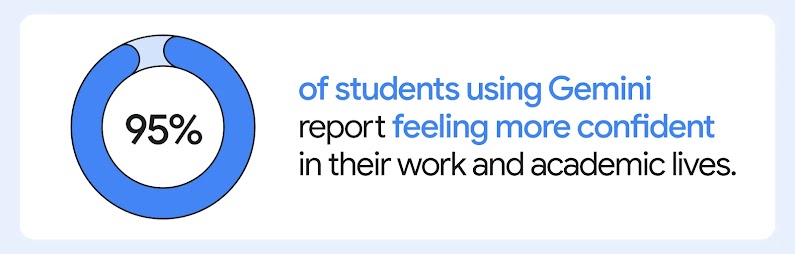
The outcome: Nurturing millions of future AI leaders through a range of initiatives.
- Establishing the AI Skills House: We’re committed to empowering 10 million Indians in the workplace through AI literacy programmes. To date, we’ve reached 1.5 million people through over 3,000 courses tailored for everyone from job seekers and entrepreneurs.
- Equipping the next generation: Through a partnership with Reliance Intelligence, we are offering millions of students the Google Pro plan at no cost. The results are visible in the explosion of creativity, with tools like Nano Banana sparking viral trends like the “AI Saree.”
- Training Campus Ambassadors: We’re working with student ambassadors across 3,000 colleges to guide their peers in using Google AI as a responsible career companion.
The watershed moment: Join us in forging the future of AI
Advancements in AI are bringing down barriers to cost, speed, and scale.
That’s opening endless possibilities to better understand our customers and deepen their love for our brands. Indeed, when it comes to uplifting individuals and communities, the only limit left is our imagination.
For my fellow CMOs, the message is clear: The technology is ready. Are we ready to forge the people-first culture and AI ecosystem that sustains it?
I invite you to join us in applying our creativity and empathy to building a transformative culture of AI — not just within our workplaces, but across India and the world.
Contributors: Preeti Kumar Raizada, Senior Strategy & Operations Manager; Farheen Haider, Product Marketing Manager
Social Module
Share