




 Sign in with Google
At Google Marketing Live (GML) 2026 events across Australia and New Zealand, the message was clear: We’ve moved beyond testing the potential of AI. We’re in the midst of the advertising industry’s most expansionary moment to date — the AI era.
AI is fundamentally redefining how consumer curiosity converts to business results. As an economist by trade, I often look to the Jevons Paradox to explain this search behaviour momentum: When technology makes something more efficient, we don’t do less with it — we do exponentially more.
As AI makes it more efficient for people to find exactly what they want, they search more, watch more, and engage more deeply. Google and YouTube are uniquely positioned to help marketers win the shift, with our full-stack intelligence engine giving you a direct pipeline from our labs to your bottom line.
The only way to win in the age of AI is with AI.
This is the Gemini Advantage we explored at GML, and we’ve put it directly in your hands through harder-working ad formats, better insights, and stronger AI integration. Because the only way to win in the age of AI is with AI.
Help consumers cross the Trust Line
While AI has massive potential to accelerate action, it isn’t automatic. Action relies on one critical factor: trust. In the agentic era, purchase decisions are governed by a new mental threshold we call the Trust Line.
It’s the baseline of confidence a consumer must reach before they’re willing to take action. When they encounter AI on platforms they don’t implicitly trust, it adds friction, triggering a verification loop — where shoppers go elsewhere to validate what they’ve seen. However, brands that show up on highly-trusted platforms like Google and YouTube benefit from a “trust transfer.”
Research confirms that Google is the No. 1 platform Australians trust the most when searching for products online, at least 4X higher than ChatGPT, Claude or social platforms including Facebook, Instagram, and TikTok.1
By showing up where consumer confidence is already established, your brand can bypass the verification loop and move browsers to buyers faster.
Capture nuanced intent in the expanding search universe
This intersection of curiosity and confidence is driving a significant transformation of search. And of all the incredible innovations we saw at GML, this is the biggest opportunity for AI marketing. The most important takeaway is this: search isn’t just evolving; it’s growing at a historic rate, with more searches than ever before.
The biggest opportunity for your business is the AI transformation of search.
This growth is fueled by a new suite of tools that empower customers to explore their curiosity. As our senior director of product management, Lou Wang, describes, search used to come with a “research tax” — the friction of juggling tabs and cross-referencing reviews to gain the confidence to act. And AI is removing that tax, ushering in the era of the super-empowered consumer.
WIth more ways to search, the scale of this shift is massive. Two years ago, we introduced AI Overviews which gives users a snapshot of key information about a topic or question with links — and today it has over 2.5 billion monthly active users.2 Last year, we launched AI Mode, which allows them to have a back and forth conversation with Search directly. One year on, AI Mode has already surpassed 1 billion monthly active users, and searches in AI Mode have been doubling every quarter since its launch.3
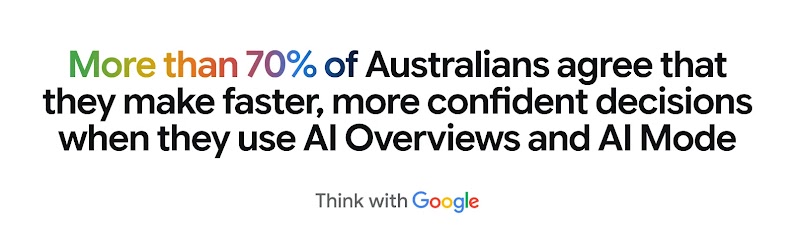
Because these tools make searching more natural, people are asking longer, more complex questions, on average 3X longer than traditional searches.4 And, as multimodal search expands, they’re using their voices and eyes to explore the world.
So what does this mean for marketers? Smarter, more conversational search means richer intent signals and faster paths to purchase.
The best ads are answers, and AI makes the answer you
If search is becoming a personal research partner, the best ads must be answers. And just as Google Search is becoming more intelligent, helpful and agentic, so are the ads across all our surfaces.
Adrian Vallelonga, our head of performance solutions here at Google AUNZ, notes we’re moving beyond matching queries to anticipating what a customer needs next. AI Max for Search with Performance Max were designed for this purpose, unlocking billions of net-new searches that manual campaigns simply couldn’t reach.5
And the advertisers using it are able to take advantage of ads across AI Overviews and AI Mode.
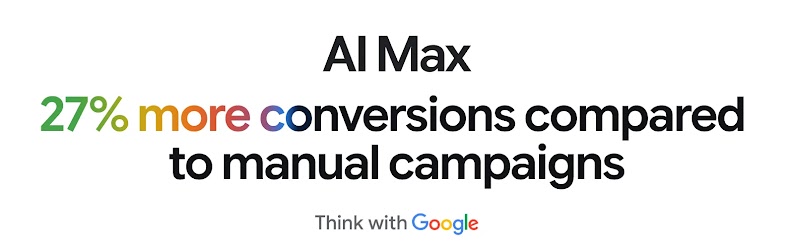
Telstra used AI Max to unlock a new wave of growth. Capturing long-form and multilingual queries, Telstra Digital saw a 52% increase in SIM orders and a 36% reduction in cost per order. For Telstra, this wasn’t just a performance gain; it was a shift in how they think about search — using AI to show up in moments of intent, however their customers search on Google.
YouTube: Winning the ‘long and short’
While search captures intent, YouTube is where demand is created. Analysis of Australian Effies data by independent consultant Rob Brittain found that campaigns including YouTube deliver 33% stronger overall business effects than those that don’t.6 YouTube is arguably the only platform that allows brands to win in the long and short — from building longer-term brand equity to driving sales impact in the near-term.
Why? Because YouTube is built differently.
It’s the foundation of intentional discovery, where audiences are leant-in and their attention is purposeful. With this mindset, audiences are more primed to engage with ads and when consumers trust a platform, they take action faster.
According to a survey by Kantar, 75% of Australians rank YouTube creators as the most trusted compared to other platforms, making YouTube the No. 1 platform people turn to when they’re ready to research and make a final purchase decision.7
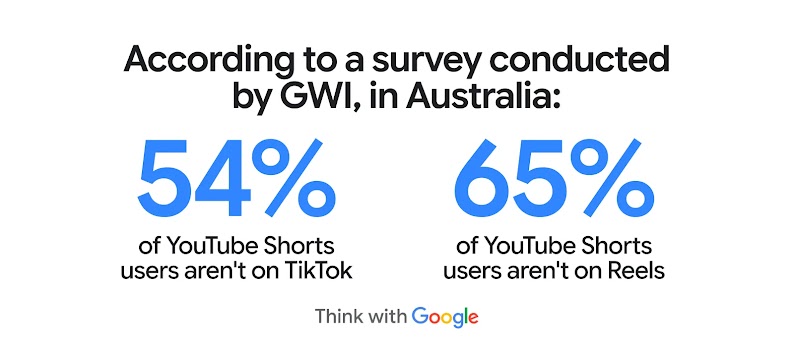
While this foundation of intentional discovery and trust are the foundation of performance, it’s YouTube’s unrivalled, exclusive reach that delivers the scale. In Australia, 54% of YouTube Shorts viewers aren’t on TikTok, and 65% aren’t on Instagram Reels.8 That’s a massive, untapped audience that can’t be found elsewhere.9
Today, the real magic happens when you layer Google AI over that powerful foundation. Demand Gen campaigns have had a massive upgrade with our latest Gemini models, and the result was a 30% increase in conversions, on average.
Australian travel insurer 1Cover used Demand Gen to meet travellers earlier in their planning journey, even before they started searching for policies. They achieved a 30% lower CPA compared to social media, and a 5% increase in customers.
We know that comparing performance across multiple channels has historically been difficult. Now, with the new Campaign Type Attribution for Demand Gen, you can isolate the conversions that your YouTube campaigns specifically drove — entirely separate from the rest of your Google activity. Plus, this helps compare YouTube’s performance against social media or other online video platforms that may not be split across multiple touchpoints.
Measurement: Turning data into decisions
For data-driven marketing In the agentic era, measurement has moved far beyond a post-campaign reporting ritual. It’s now a dynamic navigation system for every decision you make.
As Sarah Harrington-Birch, Head of Data, Measurement and Analytics at Google AUNZ, puts it: Getting measurement right compounds rewards faster than ever, but only if you nail the basics with the right AI tool that can deliver impact, clarity and confidence.
We know AI is only as good as its inputs. Advertisers who build their data strength through tools like Google Tag Gateway and Google Data Manager see an 11% average increase in incremental ROAS.10 But the real advantage comes when measurement moves from being a tool to being a culture.
Tim Doyle, founder of digital healthcare company Eucalyptus, proved this. Eucalyptus scaled from a startup with no revenue to selling their two biggest brands for $1.15 billion USD in just seven years — and he attributes this growth to getting measurement infrastructure right first: “You can’t scale if you don’t know what’s working.”
‘’Paid Google Search is our single biggest channel in terms of total incremental growth and the highest ROI.’’
— Tim Doyle, Founder of Eucalyptus
Eucalyptus built a verified foundation with Google’s open-source MMM, Meridian, which revealed that Paid Search was the single biggest channel in terms of total incremental growth and the highest ROI. This led to expanding their Search budget 12X over three years. Google Ads drove 9X more incremental conversions and generated $42 million in incremental revenue last year alone — all while remaining profitable.
Doyle’s advice? “Get measurement right, then back yourself. If a channel drives profitable incremental growth, put your money where your mouth is. Don’t be afraid to go big.”
Go big or go home
One of the most provocative insights of GML came from marketing effectiveness expert Les Binet. He challenges the industry to move beyond “small thinking,” which he defines as the obsession with narrow efficiency and doing more with less. This, he warns, can lead to a detrimental spiral of diminishing effectiveness.
The reality is that many marketers are focusing on the wrong metrics. When surveyed, CMOs said that ROI is nearly twice as important as budget in driving campaign profit.11 But research reveals a startling truth: budget is 9X more important than ROI for driving actual business profit.12
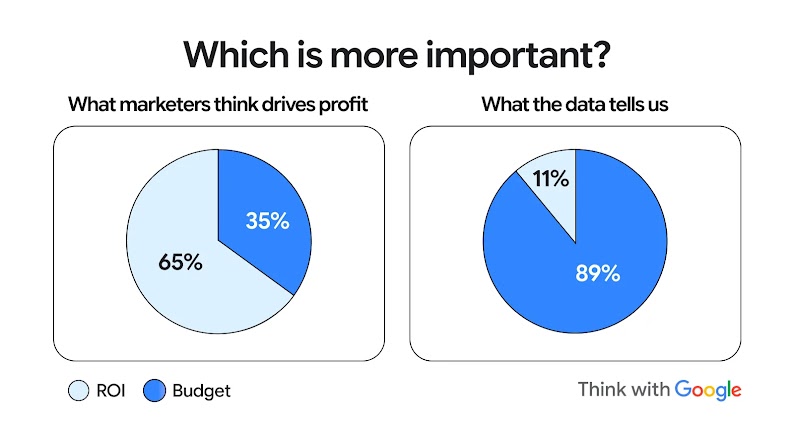
Effectiveness is largely about scale. To grow, brands must set their share of voice above their market share and with optimal budgets, maintaining a mix between brand-building and short-term sales activation — typically a 60:40 split.
Even in tough economic times, brands should resist price cuts. Instead, maintain your brand-to-activation balance to preserve pricing power, and don’t cut too deeply to maintain your ad-to-sales ratio. In other words: “Think big to stay big.”
The future of agentic commerce is here
It’s big-picture thinking that keeps Google in a category of one. As GML showed us, we’re no longer just testing AI’s potential.
Google has assembled all the components for an agentic commerce future — and our ultimate vision is one that is open, collaborative and built for everyone to succeed. We co-developed the Universal Commerce Protocol (UCP) to help make agentic commerce available to everyone. Google has always been a platform, powering the entire shopping ecosystem. We’re a matchmaker. Not a retailer nor a marketplace, we connect shoppers directly to businesses. We’re introducing UCP-powered features and AI tools to create a more intuitive, agentic shopping experience on Google for both consumers and retailers.
Whether it’s Android for developers, YouTube for creators, or Search for the open web — this ecosystem mentality that has guided us for decades will continue to guide us in the agentic era.
Make the Gemini advantage your business advantage.
The AI tools to find, understand, and do more for your customers are in your hands today. Make the Gemini advantage your business advantage — it’s time to go big.
Ready to put the Gemini Advantage to work? Watch the full Google Marketing Live AUNZ experience on demand at Accelerate with Google.
Social Module
Share