





 Sign in with Google

Food and beverage titan PepsiCo owns many household names. But its marketers never expected them to become household ingredients.
The company’s journey began when its marketing team noticed a rising trend in home cooking a few years ago. Using PepsiCo snacks like Doritos, people were making everything from esquites to stews, and uploading videos of their taste tests to YouTube.
In response, Pepsi launched FLVR, a food entertainment marketing program that works with content creators to cover the “chaos cooking” phenomenon: a type of fusion cuisine that’s part earnest experiment, part prank. Partnering with 169 creators to date, PepsiCo has made YouTube its fastest growing platform, and FLVR, PepsiCo’s most-subscribed food channel. Here are some lessons from the program’s success.
Tap into hard-earned trust
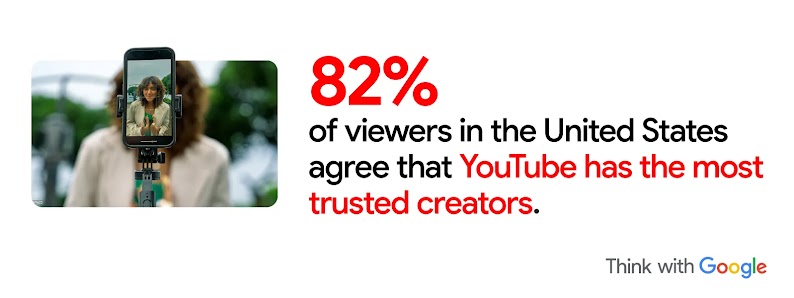
YouTube creators have built a reputation for fostering strong relationships with audiences compared with content creators on other platforms. According to a recent survey from Kantar, 82% of viewers in the United States agree that YouTube has the most trusted creators.1
With upward of 3 million creators in the YouTube partner program, FLVR needed a clear strategy. The team prioritized working with creators who were telling real stories.
By joining forces with micro- and mid-tier creators across a range of genres and interests, PepsiCo was able to tap into multiple dedicated fan bases. For example, Marquay the Goat, a comedic food creator, and Crissa Jackson, a basketball player and creator, shared videos with a combined 1.3 million subscribers to promote the Super Bowl LVIII launch of Doritos Dinamita Chile Limón.
- The takeaway: Prioritize genuine creator rapport over follower count. Authentic engagement, regardless of community size, drives greater brand impact.
Treat creators like creative directors
When FLVR launched in 2020, it bet big on granting creators the freedom to craft their own creative without heavy oversight. “We like to say our creators are our creative directors,” said Erin Higgins, social media director at PepsiCo. “They’re our core collaborators.”
The best branded content earns real attention. That only happens if brands treat creators as true creative partners.
On their YouTube show Culinary Crimes, cross-genre creator team Smosh tries out kooky cuisine combinations, such as pepper and pancakes. FLVR gave Smosh the creative latitude to develop their own Cheetos-based recipes and present them the way they wanted.
“The process was highly collaborative, from initial concepting sessions with FLVR through recipe selection, casting, production design, and editing,” said Chloe Mays, brand partnerships manager for Smosh.
“The best branded content doesn’t just check boxes; it entertains, engages, and earns real attention. That only happens if brands treat creators as true creative partners, not just media channels.”
Source: PepsiCo Internal Data, June 2025.
Theresa Gaarde, head of sales and partnerships for Popular Pays, selected Smosh for the campaign because of how their sensibilities meshed with FLVR’s aesthetics.
“When someone searches for ‘weird food combinations,’ they’re actively seeking the kind of content FLVR delivers,” she said of the strategy. “Our Smosh partnership worked because both brands were already serving passionate food communities. It wasn’t forced; it was a natural synergy.”
Smosh’s vertical videos ran over a minute long, and both riffed on the show’s “investigative” approach to figuring out if certain food combinations — like Flamin’ Hot Cheetos and chocolate — work. The Demand Gen campaign drove 90,000 conversions, a 1.85% conversion rate, and a 51% more efficient CPM compared with the industry benchmark. It also yielded multiple versions of the comment, “Their [Smosh’s] ads are the only ones I’ll watch.”
- The takeaway: By granting creators like Smosh full creative control, FLVR was able to produce branded content that naturally resonated with their shared audience.
Power reach with YouTube Shorts
FLVR’s reach strategy involved making use of the creative variety YouTube offers. Though Smosh’s long-form episodes were what caught Gaarde’s eye, PepsiCo needed the team to publish two YouTube Shorts as well.
“One of our biggest challenges was making sure the humor and storytelling landed in a much shorter time frame without losing the irreverent, high-production feel our audience expects,” said Mays. “We solved that through tight pacing and a clear creative vision.”
Of FLVR’s 328 videos, more than 300 are YouTube Shorts, and the short-form strategy appears to be working. Since launching its channel, FLVR has gained over half a million subscribers, lifting ad recall and purchase intent by 12% and 3% for brands ranging from Ruffles to Pearl Milling Company.
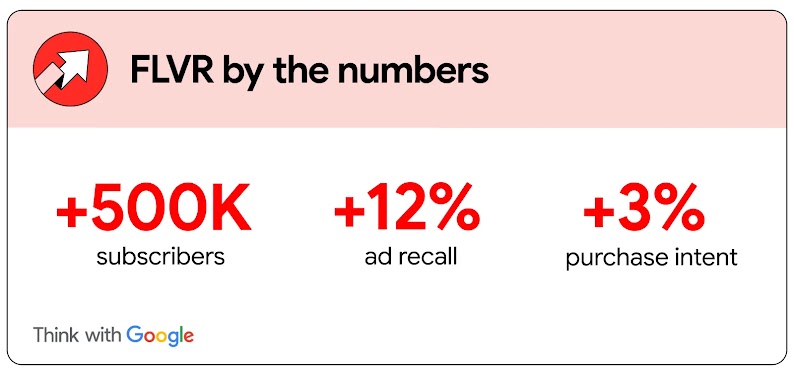
- The takeaway: FLVR used YouTube Shorts to expand their reach, successfully adapting creators’ long-form storytelling into a condensed, high-production format. This boosted key metrics like ad recall and purchase intent.
By giving content creators the space to do what they do best, FLVR has forged a collaborative model that centers talent. That emphasis on authenticity is especially valued by the younger audiences PepsiCo seeks to reach, said Mays.
“Gen Z audiences have a sharp radar for anything that feels forced or inauthentic,” she said, noting that some of the campaign’s most vocal fans were also the first to deny watching ads. “[This partnership] was a great example of how branded content can still feel fun, authentic, and true to both partners’ identities.”
Social Module
Share