





 Sign in with Google
Liz Reid, VP of Search at Google, sat down for a fireside chat at the Interactive Advertising Bureau’s 2026 Annual Leadership Meeting (IAB ALM) to discuss the new era of Search and Google’s vision for this expansionary moment.
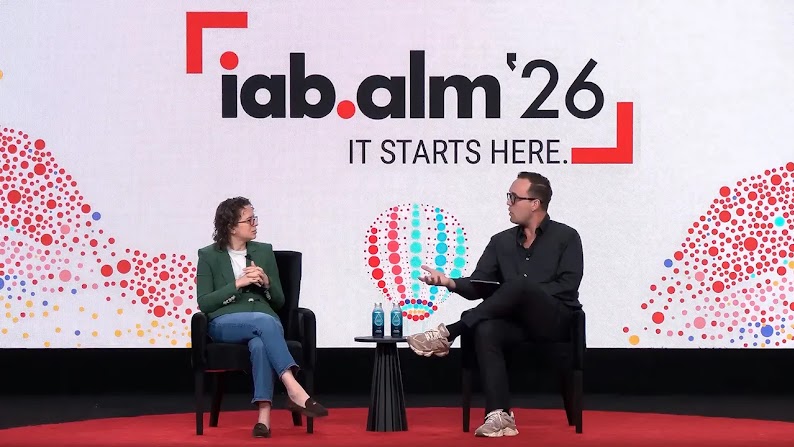
Google Search chief Liz Reid has navigated several paradigm shifts in her time at Google, but the current AI inflection point represents the most exciting and expansionary moment in Search’s history. Speaking to an audience of advertisers, publishers, and agencies at the IAB ALM, Liz explained how AI-powered innovation is driving Search momentum by delighting users and unlocking new ways to discover information.
Here are our top five takeaways from Liz’s talk that you need to know to make the most of this moment.
1. AI is making Search more intelligent and building better connections to the web
Liz’s take: “What we saw when we started to work on AI Mode was that there was this gap between a traditional search page and an AI chatbot. People wanted to have that sense of conversation, that ability to ask the next question without feeling like you had to repeat everything. … But they wanted the trust of Search, the speed of Search, and, in particular, they wanted that connection to the web. We see people really continue to hunger for that continued connection to the web.”
What it means for marketers: As Search evolves into a multi-turn dialogue, we are observing an expansion in query complexity and long-tail commercial intent. A significant portion of queries in AI Mode now lead to a follow up question.1 Search has never been more powerful at connecting consumers to new discoveries and decisions. This means more and better opportunities for advertisers to be there as the best answer. As we continue to expand and experiment with ads in AI Overviews and AI Mode, expect new opportunities to connect with consumers who are asking new kinds of questions. To take advantage of this, advertisers need to adopt AI-driven tools like AI Max for Search and Performance Max to help find more customers and deliver better experiences at the speed and scale of human curiosity.
2. Search and the web have gotten way more visual
Liz’s take: “A big thing we’re seeing with user preferences is that they’re changing in the types of content [they want]. It’s not just reading a webpage. It’s listening to podcasts. It’s watching videos. They’re looking at pages that have a lot of great images that teach people things. They’re used to looking at images all the time. They’re used to looking at videos.”
What it means for marketers: Consumer engagement has shifted toward multimodal discovery. The journey is no longer linear; it is a synthesis of images, videos, text, and more. Generative AI is making it way easier to create the high-quality visual assets critical for discovery across experiences like Google Lens and Circle to Search. This is especially true of increasingly visual experiences, like shopping in AI Mode, where users are not only browsing and comparing, they’re using images to refine searches and virtually trying on clothes. Start with your existing YouTube content, product photography, and video assets. The AI tools inside Asset Studio let you generate and scale creative with industry-leading models, including Nano Banana Pro.
3. SEO, AIO, GEO: No matter what you call it, the best strategy is to build for people
Liz’s take: “In many ways, our advice is the same: Create great content for people. What are you an expert in? What is the unique perspective you bring? Why would someone go to your site versus 50 other sites? Producing great content at its heart is the same. But there are ways in which AI is evolving how to think about that. One example is that with AI, we use a technique called query fan-out. Instead of a user using a few words, they may ask a longer question. And that question may have multiple facets.
“We take that query, and we don’t look for a single webpage that has to answer all those terms. We’ll break it down. We’ll issue many queries behind the scenes and bring up different content. Content that will thrive is content that will do a great job on some aspect of that, versus content that tries to answer everything in the shallowest way. Because people actually want to dig into each of the individual pieces. They’re not going to a website to get a one-sentence thing. They’re going to a website to immerse themselves and learn.”
What it means for marketers: The underpinnings of what Google has long advised carries across to our new AI-powered experiences. Focus on making unique, non-commodity content that visitors from Search and your own readers will find helpful and satisfying. Then you’re on the right path for success with our AI search experiences, where users are asking longer and more specific questions — as well as follow-up questions to dig even deeper.
People can perform multimodal searches where they snap a photo or upload an image, ask a question about it and get a rich, comprehensive response with links to dive deeper. For success with this, support your textual content with high-quality images and videos on your pages, and ensure that your Merchant Center and Business Profile information is up-to-date.
The only thing predictable in Search is that it always evolves because people’s needs are always evolving. Our AI experiences represent yet another evolution with Search, so that we continue to best meet shifting user needs. This evolution also means new opportunities for site owners.
4. AI makes ads more relevant and helpful in Search
Liz’s take: “We have a long history of thinking about how you introduce ads in a way that they must be really relevant to the user. People come with a lot of commercial needs to Search. They come to buy a great pair of shoes, or to buy a dishwasher, or to go out to eat. There’s a lot of opportunity for ads to provide value to the user and to allow users to discover new brands.
“As people ask longer questions, the ads can be better targeted to people. As users specify more detailed queries, the ads can be more targeted in a way that’s good for the advertisers. If you’re the niche advertiser and you’re that brand that has a particular value that the user relates to, now you have a chance to surface in a way that you previously couldn’t break out.”
What it means for marketers: As Search gets more intelligent, it gets better at helping users find the information they are looking for, whether that’s an AI-generated response, a website, or an ad. Because the best ads are just answers. The same intelligence that is powering Search is helping your ads do more. That’s the Gemini advantage in Search. We can better understand user intent on complex queries and show them personally relevant ads that meet their needs.
AI Max, for example, was launched in 2025 and is already unlocking billions of net new searches that advertisers weren’t reaching before. More generally, with the introduction of Gemini models into Search, we can better evaluate relevance and intent at scale and deliver more helpful, high-quality ads.
5. Users can make Search more personal and powerful
Liz’s take: “We’re really looking at personalization and how we help users who have a relationship with publishers. We have things like Preferred Sources that allow users to tell what sites they love. We’ve been experimenting with subscriptions making it easy to connect. So when you have that relationship with that user, we’re trying to make it easier for that user to connect directly with your content.”
What it means for marketers: These personalized search experiences make Search a bespoke discovery engine for users and a powerful retention platform for publishers and brands.
Preferred Sources allows people to select their favorite websites and see more from them in Top Stories. Preferred Sources in Search lets users customize Top Stories to see more from their favorite outlets and sites, and helps websites strengthen their audiences. People have selected a wide range of preferred sources — nearly 90,000 unique sources, from local blogs to global news outlets. When someone picks a preferred source, they click to that site twice as much on average.
We will also be introducing new ways to prioritize and highlight links from people’s subscriptions in our AI experiences, helping people get more value from their subscriptions and helping brands deepen the relationship with their loyal subscribers.
Social Module
Share