





 Sign in with Google
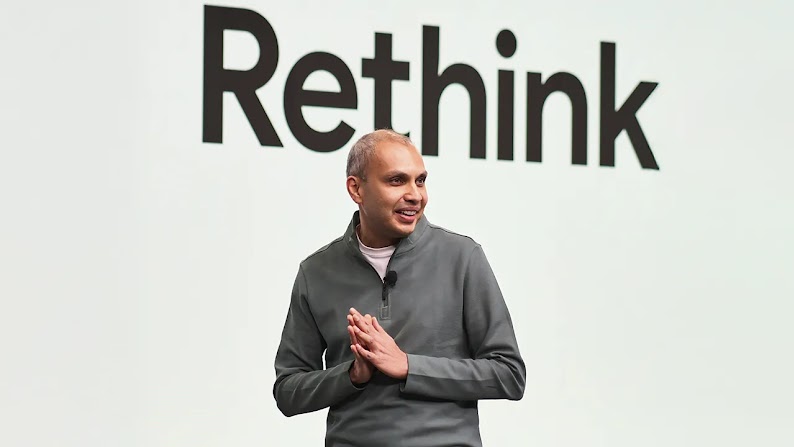
In this Q&A, Joshua Spanier, Google’s VP of AI marketing and strategy, and host of the new Frontier CMO podcast, sat down with Gaurav Bhaya, VP and GM of buying, analytics, and measurement at Google. Drawing on his experience leading Google’s AI marketing transformation, Josh talks with Gaurav about why sophisticated measurement is the modern CMO’s secret weapon for growth and how to build a data-driven team that delivers.
The marketing brief has changed. Budgets are tighter, scrutiny is higher, and the cost of being wrong compounds fast in a market that learns at the speed of AI. The race keeps accelerating.
Measurement is where that pressure — and that opportunity — converge. New AI-powered marketing measurement tools are transforming the CMO’s power to measure and plan, yet, somehow, they still suffer from an outdated, “back-office” reputation. It’s time for a reset.
Josh Spanier: Let’s dive right in. What’s the biggest shift in measurement you see coming in 2026?
Gaurav Bhaya: The end of what I’d call the “dark spend” era. The whole media environment has changed, and the tolerance for guessing has collapsed. Volatility is higher, competition is faster, and budgets are under sharper scrutiny, which means every dollar has to do real work. CMOs today need an anchor. To borrow an expression from Brené Brown’s latest book, measurement is quietly becoming that “strong ground.” Something stable to stand on but dynamic enough to move with speed. No longer as a reporting ritual, but as a way to lead decisively, because you understand what’s happening and can make moves with confidence.
The highest order challenge in media measurement today isn’t where to invest. It’s not understanding the cause of an effect.
Josh Spanier: When you say “every dollar has to do real work,” what does that mean in practice?
Gaurav Bhaya: It means every dollar should perform one of two jobs: You’re either converting existing demand to close a deal right now, or you’re creating new demand by building the familiarity required for a future sale. The highest order challenge in media measurement today isn’t where to invest. It’s not understanding the cause of an effect. The danger for most advertisers isn’t a lack of budget; it’s the visibility gap. If you can’t see which ads are building desire and which are just ringing the register, you’re operating in the dark.
Josh Spanier: Operating in the dark? How so?
Gaurav Bhaya: Because that’s how it can feel when signals are fragmented. Different platforms tell different stories and rally behind different behaviors. KPIs and outcomes coming out of Meta, Google, and Amazon rarely align neatly. And some numbers that look comforting at first glance don’t actually map to business outcomes. This is why it’s so critical for advertisers to look at performance across channels and platforms in a single view. It’s why marketing mix modeling (MMM) is going through a renaissance, fueled by innovations like Google’s Meridian. Using an open-source, Bayesian framework, Meridian allows advertisers to integrate cross-channel data and experiment into a single, transparent model that maps back to real business outcomes.
The cost of guessing
Josh Spanier: That makes sense. So if measurement is the light switch in the dark room, what happens if you don’t flip it?
Gaurav Bhaya: You might end up over paying to get the results you need, usually without even noticing. We’ve come to understand that legacy measurement practices create a clarity gap, a fog that keeps you from seeing when parts of your budget have stopped working as hard as they should. So you keep spending “lazy dollars.” In 2026, that guessing comes with compounding costs.
Josh Spanier: Like what? Walk me through some of them.
Gaurav Bhaya: Sure. Right out of the gate, there’s wasted spend. If you’re not optimizing media mix, channel allocation, and creative fast enough, you’re overpaying for outcomes. Second, if your competitors are investing in modern measurement, you are losing ground to them. It may not seem like it immediately, but it’s happening. Third, the longer you wait, the more momentum you’ll lose. Measurement is a flywheel. Every learning cycle makes the next cycle smarter. Skip cycles and the loss isn’t linear; it compounds. Lastly I would say that poor measurement habits can hurt your brand. If the wrong ads, stories, experiences hit the wrong people too often and in the wrong places, you create fatigue which can erode trust.
With AI, measurement is becoming less about describing performance and more about decoding demand mechanics.
The science of demand
Josh Spanier: I recently saw you speak at an event and talk about something you called, “the science of demand.” Can you explain what this is without making it sound like just another buzzword?
Gaurav Bhaya: I can try! It’s simply the ability to understand, at a system level, what creates demand, what captures it, and what converts it. For years, marketing teams have had lots of data but limited certainty. Now, with AI in the loop, we can collect a wider set of signals, connect them with more finesse to better understand performance, and translate complexity into CFO-grade guidance. It’s basically an equation: data plus causality plus better decisions equals profitable growth. This is why 2026 is going to be a massive turning point. With AI, measurement is becoming less about describing performance and more about decoding demand mechanics.
Josh Spanier: What mechanics? What are CMOs actually trying to master?
Gaurav Bhaya: Again, it’s really about three things. First, you create demand by sparking intent before a customer even knows what they’re looking for. Next, you capture it by showing up at the exact moment a decision is being made. And finally, you convert that demand by turning raw attention into action, using those insights to map out exactly where your future value will come from.
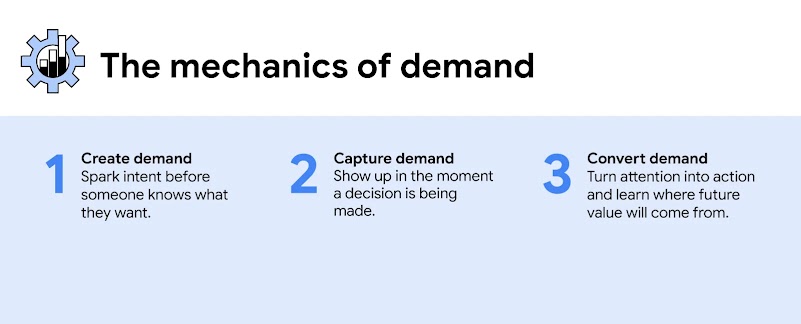
The “science” is also connecting and calibrating those phases instead of optimizing each in isolation, and understanding the time horizon of your category so you don’t make a mistake, like killing something that’s working just because the ROI doesn’t show up in a 30-day window.
Josh Spanier: Thanks for bringing up the 30-day window. Why do so many businesses still orient their strategies around short-term metrics like last click?
Gaurav Bhaya: Because it’s comforting. It’s clean. It feels like certainty. But it’s often a high-definition photo of the finish line, while the rest of the race is blurred. In long-cycle categories, demand is created upstream and harvested later. If you only reward the final click, you can end up killing the engine that generated the desire in the first place. That’s the “hidden half” of influence: touchpoints that don’t convert within 30 days but still do real work.
Growth governance
Josh Spanier: That makes a lot of sense. How can a clearer view of long-term versus short-term ROI change a CMOs perspective?
Gaurav Bhaya: The short answer is that marketing is capital, either misallocated or optimized, depending on what you know to be true and what you can credibly expect it to return. We’ve been talking a lot internally about the responsibility of marketing leaders to govern growth. Growth governance is the discipline of managing marketing like an investment portfolio: bets sized and timed with intent, guided by evidence, calibrated over time, and accountable to ROI. It’s less opex you justify and more capex you deploy, investment in future demand and brand equity that pays dividends.
Josh Spanier: So what does that mindset help unlock for organizations?
Gaurav Bhaya: Things like pacing the business. Measured marketing helps you plan out quarters with more confidence, understand the true cost of growth, see where profitability lives, learn what discounts do (and don’t do), and anticipate volume needs and capacity constraints. At that point, measurement stops being a marketing function and becomes an instrument for the whole company. This is how marketing leaders of the future earn more credit and grow their budget.
Growth governance is the discipline of managing marketing like an investment portfolio.
Better decisions
Josh Spanier: This sounds powerful. What is it going to take for brands to get to this point? Or better yet, if you were going to build something to do this, what exactly would you build?
Gaurav Bhaya: A high-fidelity AI-powered decision engine, built for the realities of 2026. Measurement is the hunt for a clean and detailed “because.” Causality is the North Star. It teaches you not just what happened, but what made it happen. So marketing leaders can act more intentionally, fix what failed, and repeat what’s winning.
Josh Spanier: What are the primary components of a decision engine?
Gaurav Bhaya: Exactly what you might expect. The trifecta. Attribution for speed and operational directionality. Incrementality experiments that validate what truly moved outcomes. MMM for strategy, a portfolio view that stitches channels, time horizons, and partial visibility into one allocation logic.
Individually all of these components may tell you different stories and lead you in different directions, but when brought together and used to calibrate each other, they can get you much closer to an accurate truth range. This is the power of AI; it’s now robust enough to decipher all of the moving parts to discover the “why” behind the outcomes.
Josh Spanier: What concrete difference will it make for CMOs?
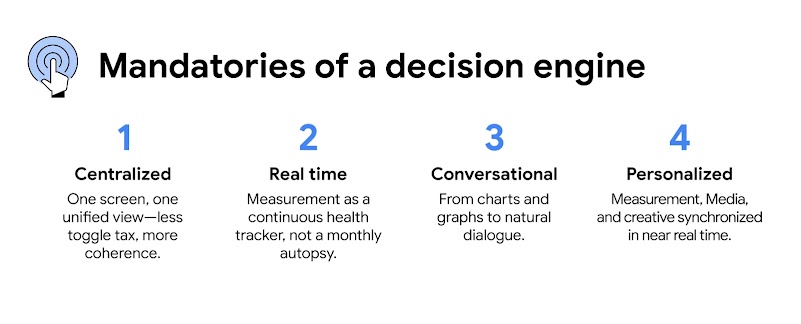
Gaurav Bhaya: It will help them make better decisions. Measurement should become more central to the CMO’s day-to-day. We’re moving toward a centralized, one-screen view that kills “toggle fatigue” and can monitor growth in real time. It’ll act as a strategic co-pilot, letting you bypass complex charts to get direct answers and proactive assistance. This shift simplifies the data, making it easier to unlock unprecedented personalization. Now, audiences, measurement, creative, and media will connect in a near-real-time loop to predict and produce defined business outcomes, not just report that they happened.
Josh Spanier: Exciting stuff. OK, last question. If you bumped into a CMO on an elevator and had 30 seconds to help them rethink their measurement strategy, what would you advise them to do?
Gaurav Bhaya: Start now. Measurement compounds like interest, and the earlier you build, the more resilient you’ll be. Stop treating measurement like a report card. It’s your steering wheel. Govern your growth like an investor, because fragmented signals are just a tax on your revenue. When you calibrate with discipline, you turn measurement from a defensive autopsy into an offensive engine. In this race, the CMO who hits the light switch first doesn’t just see the room, they own it while the competition is still grasping in the darkness.
Social Module
Share