





 Sign in with Google
Shopping for a home or car insurance policy can be a complex, time-intensive undertaking. Enter The Zebra, an insurance comparison marketplace whose mission is to match people with the right plans. Until recently, finding coverage on the platform meant filling out a detailed inquiry form that returned links instead of policy options — a boon for ad-click revenue but not for sales.
Carlton Kim, senior director of search engine marketing at The Zebra, recognized that the experience fell short for those expecting a direct quote. To build a sustainable, long-term business, the company made a strategic pivot by shifting its primary performance focus from driving clicks to securing sales, and realigning its marketing goals with core business growth. In the process, the company and its measurement partner were able to design a predictive model for evaluating customer lifetime value. Zero form fills needed.
Tightening the feedback loop
Matching shoppers with the right insurance policy takes time, anywhere from seven to 30 days. The team noticed that automated bidding algorithms were missing out on the feedback they needed to find high-value prospects.

To bridge this weekslong gap, the team focused on a critical middle milestone: the “bridge clicker.” Once an applicant reaches the results page, they can either click a third-party ad or select a policy tile to call the agency and purchase. Selecting the policy tile is the user’s final digital action before buying a policy offline.
Beginning in April, The Zebra began using this milestone as a microconversion metric to feed immediate signals back to its bidding models. Since the team couldn’t calculate the value of each click dynamically, they assigned fixed numbers. Those first numbers were artificially high, somewhere between $75 and $100, to give the automated bidder a strong signal. Once they had the first-party data they needed, the team dialed it back to a realistic value.
Unifying signals to predict customer lifetime value
To support this new bidding strategy, The Zebra needed a much stronger data foundation. Partnering with software company Switch Growth, it transitioned to enhanced conversions for leads, a secure measurement solution that matches offline sales with online campaigns. The team increased the frequency of their data uploads using a format that included securely hashed customer information, which dramatically increased their match rates.
“Coming into our partnership, our data quality was graded as a C-average student,” said Kim. “But once we were able to increase our data quality to an A+ average, that really enabled us to hit another gear. In moments where it was once difficult for us to find scale and ramp up campaigns, it is no longer a major hurdle.”
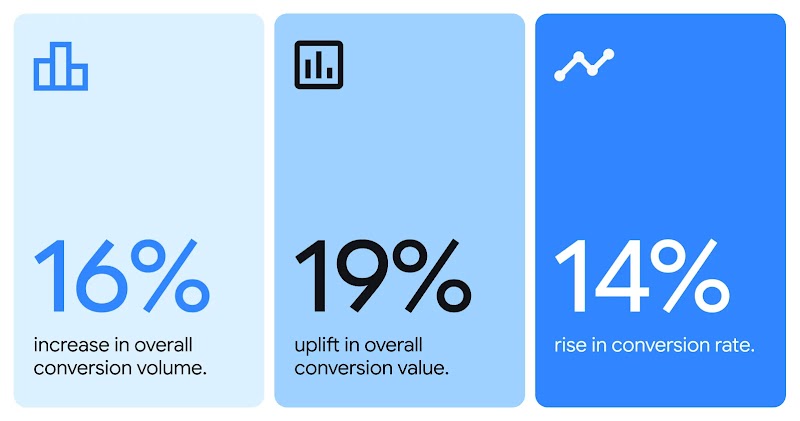
By unifying its offline data into a single biddable signal, The Zebra achieved a 16% increase in overall conversion volume, 19% uplift in overall conversion value, and a 14% rise in conversion rate.
The next evolution
The company plans to refine its predictive lifetime value models to better align value-firing moments with its actual operations. It has also expanded its core product to include price tracking, an automated shopping feature where users upload their current policies and receive notifications when cheaper rates are found. This product evolution gives customers a clear reason to return to the site, helping the team reduce customer reacquisition costs while building long-term customer relationships.
When we think about the future of growth in general, it is entirely built around intelligence and data.
“Now when we think about the future of growth in general, it is entirely built around intelligence and data,” said Kim. “The value of investing in your systems is that it makes everything more efficient and allows us to focus on what we really care about: our customers.”
Social Module
Share