





 Sign in with Google
If 2025 was about experimentation, 2026 will be defined by integration. We asked 10 marketing industry leaders — from CMOs to marketing luminaries and top advisors — to identify what is becoming more and less important in the new year.
The verdict? Stop panic-piloting and start integrating. The era of disconnected tests and brand versus performance is over. You can’t bolt AI onto legacy processes. But the challenge isn’t just internal. As we move toward an “agentic” web — where AI assistants shop on behalf of humans — trust becomes the ultimate differentiator. Start scaling what actually matters by dropping the fluff. Here is how marketing’s top minds suggest navigating the transition from fragmented tactics to a unified, agent-ready strategy.

More important: Deploying an end-to-end AI strategy that works at scale, and helps drive improved impact and outcomes for the CMO, clearly demonstrating the power and immense value of investing in marketing.
Less important: The old ways of doing things that get in the way of the profound transformation of tools, processes, and ingrained habits required to meet this moment.
More important: 2026 will separate those strategically harnessing AI from those dabbling for efficiencies. Success hinges on a brand’s ability to respond to AI “buyers’ agents” in real-time. This makes the data pipeline every CMO’s most critical asset. To compete, CMOs must ensure the quality and speed (latency) of data are high enough to power these autonomous systems in real time.
Less important: Stop wasting time “dual tracking” AI-enabled processes running alongside legacy ones. Simply commit to using agents to scale more operations.
More important: Brand matters more than ever. As humans and AI agents navigate overwhelming choice, trust becomes the primary currency to de-risk decisions. Brand equity is “back to” being a critical growth driver with patience needed on time to impact. Thriving marketers won’t be defined by specialty or generation but by their learning appetite and agility — those willing to suspend familiar methods to experiment and evolve alongside AI.
Less important: Performance marketing remains necessary but will become a part of the mix and no longer dethrones brand. Simultaneously, siloed teams and sequential decision-making are unsustainable. Rigid processes simply move too slowly. Integrated, adaptive systems must replace functional silos as a competitive necessity, moving beyond mere efficiency to ensure long-term survival in an AI-driven landscape.
More important: The new channel: me plus my AI shopping. Consumer AI will move beyond “explain this to me” to become an indispensable agent, actively advising and executing purchases. You’ll see an increase of voice interactions, in-store and online. Marketers must expand their definition of omnichannel to ensure brands are visible and “answer ready” when the consumer’s personal AI is making recommendations. AI platforms are the new ground for brand discovery.
Less important: Marketers will rely less on engineered scarcity sales tactics like “limited-time drops.” Consumer fatigue and economic uncertainty mean high-ticket impulse purchases driven by artificial urgency will hold less appeal. Shoppers will increasingly prioritize value, utility, and frictionless buying guided by their AI partner.
More important: What matters more is prepping for an agentic world. This requires building brand semantics infrastructure and establishing data exposure governance to control access, retention, and ROI. Marketers must also prioritize agent-native creative evaluation — scoring for model comprehension rather than just human appeal. Invest in agentic visibility intelligence to measure how often agents surface your brand, how they rank you, and where you are excluded.
Less important: Marketing strategies that assume humans are the only decision-makers will matter less.
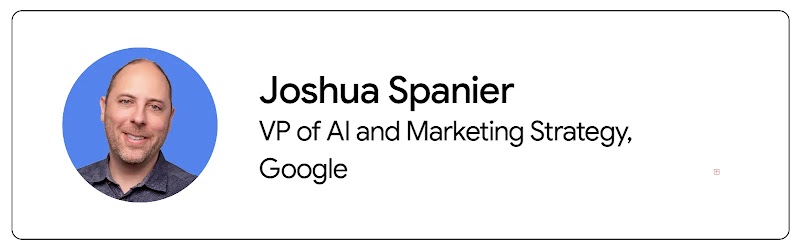
More important: 2026 is about the power of “and.” Retire “brand or performance.” In 2026, it’s about brand and performance. If you aren’t building a full-funnel engine where brand fuels sales and sales build brand, you’re driving with the hand brake on. Creators are your new creative directors. YouTube creators are rewriting the rules of engagement; stop treating them like just another media buy. If you want cultural relevance, look to YouTube.
Less important: Stop fearing “AI slop.” Humans made bad ads long before robots. AI is here to kill mediocrity, not mass produce it. Less AI panic, please. Tech changes fast, but human behavior is stubborn. Your customers aren’t mutating. Don’t panic, build out your AI plan, and carry on.

More important: Brand is back as the growth engine, supercharged by tech but differentiated by humanity. Winners will behave like culture, not advertisers. Instead of one-off use cases, AI will re-engineer the entire marketing operating system. From community-led growth to content that earns attention, the new standard is clear: If it doesn’t help, delight, or sell seamlessly, it won’t survive.
Less important: Performance-only thinking and the traditional linear funnel will matter less. One-off AI “use cases” will give way to AI that re-engineers the entire marketing operating system. The traditional funnel flattens into compressed moments where brand, content, and commerce converge, changing how work is produced, optimized, and measured end to end.
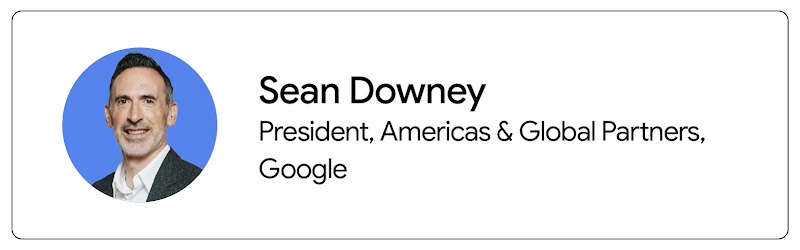
More important: Minor tweaks to existing channels are no longer enough to drive meaningful growth. Instead, advertisers must embrace a broader vision of what’s possible if they want to fundamentally transform their business. This means moving beyond “spending more” to investing for growth against the total addressable market. Most brands are currently underinvested in the AI tools required to capture this potential. By unifying AI-powered Search and YouTube, advertisers can build a single strategy that mirrors modern consumer behavior — searching, streaming, scrolling, or shopping.
Less important: Fragmented tactics that don’t capture value at every customer touchpoint.
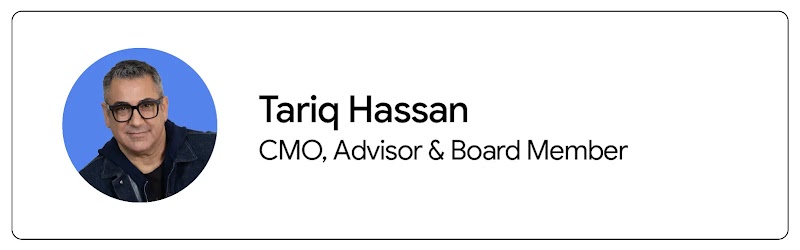
More important: Marketing will shift from experimentation to integration. Operationalizing AI workflows and optimizing for the “zero-click” reality of AI search become increasingly important. Authenticity becomes the primary currency. Prioritize micro-communities, employee influencers, and in-person experiences over mass reach. Marketers will focus on long-term brand equity and attention metrics rather than short-term acquisition.
Less important: Hollow tactics. Think: vague value pledges, platform proliferation, and mass influencer campaigns with disengaged audiences. The era of “set and forget” automation and obsessing over traditional click-through rate is ending. Success lies in human-led strategy powered by embedded AI, moving deep rather than wide.
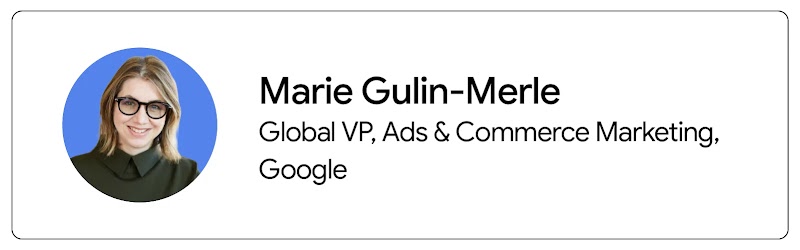
More important: 2026 is the year we break the speed barrier in marketing. We must reorganize for a unified, real-time reality where creative and optimization happen at the same velocity as consumer behavior. My team is already proving this future through outcome-based measurement. It’s about being ready to lead, not just react, in an agentic world.
Less important: Precision without speed. We can no longer afford the luxury of disconnected pilots or slow-moving experiments. If it’s fragmented, it’s obsolete.
Social Module
Share