



 Sign in with Google
 Around this time of year, The Salvation Army logo is a familiar sight: From toy drives to meal assistance, the charitable organization has become a mainstay of the holiday season.
Last fall, its goals were much the same as any retailer’s. The brand aimed to drive store visits at scale across key U.S. regions. To do so effectively, it turned to its agency of record, BarkleyOKRP.
As a Google Creative AI Lighthouse program participant, BarkleyOKRP was already looking to use AI to create an “impossible ad.” The Salvation Army’s need for relevance at scale provided the perfect opportunity. Using the latest versions of Gemini and image generator Nano Banana available, the team built a system that turned a counterintuitive idea into a premium, personalized, nationwide retail campaign in just 30 days. Here’s how.
Developing the creative concept
The Salvation Army and BarkleyOKRP campaign focused on a straightforward goal: translating the emotional connection people have with thrifting into real foot traffic. “Our insight was simple: FOMO is real, and in thrift, every product in our inventory is one of one,” said Tim McCracken, SVP, creative and AI at BarkleyOKRP.
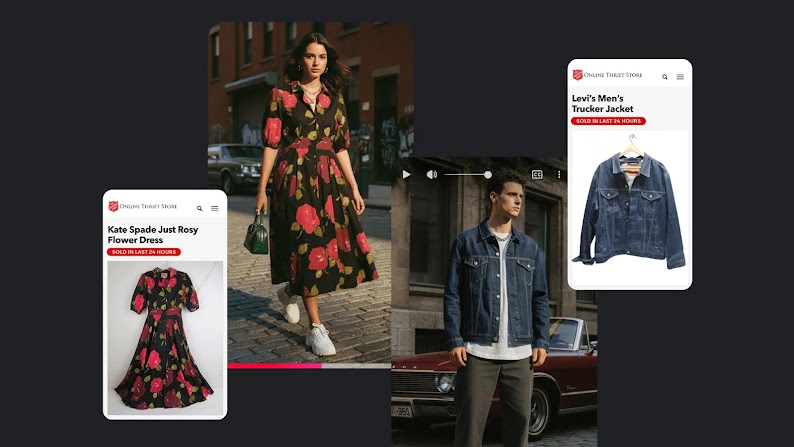
The retail campaign did not promote available stock. Instead, it showed potential customers recently sold, rare items. “It turned absence into attraction and created a new kind of retail storytelling, where every ad reminded people to act fast or their next great find might be gone.”
Given that the products shown would no longer be in stock, the team needed AI for more than just efficiency. It was the only way to tell the story.
Hyperlocal execution in weeks, powered by AI
Having aligned on a creative concept and ambitious goal, BarkleyOKRP’s team of creatives, developers, and technologists asked themselves how AI could speed up the process. With thousands of product photos from The Salvation Army’s extensive nationwide inventory to review, analyzing everything was simply impossible. They decided to use Gemini to build a system that could evaluate all the images for them.
By integrating Nano Banana into the software Gemini built, the team was able to speed up product curation and creative production. They generated hundreds of highly stylized editorial images based on basic, back-of-house stock images, pulled according to strict criteria. Next, Nano Banana resized the images for seamless distribution in seconds, and the team chose their favorites to deploy. Finally, Gemini pulled data like sale location, sale date, and store location to determine where the ads would be seen.
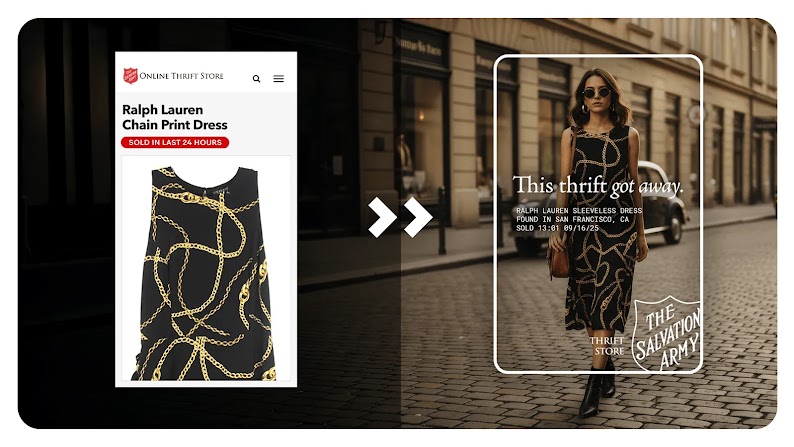
Above all, McCracken was impressed by the premium look and feel of the AI campaign art. “[Nano Banana] transformed the raw inventory photos into beautifully art-directed images that felt like high-end fashion editorials,” McCracken said. “We produced some of the most polished, high-craft imagery and ads we’ve ever made for the brand.” Most impressive was Nano Banana’s accuracy in replicating each product, capturing not just color but texture, fabric, and movement.
“It raised the bar for what AI-assisted creative can look like,” said McCracken. “It showed that AI isn’t just a production tool. It’s a creative enabler.”
Driving ROI, one click at a time
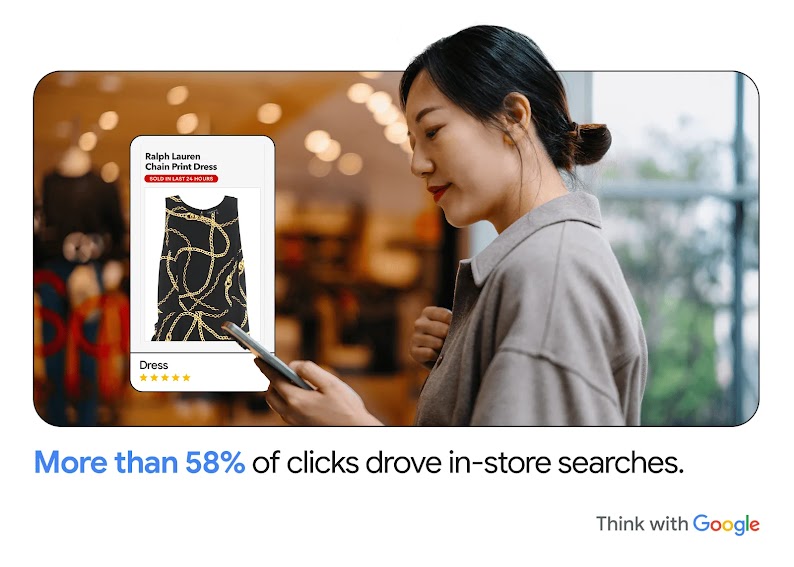
The first 30 days of the retail campaign proved that a strong emotional insight, combined with imagery made possible by generative AI, can move sales. Since its launch, the campaign achieved a low cost per store visit of $11,138% below benchmark. Its click-through rate outperformed Google Display Network benchmarks by nearly 2.6X. Most telling, more than 58% of those clicks led to in-store searches, demonstrating a clear path to action.
“The campaign turned a counterintuitive idea, advertising items that are already gone, into a performance success story,” said McCracken.
McCracken expects the test to be only the beginning as AI tools rapidly advance. Made today, he speculates that the campaign would be even more personalized.
His advice for other creatives? Treat AI as a creative multiplier, not a shortcut, and make sure your teams are owning all decisions.
“Start by identifying the data and assets you already have, then look for ways AI can unlock hidden stories within them,” he said. “The strongest AI-powered work evolves with data and insight, not just speed.”