





 Sign in with Google
For decades, a marketer’s job was to help shoppers narrow down choices, quickly. In the AI era, that model is flipped.
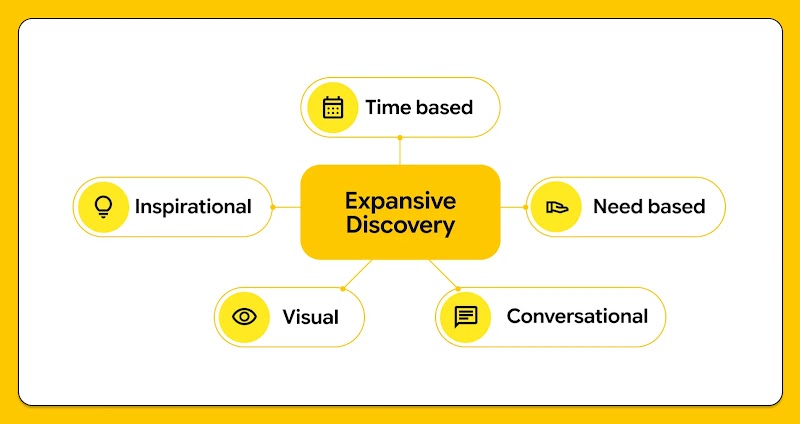
Discovery is now expansive. AI tools don’t just answer questions. They introduce new ideas, adjacent categories, unforeseen brands. When combined with visual search and creator videos, the options keep multiplying. Eighty-five percent of U.S. holiday shoppers using Google and YouTube say these tools help them find inspiration for, discover, or expand ideas.
We identified five ways holiday shoppers use AI for product discovery, and how marketers can show up for each.
1. The conversational brainstorm partner
Starting from scratch can be intimidating. It helps to have a brainstorm partner that can parse multiple qualifiers. Suddenly, “ideas for an outgoing boy mom who loves baseball” becomes a fun back-and-forth, not a string of unrelated search terms. That means AI can cater to the user based on an accurate reading of their intent, giving you a higher-quality lead.
Through follow-up questions and iteration, AI expands a query into a range of gift categories.
According to Google Trends data, queries related to brainstorming in AI Mode have grown 30% faster than AI Mode queries overall since launch.1
Your move: Think outside the keyword. Through follow-up questions and iteration, AI expands a query into a range of gift categories, giving marketers the opportunity to tell a more nuanced story through context-rich, conversational site content and creator partnerships.
2. The moment of inspiration
A competitor caught your would-be customer’s eye on social media. In the AI era, that’s an opportunity.
That early spark of inspiration launches a quest for answers. More consumers turn to Google Search in their purchase journey than any other online platform when looking to discover new options.2 There, they find alternatives: Over 70% of those who use AI on Google say they use Google Search’s AI features to discover or get ideas before they even know exactly what they want to buy,3 and 71% of shoppers coming to Google Search agree they are open to trying new brands or products.4
Your move: Embrace the browsing mindset. Don’t wait for high-intent queries. Use visually engaging formats, like Demand Gen campaigns, to win over users open to inspiration.
3. The need-based parameter paradox
Many shoppers approach product discovery with nonnegotiables in mind, such as budget or recipient age. But even those shoppers find expansive solutions.
Within rigid parameters, a shopper might be completely open to the final result. Someone seeking “sustainable beauty gift under $50” might turn to Search to find viable options: 70% of Google Search’s shopping queries focus on discovery, exploration, or product research.5
Random scrolling could never deliver the same precision.
Your move: Check your back-end data. It’s common sense to ensure your product descriptions are accurate. Just as important is what the customer doesn’t see. Make sure your pricing, material attributes, and category tags are readable for AI systems.
4. From first visual to creator as validator
It all starts with a visual.
Beyond validating a single purchase, creator videos often introduce related accessories or better alternatives.
When a shopper uses Google Lens to identify a product, what follows is a full view of price comparisons, local availability, and more. Next stop: A trusted creator who will show the product in a lifestyle setting — potentially surrounded by other, related products.
Beyond validating a single purchase, creator videos often introduce related accessories or better alternatives. In fact, according to a survey conducted by Kantar, 87% of surveyed viewers in the U.S. say that YouTube introduces them to new things they wouldn’t have discovered on their own, outperforming other online platforms (69%).6
And once aware of a better option, shoppers may return to Search for a deeper dive. When users viewed an organic video about a brand, they were 13X more likely to make a branded search and 5X more likely to make a purchase.7
Your move: Give creators a seat at the table. From product launches to store openings, trusted creators have just as much to say about your brand as traditional media. Partner with them to connect with their audiences, and boost their content using Demand Gen.
5. The time-based logistical lifeline
In late December, shoppers aren’t just discovering gifts but ways to get them faster. Eighty-five percent of U.S. holiday shoppers using Google’s AI features say Google Search helps them learn more about an item, find the best deals, see what a product is really like, and/or look things up even while in store.8
These shoppers represent high value for brands. During the Q4 holiday shopping period, brands spending a high share of their media budget on Google Search see a 204% higher return on their total media budget, compared to brands with low Search investment.9
Your move: Be the hero your lingering shopper needs. Update inventory, pricing, and shipping speeds in real time so AI can accurately match your products to the shopper’s time-sensitive specifications.
To apply these insights in Q4, download our comprehensive report, where we delve deep into AI Mode consumer usage trends.

Social Module
Share