





 Sign in with Google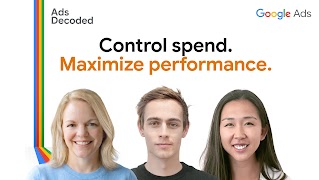
Master bidding and budgeting in the AI era. We break down learning periods, campaign cold starts, and using targets to scale with efficiency.
Episode overview
Getting your bidding and budget dialled in has always been a vital part of campaign success, but it takes on new significance in the era of AI. The strategies and settings you use do more than manage spend - they’re how you signal your business priorities to the system, so it can more effectively deliver on those goals.
Join host Ginny Marvin as she sits down with Kristina Park and Carlo Buchmann, Google Ads product managers who specialize in budgets and bidding, to discuss modern best practices and the new capabilities AI is unlocking in these areas.
We cover:
- Smart Bidding ‘cold starts’: Why you no longer need lots of conversion data to launch new campaigns with confidence.
- Mastering fixed-budget events: How campaign total budgets and seasonality adjustments can maximize your promotions.
- Finding growth: Using targets to scale with efficiency.
Want Ginny’s key takeaways and tips from this conversation? Subscribe to the Ads Decoded newsletter.
Additional resources
Smart Bidding basics & best practices
Learn how to use Smart Bidding to optimize conversions and conversion values.
Get best practices for automating and optimizing your bids.
Hear about the latest Smart Bidding and Budget updates from our product experts.
Introduction to value-based bidding in Search
Discover how value-based bidding can help you optimize conversion values.
Bidding and budgeting best practices for the AI era. We break down learning periods, campaign cold starts, and using targets to scale with efficiency.
Transcript
Kristina: Smart Bidding Exploration is designed to actively find new, high potential traffic for a campaign that might fall outside an advertiser’s usual safe bidding patterns, where we know - or have a better sense - that it’ll deliver a click or a conversion. And so this feature helps the system explore more of these new queries for you to find some of those conversions that you were missing out on before.
Ginny: Hello, I’m Ginny Marvin, and today I’m talking with Kristina Park and Carlo Buchmann, Product Managers who specialize in budgets and bidding. We are going to talk choosing the right bidding strategy for new campaigns without needing months of data first, bidding
best practices, navigating learning periods with confidence. We’ll tackle your biggest questions and talk about what’s new. Enjoy!
Hi, I am delighted to have you both here on Ads Decoded, Kristina and Carlo.
All right. A big area of confusion is cold starts. So you have a new campaign or a new account: which bidding strategy to start with. And some argue start using Max clicks or manual CPC until you have enough data to switch to Smart Bidding strategies.
Others start off with Max conversions or tCPA and then switch to value based bidding, Maximize conversion value or tROAS when they have enough conversion data.
So, do you need to have conversion data to start using Max conversions or tCPA in a new campaign or account?
Carlo: Generally you can start with the bidding strategy that you want to optimize towards. The system will learn as new conversions or a conversion value comes in and adjust quickly. So that’s one part.
And I think the second part to mention is - especially when you’re thinking about an existing account, right, that is already set up and you do have some campaigns running - actually Smart Bidding trains and learns across your conversions in your entire account.
And so, yes, a new campaign may have new keywords, may have a new target that you want to optimize towards, but it’s not like it’s an isolated campaign that has to start from scratch.
Ginny: And we do recommend as often as you can, right, using a target because it is giving Google the information that you know about your business goals.
Kristina: Yeah. In general, the theme with the Google Ads system is the more inputs and data we get, the better. So the more we can learn about what your business goals and business needs are, the more we can help you achieve those goals and then also build new features to help you achieve that.
Ginny: When does ‘limited by target’ show and what should advertisers do when they see that?
Kristina: So this appears when your target CPA and target ROAS strategies is too restrictive and it limits the system from participating in auctions, because, when you enter an auction and it sees that, yes, you could get a conversion, but not at your efficiency target, then it doesn’t see it as worthy of you bidding on this.
If you see this, I would consider relaxing your target. So raising your target for target CPA or lowering your target for target ROAS. This way the system can find you more traffic that meets your goals and also is still within your budget and is spending your budget properly.
Ginny: And so obviously you still want to keep those targets within the guidance of what matters to your business. That’s really helpful.
I want to switch to learning periods and volatility. The wild swings or variance in performance can be unsettling. How should advertisers approach target and target changes to limit performance volatility in their campaigns?
Carlo: If there’s a change in your business strategy, if you do have a new CPA target, I think in the past, you might have been hesitant to make those changes and make them very gradually to not disrupt the system.
The system can handle those changes. And if you do have a critical business need, you can make those changes directly in the account.
How you want to get to that new target, though, is very much dependent on what you want to achieve. If you’re making target changes every minute, that’s probably suboptimal for the system.
So generally, what we recommend is that you make targeted changes and, wait, at least one conversion cycle, before adjusting the target further. Just so the system can learn and converge to your target.
You can do that in increments. So if you’re trying to go from a smaller target to a very large target, for example, you might do that in increments to make sure you don’t overshoot. But again, if you do have that critical business need, you can also make that target change right away.
The second thing I’ll just mention is when you’re evaluating performance, you should always evaluate accounting for the conversion delay. So make sure that you’re either excluding that conversion delay, from the window that you’re evaluating or use some of the tools that we have in the UI today that tell you how much more additional conversions or conversion values we typically expect for that delay window.
Ginny: Are there times when we see big swings in CPCs and is Google doing anything in the back end to minimize that?
Carlo: Yeah. So the system will always try to optimize towards the most conversions you want or the most conversion value that you want to get at the ROAS or CPA target that you set.
There can be cases where the system might identify or assume that there is a really high value customer, right? And so there may be cases where we do bid up, and there may be cases where we do put it down.
Generally, though, and there’s a lot of reasons why CPCs may fluctuate. So there is change in the auction list that you participate in. Maybe there’s a different advertiser who is bidding more aggressively or they have a seasonal event.
Ginny: All right. The other thing we often hear: small businesses - or businesses with limited budget and lower conversion volume or the longer conversion cycles - are especially sensitive about learning periods and having enough data to ensure the system is able to optimize and to be able to evaluate whether the campaign is performing or not.
So any specific guidance that you would give to those advertisers?
Carlo: Yeah. So I think I decouple this into two parts, right? One is the learning status in the UI specifically, and then two is the actual bidding performance.
Everyone gets this learning status when a new campaign is created. That doesn’t mean that we might not actually already be achieving your desired performance CPA, goals and is dependent on how long your conversion delay is.
Now in terms of the actual performance, though, especially for smaller businesses, I think one thing to consider early on, even as you’re setting up your account, is what is something that you can optimize towards that isn’t ultimately too sparse and too delayed, that will result in having no signals at all?
There might be different points that you could optimize towards, where you do have a little bit more volume. That will give us more of an indication of these are meaningful users, and data accordingly in terms of, how can we evaluate you know, early on if the performance is achieving the targets?
We do have sort of predictive, conversions or conversion values in the UI that you could check and evaluate, sort of what do we expect in terms of volume? You know, if you do have, you know, a lot of our conversions earlier.
Ginny: For example, in an earlier episode about search campaign structure, we talked about having a portfolio bidding strategy. If you have shared targets and goals across campaigns to help kind of group, pull some of that conversion data.
We’ve talked somewhat about value based bidding. I want to dig in a bit more there. Why do we encourage advertisers to use value based bidding and again, maximize conversion value and or with a tROAS, whenever possible?
And what is the benefit that we see for businesses who use value-based bidding?
Carlo: This is a great question. Maybe let me set some context first. So, when Smart Bidding first came around, and people started exploring and using it, I think they naturally gravitated towards conversion events that were readily available and easy to set up.
Right. So think you’re a university? You might just track like someone filling out an interest form submission and optimize towards that. But what we quickly realized is, these businesses then create like, an abstraction layer because ultimately the university probably cares about the sign up to a course, for example. And so they’re trying to abstract what they set in terms of their targets, for these, interest forms that they’re now optimizing towards, in terms of CPA or ROAS to what they ultimately care about.
And so what we’ve noticed over time is, people should challenge themselves to understand, is there something closer to my ultimate business goal that I want to optimize towards?
So it turns out a lot of businesses actually do care about conversion value. It’s actually just more difficult for them to pass that back into Google Ads. And so getting that journey started and understanding how can we optimize towards revenue or profit, if that’s what you care about - or margins - and thinking about how to get that conversion data into Google Ads is sort of what we challenge people to do.
That all being said, target ROAS or value-based bidding isn’t for everyone. We don’t want you optimizing towards, you know, garbage values. The system is only as good as the data that you get. So maybe you’re better off using, for example, a max conversions or a target CPA.
Ginny: Other than not being able to have good quality value signals to share with the system or any other like big pitfalls, you see, or, mistakes advertisers may be making when adopting or optimizing for value based bidding.
Carlo: Yeah, I think the biggest one is is the obvious one, which is just ensuring that you pass the right values and those values match your expectations. We get these questions all the time where an advertiser might be concerned with their performance, but the system is actually hitting the target that they have set - if that’s a budget or ROAS target.
And so it comes down to the values that they pass are maybe not fully aligned with what they ultimately care about. So making sure you think critically about those values right from the beginning, when you’re setting that up is probably the most important thing when using a value in strategy.
Ginny: Okay. And, if advertisers want to bid based on profit margin. How can they use value based bidding to achieve those goals?
Carlo: So in short, yes, you can pass back any sort of value that you care about and optimize towards. So there’s nothing stopping you from passing by profit data. We’ve seen some advertisers be able to do this directly in the tag, and they’re able to calculate the profit in the tag
if they’re comfortable with it being there.
Other advertisers might use different measurement solutions like, offline conversion to import, to pass back their profit data.
Ginny: OK, great. Yeah, and I just want to note, so you mentioned, offline conversion import when, enhanced conversions enhance conversions for leads. And we talked about some of these other mechanisms for passing your value data back in our measurement and Google Analytics episode as well. So encourage people to check that out.
I kind of want to look to some of the newer bidding capabilities, budgeting capabilities. Campaign total budgets are now available globally. What is it and how should advertisers use it?
Kristina: This allows advertisers to set a total budget amount to spend over a specific time period. So advertisers should use this when they have a promotion or a time period with the hard start and end date, like a holiday sale or a product launch where you have a set, fixed amount of money that you want to spend.
Ginny: Great. And any other kind of guidance that advertisers should be keeping in mind when using campaign total budgets?
Kristina: You want to make sure that your campaign is not limited by other factors like limited by target. Because if that’s the case, then, our system may fail to spend the total budget and by the end date.
Ginny: Okay. And where do seasonality adjustments fit in? Should advertisers be using them during known holiday or peak periods that, you know, like Black Friday, for example, or just for unique times, when they expect their own conversion rates to be higher or lower based on their own, unique promotion schedule.
Kristina: So seasonality adjustments in general can be used for like a holiday peak period or for unique times where conversion rates are going to be higher. But I’d emphasize it’d be for like short, spikes in conversion rates, like a three day flash sale. And this is very useful for times where our system using historical data can’t see or account for the spike.
Our system does understand these, like, set periods that historically always happen like for like Black Friday or Valentine’s Day or other holidays. Advertisers should really just use seasonality adjustments for those times where our systems can’t account for that. Or if they have like an additional consideration during those like known periods.
Ginny: Smart Bidding Exploration. We called this last year the biggest advancement in bidding in years. It’s a bit complex of a concept. Can you just explain what Smart Bidding Exploration is and what it’s designed to do?
Kristina: Smart Bidding Exploration is designed to actively find new, high-potential traffic for a campaign that might fall outside an advertiser’s usual safe bidding patterns where we know that or have a better sense that it’ll deliver a click or a conversion. And there might be other traffic that could also deliver like a high potential conversion, but our system doesn’t know about it. And so this feature helps the system explore more of these new queries for you to find some of those conversions that you were missing out on before.
Ginny: And it does that because you’re giving it more of a looser leash on what it can look at, in terms of potential value or volume. That’s how the system is able to expand that exploration.
Kristina: Yeah. So we ask you give some flexibility in your ROAS target. And then we use an AI and additions to our bidding system in order to help you capture additional conversions.
Ginny: And it is in the UI. It’s just a really easy slider as the control mechanism. How can advertisers tell if Smart Bidding Exploration is actually working?
Kristina: So there’s two ways. One is you would look for an increase in total conversion volume. So you can find this in the Google Ads UI in the campaign table or the bid strategy report. And then the second thing is discovery of new search terms. We have established in the Google Ads UI a new metric called traffic diversity.
Essentially what traffic diversity is, is it’s the number of unique search terms that you are getting an impression, a click or a conversion for. So if this goes up, this means you’re showing for a wider set and getting conversions from a wider set of queries.
Ginny: And can you use Smart Bidding Exploration with AI Max?
Kristina: Yes. It’s actually great to use with AI Max. So like I mentioned before, if you expand your targeting, which AI Max does, Smart Bidding Exploration pairs really nicely because now that you’re eligible to show for more queries, we can bid more effectively on that wider set to find you new pockets of traffic, along with still delivering performance on the core set that you’re already bidding on.
Ginny: Okay. And I want to talk a little bit more about AI Max, but first, the biggest question we have gotten about Smart Bidding Exploration is how is it any different than just lowering your ROAS target overall?
Kristina: Yeah. Yeah. We have this question a lot, which is totally fair. So if you are just lowering your ROAS target, this simply tells the system, hey, I want to be less efficient across the board, across everything. And I want to get, you know, get more volume, find conversions, even if that means less efficiency.
Smart Bidding Exploration is more surgical and specific with its approach. It still maintains performance and make sure you deliver on your core traffic, but it also explores new areas to help find growth so that the system learns, hey, these are newer queries that maybe have clicks and conversions that are valuable. And then our system will learn off that, to continue to find more of these new queries for you.
Ginny: And just to reiterate, it’s only compatible with target ROAS. So another reason to be looking at, value based-bidding.
Kristina: We’ve seen on average advertisers who enable Smart Bidding Exploration see 10% more conversions than simply lowering your ROAS target.
Ginny: All right, AI Max, there’s also been a lot of questions around, bidding strategies and requirements for finding success with AI Max. What small businesses should do to ensure Smart Bidding works effectively in AI Max and whether it’s suitable for, again, smaller businesses or businesses with relatively low conversion volume.
So are there any special considerations for businesses to be keeping in mind to ensure that Smart Bidding can work effectively when AI Max is enabled in their search campaigns?
Kristina: It’s very similar to the normal bidding practices that you should take into account. So: making sure your conversion tracking is accurate
Ginny: Okay, yeah. So as long as you’re giving the signal that this is a this is a quality signal to me,
then that can help give the system more data to optimize from.
Kristina: Yeah. And I think one last point too, and this is also also a good example of making sure if you want to get the most performance from AI Max to also not be limited by budget.
Ginny: I just want to underscore the conversion tracking piece of this conversation, because it does underpin the success of any of your Smart Bidding strategies.
Carlo: Yeah, I think the only other thing is, once you have good conversion tracking setup in place and it aligns with your business goals, also put in effort to ensure that the data is reported consistently and frequently.
Ginny: Looking ahead in the near term, we teased Journey Aware bidding last fall. What can you tell us about it?
Carlo: Yeah, we’re super excited about this. We know that advertisers have long sales journeys or sales funnels that they want to optimize towards. And usually they pick a single point in that funnel that they care about and they use for bidding, right?
So maybe that’s your purchase or your converted lead event. But we also know there’s additional points along that funnel that are key and critical to inform if a certain user or a customer or a potential customer is actually going to end up converting.
And so we want to provide advertisers with more tools through using the existing conversion reporting framework to allow advertisers to map their entire sales funnel, report those as conversion events and then use those to improve the bidding system against what you still care about.
So in short, you still optimize your bidding strategy towards whatever you care about today, if that’s your purchase or your converted lead. But you’re giving us additional data points along that funnel that the system can use to further improve your bids and further improve your performance.
Ginny: And how does that differ from setting values for your conversions?
Carlo: You can think of it very similarly, but the difference is that the system gets an earlier signal, right. And so if your purchase takes, you know, on average 7 to 14 days, let’s say from the original click we get earlier signals around, hey, this user interacted or this user performed a certain action that I find valuable as a business. And so it improves the sort of reactivity of a system in general.
Ginny: How is AI playing a role in the bidding roadmap?
Carlo: There’s a lot of exploration and R&D going into this because specifically in bidding, one of the use cases I just talked about is, you know, better understanding the user and their journey to getting towards their final purchase, for example.
And so using these systems, we think we can do a lot better on understanding the user, understanding their journey, making more sense of the context that they’re going through, and using that allows more to come of that in the future.
Ginny: It’s really been a good building conversation on previous discussions around making sure that you are feeding the system with the data that matters to you and having that data strength, as well as thinking about your overall campaign and account structure to be able to maximize the bidding strategy performance.
And thank you so much and really appreciate your time.
Kristina: Great. Thanks, Ginny.
Carlo: Cool, thanks.
Ginny: I’d love to hear your takeaways from that conversation. When it comes to conversion data, you want to prioritize quality volume that can give AI the data it needs to perform. Look at ways to give the system flexibility to ensure that every dollar is going towards your highest probability conversion.
Now it’s time for Community Q&A. First, a quick shout out to Ben Luong who asked a question on LinkedIn about raising budgets and learning periods that Carlo addressed in our conversation.
We’ve got a couple of questions from Reddit. So number one, if I mark a conversion as secondary, does the algorithm use it to optimize or does it ignore it completely?
So secondary conversion actions are ones that you want to observe but are not ready to bid on. That might be a specific page view, a download, an add to cart, but not that end goal, perhaps. Secondary conversion actions, you want to use those to pass data to Google Ads. You can then look at these, get reported in the all conversions column. But again, they’re not used for bidding.
Only exception is if you do use a custom goal that you are targeting towards and it has a secondary conversion action in it, then it will be used for bidding. Otherwise, for any conversion action to be biddable, it needs to be set as primary and it has to be part of the goal that’s being used for current campaign optimization. So check your campaign settings.
And with that, that’ll do it for this episode. Thanks so much for listening and subscribing to Ads Decoded. If you want more, catch our companion newsletter on the Google Ads LinkedIn page, where I dive even deeper into the big takeaways from every episode. Until next time.
