




 Sign in with Google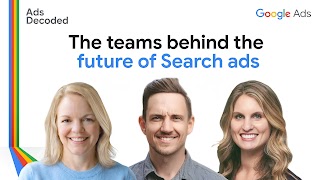
Go inside the engine room of Search ads. Discover how Google tests new formats to balance user trust with advertiser value. With host Ginny Marvin.
Episode overview
Ever wondered why the text asset you meant as a headline is showing as a sitelink? Or why Google introduced a button that lets users hide ads on Search?
Changes to how text ads show up - especially as AI experiences like AI Overviews and AI Mode drive a total reimagining of Search - can make advertisers feel out of step with the mechanics of their campaigns. So in this special episode of Ads Decoded, we’re pulling back the curtain on the design and testing process behind these new ad experiences on Search.
Join host Ginny Marvin, Abby Butler (Ads UI Product Manager) and Adam Bullock (Search Ads UX Lead) as they discuss the “ecosystem balance” between user trust and advertiser value that guides every change that makes it to the results page.
In this deep dive:
- Testing for trust: The specific data points and rigorous vetting process required to move a new format from hypothesis to global rollout.
- Beyond the click: Why optimizing for user agency (like the new ""hide"" button) actually builds the long-term trust necessary for better advertiser ROI.
- Asset variety is key: Why you shouldn’t get hung up on the impressions of a single asset, and focus on asset breadth to meet the specific intent of complex, conversation-driven queries
Want Ginny’s key takeaways and tips from this conversation? Subscribe to the Ads Decoded newsletter.
Additional resources
Discover AI Max for Search campaigns
Unlock a suite of AI-powered targeting and creative enhancements.
Explore Search campaign best practices
Reach more of the right customers with AI-powered Search ads.
Get the latest Smart Bidding and Budget updates from our product experts.
Get best practices for automating and optimizing your bids.
Transcript
lot of people from an outside perspective. You’re managing campaigns. You’re working on your assets and your creatives and you’re trying to understand where and how your ads are showing up in the results. And it can feel unpredictable as asset placement becomes more fluid and ads can appear above or below the AI Overview etc.
So what are some of the key principles that your teams are operating by when looking at test opportunities and outcomes?
Abby: Yeah, we operate in a really close kind of, for lack of better words, pod if you will. So there’s, it’s a really close collaboration across product design, research, engineering and then Search counterparts and so forth.
I think one of our main principles is that we try to be - and we strive to be - hypothesis-driven and that means that what we’re, what ideas we come up with, we have some reason to believe that there’s value.
Whether it’s prior LEs or experiments that we’ve run and test results that we’ve gotten, whether it’s strong user research that we’ve gotten, or recent research results, or in some cases just pure intuition. It’s really kind of a combination of, why do we think that there’s value here? Where does this like maybe align with the whole page design system, and where it’s going, and kind of evolve from there.
Adam: Just to double down on what Abby said too, I think one of the things we’ve been talking more about is having within these design sessions, I personally want to make sure and - the team does a really good job of this - of having like what we call five in the box.
So again like Abby said, we have one rep from data science, we have an engineer, we can make sure we have someone from UXR, right? All the way around the table to make sure that we can vet and bounce these, you know, evidence-based hypotheses off of each other. Because an engineer will have a really great point that I would have never come up with, or vice versa, the
Ginny: Are there any ad experience testing failures or perhaps eventual successes that have surprised you?
Abby: That have surprised me in three years. I can say, yeah. Yes. In short, of course.
Ginny: And it can be broad strokes in terms of like, the types of tests.
Adam: Yeah, there’s too many. I’m doing the same thing. I’m like, where do I start?
Ginny: If you’ve looked at the search results page lately and thought, “Wait, that’s not how I built my text ad.” Or if you’ve been wondering about that new hide button, you’re not alone.
I hear the questions, “How does Google decide which ad test to run and actually roll out? Why are my assets showing in different spots in my ads?” And in the words of Barry Schwarz, is this new?
This conversation is one that I’ve wanted to have for a long time and the podcast is finally a natural forum for it. When we talk about search ads, we often focus on the mechanics, keywords, assets, bidding, budgets. There’s an entire segment of product and design dedicated to how your ads show up on the page.
I’m joined by two people who work at the intersection of your campaigns and the user screen. Abby Butler, a product manager on the ads UI team, and Adam Bullock, a UX lead for search ads. They’re giving us an exclusive view into the product and design process and insights for what it means for your ads.
Enjoy the chat and stick around for community Q&A at the end.
I’m so happy to have you here with us, Abby and Adam. Can you each tell us about your role and the type of work that you do at Google? Abby, we’ll start with you.
Abby: Great. Yeah, and excited to be here. Thank you for having me. So my name’s Abby. I’m a product manager on the Ads UI team here at Google. So, specifically Search ads UI. So, my team is responsible for essentially creating and optimizing ad experiences to deliver optimal user value, advertiser value. And I work really closely with Adam’s team on the design side - but I am primarily on the product side of things and Ads UI.
Ginny: I just want to clarify: we’re not talking about the Google Ads UI in the tool. We’re talking about Search UI, Search ads UI.
Abby: So, the text ads you see on the top and bottom and within search.
Ginny: Great. All right. And welcome, Adam. Can you share about your role and your work?
Adam: Yeah. Hi. I am Abby’s counterpart over on the UX design side. So my team is essentially tasked with making the best user experience. We work really closely with our UX research partners, go through, and quite literally: the products on screen that you see, feel, touch that’s our team.
Ginny: Great. All right. I’m very excited about this topic. It’s something that we often don’t get an inside view on a lot. First, I want to zoom out to some of the broader shifts that we’re seeing, and I’m curious how they may factor into your work.
First, how do changes in consumer behavior inform how you and your teams are thinking about the overall Search experience and the tests that you run?
Abby: So, we constantly have a pulse on what are users searching, how are they searching, you know, what exists out there in the market that might be different from what previously has existed. Because if we’re trying to create helpful and useful experiences for users - as users evolve and change and come to Google for different things or maybe even the same things, but in different ways - it’s critical that we’re evolving, how does AI change the way users search? How does it change their expectations of what the content that they’re going to be getting on Search? And how does that impact how we approach ads?
Adam: A little more tactically too: on the design side, we have really strong partnerships with our research partners who are consistently running foundational research, going out getting that pulse check that Abby talked about sort of in real time from real people - as well as what our organic partners are doing too.
Ginny: I do want to talk about the organic experience as well and how that informs a bit later. Building on what we were talking about with consumer changes with technology advancements, I’m curious if there are any examples of the types of text experiences that are on your radar now or maybe live now that would not have been possible even just a few years ago.
Adam: Yeah. I mean, it’s so crazy how this, you know, AI is really just blown the doors off of what was possible - air quote - you know, just two years ago. I think the value at least, you know, on the AI subject is how much effort it can save users.
And so I think if you sort of backwards engineer that into your ads experiences, what’s that’s what’s what’s the core user problem we’re solving, is - I think - synthesis of information, simplifying the messaging, trying to quickly draw out the attributes or the values that advertisers can bring to users that can show up in a lot of different experiences and things we design for.
But the simplification of information is allowing us to do so many different things that we weren’t able to do. There’s a lot of different things that we’re planning on doing with that.
Ginny: Interesting.
Abby: And to add on to that, I think also something that’s top of mind is content-forward experiences on Search too. So how do we incorporate helpful content, relevant content, and how do we do that in large quantities without being overwhelming for users as well.
So a lot of new ad formats are constantly top of mind for us. And every year we revisit them and every year they seem more and more achievable as technology advances and advertisers provide us with more content and more content exists in the ecosystem.
So, yeah, to Adam’s point, thinking back just even a year ago, the things that weren’t possible are possible now. It’s constantly evolving. So, it’s an exciting space to be in for that reason.
Adam: I agree. And I think one more thing: personalization is really really interesting, too. And some of the things that - at least on the UX side - we talk about is intent and trying to understand users’ intent and help users refine what they’re looking for more easily and quickly ultimately is going to get them what they’re looking for faster. It’s good for users, advertisers, and ultimately all the chain.
Ginny: And refinement. That’s actually such an interesting piece of the puzzle that I think is sometimes not on advertisers’ radar in terms of how their ads show up and how that gets reflected from maybe the original query or keyword that matched to maybe the start of a customer’s journey, and how that may evolve.
I kind of would just want to take a step back also and just talk about some of the factors that you’re looking at when determining if text ads on the page are adding value. There’s a lot of questions about how the work that you all are doing really is factoring in value, and whose value that we are taking into consideration.
Abby: We look at the ecosystem and the value that we’re delivering across: that’s users, that’s advertisers. You have to have a balance of those.
And for users, relevance is really kind of a key thing we’re looking for. At the end of the day, users want relevant content. They want to see um throughout the whole Search page, not just on ads. Creating relevant ads and measuring user value in a variety of different ways through research and metrics.
From the advertiser value, it’s connecting them with the right users and the right audience. And so kind of balancing those two things brings success to users, brings success to advertisers and therefore Google as well.
Ginny: Yeah. And so that through-line needs to happen. The user needs to be satisfied with the ads that they’re seeing and the advertiser needs to be satisfied with the user that is coming to their business. And obviously both of those need to be in line for Google to be successful.
Abby: Absolutely. I mean, an example of the opposite would be if we lean really too heavily on advertiser value. There’s maybe all these short-term gains that they’re going to get. They’re going to get all this traffic, but that erodes the long-term trust of users. And in the end, that just kind of comes back to be negative for the advertiser as well.
Ginny: Yeah. I’ll also add coming to Google from the advertiser side, that the amount of conversations around long-term value from both the user and advertiser perspective is something that I wasn’t necessarily surprised by - but is a really important piece that is often not externalized that well and people may not be aware that that long-term term value is an underlying factor in the work that your teams do.
Abby: Absolutely.
Ginny: Does the organic Search experience factor into your approach, and if so how?
Adam: From the design side we are sort of the tip of the spear in terms of, what is that whole page consistency perspective. It’s one Search experience and my team has an awesome set of mechanisms in place to help us stay making sure that we’re being consistent. And again it always comes down to the user for us.
Ginny: Great. That’s really helpful and I think: all coming back to the user experience. All right. So, for more context, I want to talk about some of the recent examples of the ways that text ads show on the Search results page and some of the recent changes.
Starting with formats, because we’re not just talking about where ads show up, but how they show up. So changes to how assets can show in responsive search ads. For example, we may show one headline and move a second headline to show with the description. And then as early as, I guess early last year, up to two of your headline assets may serve along with your site links.
What are some of the main impetus behind these types of updates to how assets can show in ads and how should advertisers be thinking about their text assets overall? Abby, I’ll start with you.
Abby: The impetus for these changes and how assets can show is really to try to maximize relevance at scale for users and for advertisers. So for example you mentioned headlines as site links is a good example.
Headlines are really high quality content. Site links are really valuable for users. We know that through, you know, a lifetime it feels like, of - you know - research and metrics and data. So being able to leverage these high quality assets in a different way, while maintaining that relevance, gives advertisers that much more opportunity to show that format for them and show more site links across maybe additional queries that they wouldn’t have shown on.
So it really comes down to having a breadth of assets. The more assets advertisers provide, the more likely they’re going to be able to show various formats across various different queries.
Another example of this is image extensions. I worked on image extensions for a long time, and my team still works on it. Is providing more image extensions, which we know are really valuable for users. Users like to see visuals on the page, and that varies by query and vertical of course.
But we started with just a thumbnail image on search. That is our more predominant form image format for sure on the Search ads front. But the more assets we were getting over time, the more we could unlock these new formats.
So you’ll see collage formats, you’ll see in some cases a landscape format. Those don’t show all the time, but when they do, they’re immensely valuable. So being able to take these assets and create these great user experiences, and then the more assets we get the more likely those are to show is kind of the objective there.
Ginny: That’s a really - the more assets you have, I think is so important to underscore. Because I think a lot of times people look at their asset reports and see, you know, they may have a handful of assets that have very low impressions. They may be doing well from a performance standpoint, but the question is why am I bothering with these assets?
And I think to your point, Abby, you’re saying that they allow you to show up for more relevant impressions that may not be showing all the time, but when they do show, they’re impactful and then opens up just more opportunities.
Don’t get hung up on necessarily the impressions per asset, but the overall performance of your ads themselves.
Adam: You really nailed it Ginny on the last part. What I was going to mention too is, I think yeah as a design team it’s one of the, I would say, a fun constraint. We have assets that we have and we make them work. And so I think again, you know, moving around and finding new homes in the formats and the UIs for different types of content, having things that we don’t use right now, but we can find new opportunities for later is great.
So again, just because you know it’s a headline and a headline only, but we can put it in some other experience that we’re going to build in the future. If it’s high quality, that’s great.
So, a call from me as, you know, design leader out to the advertisers. We love the assets. Please keep them coming. All it does is give us more buckets of paint to make some great things with.
Ginny: And also, I just want to underscore that we always say when we make these changes that, you know, your headlines may show with your site links - or we may only show one headline - when it’s predicted to improve performance.
And then people always ask what does that mean? So anything you can share in terms of like, what are we talking about when we say predicted to improve performance?
Abby: Really what we’re meaning is we have you know very significant metric tracking and performance tracking and you know, models in place to really optimize for both user and advertiser. So predicted performance is really based on all of these data points that we have and all of the impressions we have on these formats and so forth. What do we expect the outcome to be, and kind of weighing those, which do we expect to drive the performance that that advertiser is looking for and optimizing for, is really what it comes down to.
I say that in a kind of really broad context because it is kind of broad to be honest. It’s like a pretty complicated system that we have operating under the hood. But the kind of key points that I want to double click on it is is it really is optimized not just to drive a lot of clicks. It’s optimized to drive a lot of high quality clicks. It’s optimized to drive conversions if that’s what you know advertisers are bidding against.
And so predictive performance is really based on what our system knows about this format, in this query, in this specific context. It gets very granular and how does it compare to other formats that could be eligible within that same context.
Ginny: Very helpful. Thank you. A more recent update is the addition of the “hide sponsored results” option to collapse text results at the top of the page. A lot of advertisers were surprised by the hide option and wondered how it might impact their campaigns.
So, how did that idea come about, and anything else you can share on that?
Adam: Yeah. Um, again, kind of coming back to what I’ve been speaking about earlier is, what’s whole page doing? Are we trying to reinvent the wheel, or is there something that we can repurpose and reuse that users know, have trust in, expect?
And so if you actually look at how our organic partners were clustering, we’re grouping these types of web results together, there is a pattern in the search design system of kind of ending everything with this CTA.
So a group of things is usually on Search, again the great button. And so first is, okay the consistency angle, that’s something we can do there - but how do we make this unique to ads? And frankly I think answer the question of how do we give users more control and more agency, so instead of you know reinventing the wheel, let’s find an experience they already know, that they’re familiar with. So far it’s been really valuable and I think useful for users and advertisers.
Abby: Yeah. And I say valuable for advertisers, which kind of contradicts, I think, what most people would think. You’re giving users the ability to hide ads. How is that, how is that helpful and useful and valuable for advertisers?
And it’s because giving users control over their Search experience is a way that we’re, you know, you’re building trust in our users. And if users want to hide ads, then they want to hide ads. What we’re finding is they often don’t. They see the content and it’s valuable content for them.
We also take those inputs and that experience and the hide feature and use that to really understand how can we optimize it, how can we better improve this experience across the board, too. So it’s another lever that we can use to kind of measure the user experience against and how we can further improve it going forward.
Ginny: Really helpful. You may not have specifics to share, but are there any ad experience testing failures, or perhaps eventual successes, that have surprised you?
Abby: That have surprised me in three years. I can say, yeah. Yes. In short, of course.
Ginny: And it can be broad strokes in terms of like, the types of tests.
Adam: Yeah, there’s too many. I’m doing the same thing. I’m like, where do I start?
Abby: Yeah, I love about this team is we’re, it’s a really idea and idea generation culture, everyone has new ideas all the time. We’re constantly whether we test it or not, we’re constantly thinking of new things and thinking back to has something like this been tested in the past, has it worked, and then how do we kind evolve it for current and present day.
Something that’s been a challenge historically that I don’t know if it surprised me, maybe it did, is kind of content-forward ads, which I mentioned earlier. And something we’re constantly working on is using all these assets in this content to create the most relevant useful ads for our users. How do we kind of strike that balance of creating these ads but still driving, you know, value to our advertisers as well?
In the last like, couple years, we tested kind of this answer-seeking ad format where we leveraged LLMs to generate an answer to a question. So if a user submitted, you know, a question as a query, how can we generate a really useful ad - because text ads today in their current form don’t necessarily directly answer a question.
So we had to change, we created this new UI and it looked great. The content was like superb quality, and we just found it didn’t compete with our current formats. So we tabled it. Doesn’t mean it won’t come back in a different form. But that was something that surprised me because it was kind of one of our first like AI-generated formats that we were exploring.
So it was really fun. We learned a lot. Advertisers liked it, at least the ones I talked to. And it just wasn’t the time.
Ginny: Interesting.
Adam: I agree. I think that was a, you know, a big swing. And I agree. I think it was probably just too early.
Ginny: I want to talk a little more deeply about the process. It’s sort of, I think, a mystery to a other way around the room.
So again, back to the science part is like open discussion, but making sure that we’re daisy chaining evidence along the way. At some point, you know, that really becomes a very strong why and rationale for why we launch things.
Abby: It’s really fun when you bring ideas that you think are really great and you bring them like to a lead forum or into some brainstorm and it’s like immediately like no, but what if we completely changed it and did this? It’s kind of this process of like, you know, sparking inspiration and keeping things moving forward is a really fun part of our job.
Adam: Speaking to the advertisers out there, we hear you from the interviews that we hold, and drill from their insights, or well .what if we tried this’ and then again that foundational research we talked about with our UXR partners is really really key.
I think one of the things I’m invested in - I know our team is - is how do we keep problem farming, in a good way, of like opportunity farming and we have just a conveyor belt of opportunities and feedback and things always coming to us.
Ginny: That’s great. Yeah, and I’m glad you brought up the feedback piece because I mean obviously I’m hearing and seeing and bringing in a lot of feedback, but there are so many mechanisms here at Google to bring feedback in, and the interviews that you mentioned, Adam. And so it comes back in a whole lot of different forms and forums and is used by all kinds of teams including yours. So I’m glad you touched on that.
Also, we know that people are constantly spotting new tests around the world and wondering, ‘is this going to reach me’? I would love to hear more about the typical testing process. We’ve talked about, you know, from initial idea generation, but through to that testing process. And so once something is, you know, going to launch as a test, what does that look like and how do we decide when to progress? Yeah.
Abby: We bring a lot into testing for sure and even small scale experiments get plenty of traffic at the Google scale. So we usually start really small and measure impact. We always have like, some founding hypothesis that we’re grounded in why we’re going to run this experiment.
When we do run the experiment and we’re evaluating metrics and it proves that yes, this is like actually adding quite a bit of value, we have a lot of kind of feedback loop cycles of why, understanding really the why. What’s the crux of why this is adding this value? Why is this valuable? Beyond why we think it is, but what is the data telling us? What are users telling us? What are we hearing in the press?
And these can be really small scale changes that to the blind eye users might not even see or even notice and those even go through quite a few rounds of - you know - iterations, or at least like testing then ramping up to get to the appropriate place to larger scale launches that are very visible on the page.
We approach it with a ton of rigor every single change that we make. And really that’s because we want to make sure that we are delivering value. We’re understanding the value we’re delivering. We’re not creating any experiences that go against, you know, advertiser expectations and that we’re able to get the messaging out to everybody as to what we’re changing and why.
Adam: I think it’s rarely you get it on the first shot, right? Like any sort of small experiments on the iteration side, that I think is the big reason why nothing is sort of like an experiment one day and then launch the next day.
To Abby’s point, the diligence is very much there at different altitudes depending on where we are in the process. But I think bringing people along the way is really important, it’s a lot of iteration, and making sure that the due diligence with the right folks is happening along that path. Not a lot of magic: it’s pretty much what you would kind of, you know, think in the day-to-day for the most part.
Ginny: Looking ahead, ads in AI Overview, search and shopping ads can currently show up there. We are still in early testing with ads in AI Mode. We recently announced that we’re testing Direct Offers in AI Mode. My question is, you both bring a unique perspective, and how are these newer experiences informing how you’re thinking about Search and text ads experience on Search?
Adam: AI is really changing everything as we all know right? I think there’s still so much trust and reliability that we’ve built over the two plus decades of Search, that we are still critical in gathering information and people finding what they need, right? That doesn’t mean we can’t keep doing what we’re doing, right? We have to evolve with it.
And so for me at least in terms of the experience that we can give people, I’m really interested in understanding more closely and this is part of what we’re doing with our research team is what are
the new ways of consuming information that people are experiencing in these AI experiences, right?
The simplification back to what we were talking about earlier, the organization of content, just making it so easy for me to find what I need faster. It’s more about, how do we bring those things into search and evolve with it. I think the evolution of what we’re learning in, you know, as an AIO and AI Mode are really going to bridge back to SERP. And I’m excited about some of the things we’re learning already and uh maybe some some things we’ll see in the near term.
Abby: I think everything Adam said, but also it’s just such a cool space, right?Like the way that Search is changing and evolving and is going to continue to evolve. Ads are going to have to constantly evolve too. And how we surface advertiser content and connect users with, you know, relevant brands and companies is going to change. It has to change, right?
It’s also fun because it creates a lot more experiences and opportunities to connect these two. An example is instead of users coming and just submitting a single query, they’re now having a conversation and there’s multiple queries happening and that much more opportunity to connect these users with advertisers throughout this journey and experience.
Ginny: Yeah. In our last episode I was talking to Brandon Ervin about the ability to have a much deeper understanding of intent with taking new signals into account. And so I think hearing from the UX side of things and the experience, is also so interesting to think about the cohesion from the advertiser and the user experience and making sure that they are gelling.
And I think also we talked about this in terms of how advertisers should be thinking about their assets being a bit more fluid and less ‘this is a headline, this is a site link, this is a description’. Any other insights you can share into how advertisers should be thinking about their text ads in 2026 and beyond?
Adam: Going back to, it kind of ties nicely to what you just said, with like, relevance and intent, in that if we have more assets and information from advertisers, we can answer that call more accurately and efficiently, right? People are chatting with these experiences. They’re having conversations.
And so for these complex queries and these experiences moving forward in ‘26 - if that’s the way things go, which I think they will - then having more assets, having more tools in the toolkit from advertisers to be able to answer these questions and show responses and helpful information in different ways that are unique to that query that is complex. That’s going to be a real challenge. So, we’re looking at all different kinds of ways, as well as what new opportunities it’s creating.
Abby: Yeah, I think in addition there’s control. Advertisers should have control over their assets and how their ads look and how their brand is portrayed on google.com. I think there will be - and I hope that there will be - a little more appetite for some flexibility within assets so that we can leverage how are we showing these assets, and still being able to abide by brand guidelines, and again how the advertiser wants to be portrayed on google.com. Some advertisers have a lot stricter guidelines than others, and we fully understand: that’s not lost on us by any means.
The more kind of, flexibility we can get, the more we have to work with to create these, you know, really valuable, unique, relevant experiences that will speak to more and more users.
Ginny: And with that, thank you both so much. This has been really illuminating for me. And thanks so much for your time.
Abby: Yes, thank you so much. This has been fun.
Adam: Yeah, thank you. Appreciate it.
Ginny: That was a bit like going to the engine room of search ads and seeing the designs that determine how and why your ads actually live on the page. What stood out to me?
One, that as AI has opened new opportunities for design. Abby and Adam described AI’s primary role in the ad experience as a synthesis engine, taking complex queries and information and simplifying the ad experience so that users can find your value faster.
Two, the concept of five in the box that Adam referenced, having people from product design, research, engineering, data science all together reviewing and vetting each ads update to the search page to ensure that every test is hypothesis-driven and supported by evidence before ever reaching launch stage.
Three, the ecosystem balance that the teams operate on the principle that long-term trust requires balance between the user and advertiser experience and that value is created when Google makes useful connections.
And lastly, whole page cohesion. While ads and organic results remain separate and distinct, there is a cohesive whole page vision to ensure that the user experience remains at the forefront.
All right. Now, the big action item that I took from this conversation is if you want to stay ahead as search becomes conversational, more fluid: focus on asset breath. Sound familiar? In our year-end episode, Charles Boyd said that asset variety was his number one tip for success in 2026 and highlighted Asset Studio, the hub for creative generation in Google Ads as his top launch of 2025.
Today, Adam described your assets as buckets of paint for the design team. The more diverse, high quality assets you provide, the better the system can unlock new formats that are tailored to a user specific intent. Don’t get hung up on impressions of a single asset. Focus on giving the system the flexibility it needs to make your brand stand out again in each moment.
All right, now to community Q&A where I answer questions I’ve heard from the ads community. Staying on the topic of ads experiences and the new opportunities that AI is bringing, we’ve had a lot of questions about the Direct Offers in AI Mode pilot that was announced in January.
In case you missed it, I’m going to read a little bit from the blog post. Direct Offers allows advertisers to present exclusive offers for shoppers who are ready to buy, like a special 20% off discount directly in AI Mode. With Direct Offers, retailers set up relevant offers that they want to feature in their campaign settings and Google will use AI to determine when an offer is relevant to display.
We are initially focusing on discounts for the pilot and will expand to support offers with other attributes such as bundles and free shipping.
All right, there were two top questions that we got on Direct Offers. First, on incrementality: will I be offering a discount to someone who was already likely to purchase?
So, the goal here is to help merchants close high intent consumers that they might not have otherwise by sharing a special offer in the moment. As an example, a consumer searches ‘best headphones’, clicks on an organic product listing for a specific pair. The consumers expressed interest in the product, but not necessarily a specific seller.
At this point, merchants selling that specific pair of headphones can step in with a Direct Offer, help close a sale by adding extra incentive to choose them over a competitor.
Question number two, will advertisers have control over the offers that consumers see? Will they solely be determined by the AI?
Merchants provide a set of discount options and unique coupon codes that they’re willing to offer on for specific products directly in their Merchant Center accounts. And again, at this point, it’s a discount, but it could be another type of offer like free shipping in the future. Direct Offers is currently in testing in the US with a small group of advertisers. So, it’s still in that learning and verification phase that Abby and Adam talked about today.
And that’ll do it. Thanks so much for listening to Ads Decoded. If this episode helped clarify how your ads are evolving, be sure to subscribe so you’ll never miss a deep dive.
