





 Sign in with Google

In the travel space, the complicated purchase journey of researching, comparing, and booking travel is undergoing a transformation. Consumers have embraced what AI in Google Search helps them do, and leading brands are doing the same. The marketing leaders at the helm of the Expedia Group are excited about this change, building on 30 years of experience to reimagine marketing for the new and more empowered traveler.
In a recent interview with Think with Google, Expedia Group’s Eric Gottloeb, VP of performance marketing, and Daniel Shin Un Kang, head of organic and agentic search, shared a behind-the-scenes look at this shift, and how the online travel agency is moving away from traditional, siloed marketing channels to continue to focus traveler needs.
Building for people means adapting to new behaviors
AI helps people ask Search more questions in new ways. Marketers know that Search never stands still, and this AI evolution continues to use technical innovations to meet human curiosity. “The fundamentals of delighting consumers haven’t changed,” says Kang. “What has changed is the medium of search, from keywords to conversations.”
At Expedia Group, that means using technology to ensure its web presence is evolving as well. Its teams are putting AI to work to ensure the content is tailored and adapted to a wide range of user needs.
The fundamentals of delighting consumers haven’t changed. What has changed is the medium of search, from keywords to conversations.
Marketers in the AI era should continue building compelling, differentiated content for people who use technical best practices to ensure their content can be indexed and interpreted. This guidance isn’t new. “When people are searching on Google, they just care that they’re getting the information that they want and can find what they’re trying to discover.” Gottloeb says.
Evolving its approach to marketing technology
To meet this moment, Expedia Group is building new capabilities within its marketing function. One innovation is Expedia Group’s “Business-to-Agents” practice that complements its B2C and B2B marketing capabilities. The team studies agent behaviors the same way they try to understand consumer behaviors. They also employ emerging communication protocols like Google’s open-source Universal Commerce Protocol (UCP), an open standard for agentic commerce that works across the entire shopping journey, establishing a common language for agents to work together across consumer surfaces, businesses, and payment providers.
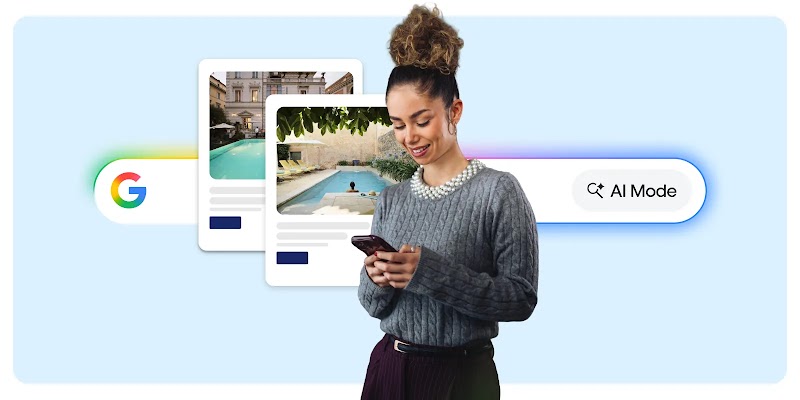
As AI tools become more integrated, traditional organizational silos are beginning to break down. At Expedia Group, this has led to a more holistic and channel-agnostic view of its marketing strategies. “Good SEO is good AEO. You could expand that and say that it’s also turning into good SEM. With AI Max for Search and other tools that are coming out, these things are becoming more intertwined than ever,” says Gottloeb.
We take a very traveler-first approach, regardless of what our org structure looks like.
Removing the organizational tax
All the innovation and new ways of working could lead to more organizational tax, but Gottloeb and Kang are committed to avoiding that path. “We take a very traveler-first approach, and we think about things that way, regardless of what our org structure looks like.” This shift has also allowed them to take a longer-term view into results.
Expedia Group is organizing its teams around the customer journey, enabling a complex and large organization to move at a startup speed. Kang says that the velocity of its marketing experiments has “increased tremendously” over the last few quarters because of an integrated structure enabled by AI systems.
Expedia Group’s approach of long-term planning, collaborative working, and customer-centric tech investments offer a model for marketers. Its success shows how brands can drive growth with search by delivering personalization at scale and building deep, lasting relationships with customers, wherever their curiosity takes them.
Social Module
Share