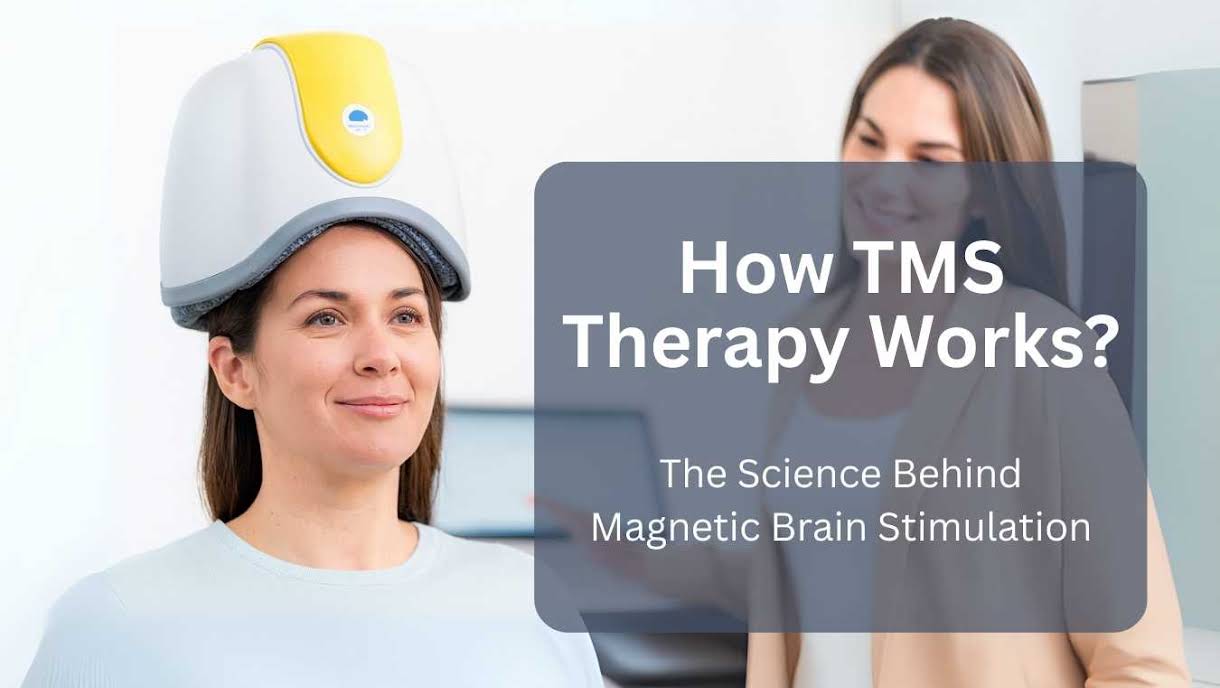
How TMS Therapy Works: The Science Behind Magnetic Brain Stimulation
Depression can be exhausting and overwhelming. For many people, it affects how they think, feel, and live their daily lives. While medication and therapy help many patients, there are cases where symptoms do not improve enough. In these situations, doctors may suggest other options, such as TMS therapy for depression.
TMS, or Transcranial Magnetic Stimulation, is a modern treatment that uses magnetic pulses to stimulate specific areas of the brain. It is non-invasive and does not require surgery. In this guide, we will explore how TMS works, the science behind it, and why it can be effective for depression.
Understanding TMS Therapy
TMS therapy is a medical treatment designed to improve mood by directly stimulating brain activity. Unlike medication, which changes brain chemistry through the bloodstream, TMS targets the brain from the outside.
Learning how TMS works can help patients feel more confident about their treatment choices. Understanding the process also helps people set realistic expectations and prepare for the sessions.
What is Transcranial Magnetic Stimulation (TMS)
Transcranial Magnetic Stimulation is a treatment that uses magnetic fields to activate nerve cells in the brain. The term “transcranial” means “across the skull.” The magnetic pulses pass painlessly through the skull and into targeted brain regions.